
Best Office Chairs for Hypermobility of 2026 for Joint Relief
Stabilize loose joints with the best office chairs for hypermobility in September 2026, offering responsive lumbar pads and wide seat bases.
 By bsr_admin
Updated September 27, 2026
By bsr_admin
Updated September 27, 2026
Frequent joint shifting, ligament strain, and unpredictable posture changes make desk work exhausting when your body lacks natural stability. Hypermobile spines often collapse into deep slumps because loose connective tissue cannot hold neutral alignment without external help. Standard task chairs usually fail to provide the firm boundary your pelvis and lower back need to prevent hyperextension during long hours. Selecting the best office chairs for hypermobility requires looking past basic padding toward structured seating with adaptable lumbar contouring and adjustable armrests.
Careful analysis of frame geometry, cushion resilience, and seat dimensions shows that versatile adjustability protects vulnerable joints from fatigue. Chairs with wide seat pans, multi-angle recline locks, and adjustable arm assemblies let you alternate between upright typing and cross-legged positions without losing spinal contact. Responsive backrests with independent lumbar support help anchor the sacrum, while dense cushioning prevents bottoming out on rigid seat pans. Investing in the best office chairs for hypermobility helps stabilize your posture and keeps daily desk fatigue in check.
| Award | Product | HOF Score About HOF ScoreThe HOF Score is our own rating from 0 to 10, based on performance, design and build, ease of use, and value. It reflects independent research and is never influenced by manufacturers, retailers, or affiliate commissions. Learn more › | |
|---|---|---|---|
| Best Overall |
 Marsail Ergonomic Office Chair
|
9.1/10 | Buy |
| Best Budget |
 Nexthro Ergonomic Office Chair Desk Chair
|
8.9/10 | Buy |
| Best Value |
 COMHOMA Big and Tall Office Chair Heavy Duty Wide
|
8.9/10 | Buy |
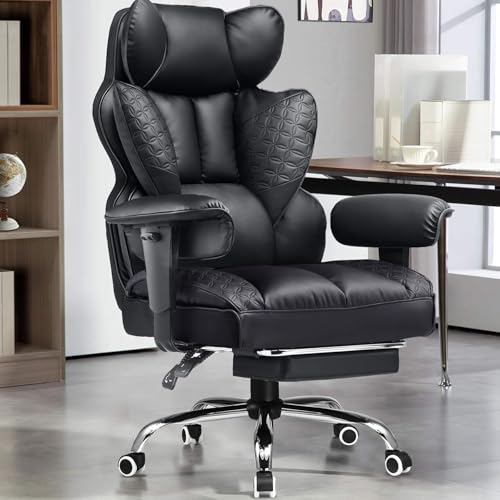 GTPLAYER Big and Tall Gaming Chair 400lbs Heavy
|
8.9/10 | Buy | |
| Best Premium |
 Big and Tall Ergonomic Office Chair
|
8.9/10 | Buy |
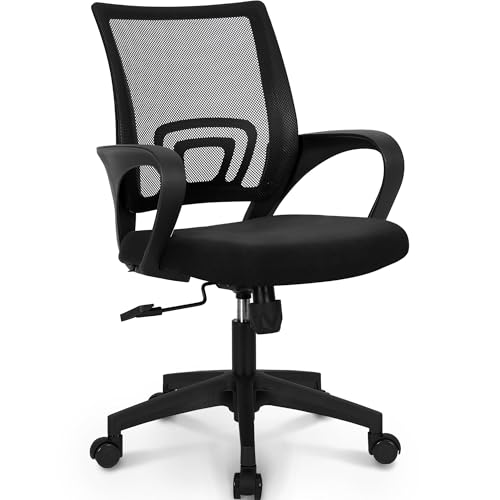 NEO CHAIR Office Computer Chair Ergonomic Mid-Back
|
8.8/10 | Buy | |
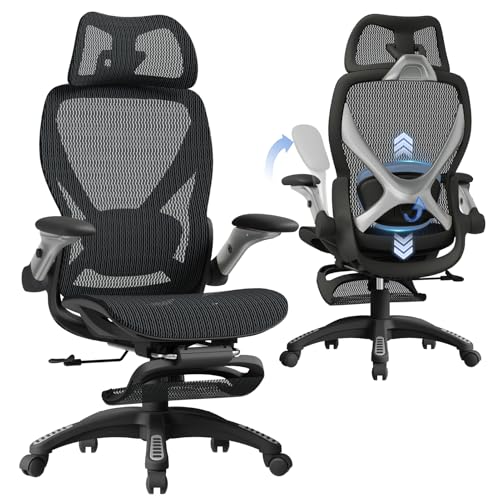 ELABEST X100 Ergonomic Mesh Office Chair
|
8.3/10 | Buy | |
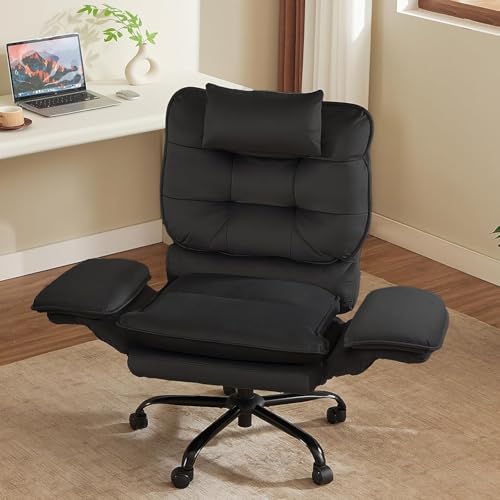 Bestier Criss Cross Chair with Flip-Up Armrests
|
8.1/10 | Buy | |
 Office Chair, Ergonomic Desk Chairs 330LBS
|
8.0/10 | Buy | |
 GABRYLLY Ergonomic Office Chair
|
8.0/10 | Buy |
Frequently Asked Questions
Why do people with hypermobility need adjustable armrests?
Yes, adjustable armrests are critical because they bear upper body weight to prevent shoulder subluxation and neck spasms. When your armrests adjust in multiple dimensions, your forearms remain supported without hitching your shoulders up or letting them dangle unsupported. This reduces constant traction on lax shoulder ligaments during long typing sessions.
Is mesh or high-density foam better for hypermobile sitting?
High-density foam cushions generally offer better stability than soft mesh for hypermobile individuals. Soft mesh seat pans can create a hammock effect that rolls the hips inward and strains the pelvic joints. A supportive foam seat with a firm base, like the 3.2-inch cushion on the Nexthro Ergonomic Office Chair Desk Chair, keeps the sit bones level and well supported.
Can cross-legged sitting chairs benefit hypermobility?
Yes, wide seat pans that allow cross-legged sitting can provide relief for hypermobile desk workers. People with hypermobility often cross their legs or tuck a foot under to compress joints and gain proprioceptive feedback. Models like the Bestier Criss Cross Chair with Flip-Up Armrests and Big and Tall Ergonomic Office Chair feature widened bases and pivot armrests to accommodate dynamic leg positions safely.
What lumbar support design works best for joint laxity?
Firm, two-way adjustable lumbar supports that offer both height and depth tuning work best for lax spines. Fixed lumbar curves rarely hit the lumbar spine at the correct angle, causing unwanted spinal extension or slumping. A mechanism that moves vertically and forward, such as the system on the Marsail Ergonomic Office Chair, stabilizes the lower back precisely where extra resistance is needed.
Why is a reclining backrest with tilt lock important for Best Office Chairs For Hypermobility in 2026?
Tilt-lock recline mechanisms help redistribute spinal pressure away from fatigued postural muscles throughout the day. Sitting rigidly at ninety degrees forces hypermobile core muscles to overcompensate to keep the spine upright. Reclining to 110 or 120 degrees transfers upper body load onto the backrest, giving overstretched back ligaments a needed rest.
How does weight capacity impact stability for hypermobility seating?
Higher weight capacities usually signify reinforced steel frames, wider bases, and heavy-duty gas cylinders that eliminate unsettling chair wobble. Loose joints feel insecure on shifting chairs because micro-movements trigger muscle guarding and fatigue. Heavy-duty options with 330 to 400 lbs ratings, such as the Office Chair, Ergonomic Desk Chairs 330LBS or GTPLAYER Big and Tall Gaming Chair 400lbs Heavy, ensure a solid, stable foundation.
About the author

bsr_admin writes reviews and buying guides for HOF Review.