
How Much Better Is a Standing Desk: Practical Ergonomic Value for 2026
Evaluating how much better is a standing desk reveals real posture, energy, and comfort advantages for your daily home office workflow in November 2026.
 By Arriana Vasquez
Updated October 9, 2026

Sitting in a fixed task chair for eight or more hours creates continuous pressure along the lumbar spine, tightens hip flexors, and stalls blood flow in the lower limbs. When workers explore how much better is a standing desk, they are usually attempting to solve chronic afternoon fatigue, shoulder tension, or dull lower back aches. Modern workstations address these physical strains by enabling effortless posture variation between seated focus and standing activity. Understanding these functional differences begins with fundamental benefits of standing desks, which highlight how alternating your posture relieves concentrated joint stress throughout the day.
Dynamic movement during the workday does not require standing for eight straight hours on hard floors. Instead, the real advantage lies in breaking up prolonged static positions that lock muscles in shortening patterns. Choosing between an electric motorized frame and an adjustable tabletop riser determines how easily you will incorporate standing intervals into your workflow. Taking time to evaluate your existing layout before selecting a reliable home office desk ensures your setup supports neutral joint alignment and accommodates all essential equipment without awkward strain.
| Award | Product | HOF Score About HOF ScoreThe HOF Score is our own rating from 0 to 10, based on performance, design and build, ease of use, and value. It reflects independent research and is never influenced by manufacturers, retailers, or affiliate commissions. Learn more › | |
|---|---|---|---|
| Best Overall |
 HUANUO Electric Standing Desk |
9.2/10 | Buy |
| Best Premium |
 TechOrbits Black 32 in Standing Desk Converter |
8.6/10 | Buy |
| Best Budget |
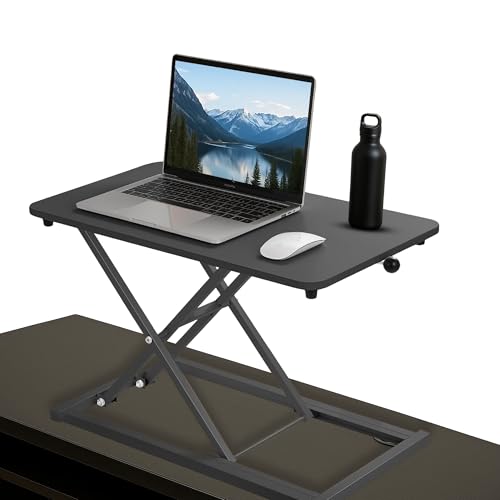 ANTHOSPACE Standing Desk Converter 23.6" x 13.4" |
8.4/10 | Buy |
 Klvied Adjustable Height Standing Desk with Cup |
8.3/10 | Buy | |
| Best Value |
 VIVO Black 28 in Standing Desk Converter |
8.1/10 | Buy |
 VIVO Black 32 in Standing Desk Converter |
8.1/10 | Buy | |
 DUMOS 48 Inch Electric Standing Desk |
8.0/10 | Buy |
Evaluating the Real Value and Impact of a Sit-Stand Workstation
Quantifying how much better is a standing desk requires looking closely at physiological impacts, musculoskeletal changes, and daily task productivity rather than relying on promotional marketing slogans. While an adjustable workstation cannot magically cure chronic spinal conditions or replace regular cardiovascular exercise, alternating postures fundamentally changes how physical strain accumulates over an eight-hour shift. Static sitting concentrates gravitational pressure on specific lumbar discs, while standing redistributes that load across the skeletal frame and engages lower-body stabilizers. Examining these distinct physical and cognitive differences helps clarify what improvements you can realistically expect after upgrading your office setup.
Biomechanical Relief and Spinal Disc Decompression
Prolonged sitting places continuous compressive stress on the lumbar spine, especially when forward slouching rounds the pelvis and flattens the natural lordotic curve. Biomechanical measurements of spinal loading demonstrate that seated postures can elevate intradiscal pressure significantly compared to standing with balanced pelvic alignment. When you rise to a standing position, your hips open, your lumbar curve restores its neutral posture, and your thoracic spine naturally lengthens. This simple transition relieves the passive strain placed on posterior spinal ligaments and prevents deep gluteal muscle deactivation.
Neck and shoulder discomfort also stem from fixed seated positions where arms reach forward toward a keyboard, causing the head to drift past the center of gravity. Standing naturally brings the shoulder blades back and encourages thoracic extension, which reduces upper trapezius tightness and occipital nerve tension. Users who alternate their posture throughout the day frequently report fewer tension headaches and less shoulder blade aching by the late afternoon. Relieving that persistent muscular tightness allows you to finish tasks without the physical distraction of a stiff, aching upper back.
Energy Expenditure and Cardiovascular Activation
The metabolic difference between sitting and standing is often misunderstood by consumers hoping for dramatic weight loss. Standing burns approximately ten to twenty additional calories per hour compared to sitting quietly in an office chair, which does not produce substantial fat loss on its own. However, the true cardiovascular benefit comes from muscle contraction in the calves, quadriceps, and core, which activates the venous pump in your lower legs. This continuous muscular engagement promotes healthy circulation and prevents the venous pooling that causes swollen ankles and heavy legs after long seated sessions.
Breaking up prolonged sitting also plays a documented role in regulating glucose levels and improving insulin sensitivity after meals. When you sit statically for hours, enzyme activity responsible for breaking down circulating fats and sugars slows down dramatically. Rising to work while standing for twenty or thirty minutes after lunch stimulates muscle contractions that help clear blood glucose more efficiently. This modest physical demand keeps your circulatory system active, which directly mitigates the sluggish, lethargic sensation that commonly sets in during mid-afternoon desk work.
Cognitive Focus, Alertness, and Mid-Day Fatigue Management
Mental fatigue in modern knowledge work often correlates directly with physical immobility. Sitting motionless in front of multiple screens reduces overall blood flow, leading to shallow breathing, lower oxygen intake, and creeping drowsiness. Standing up immediately prompts a minor spike in heart rate and stimulates the sympathetic nervous system, boosting alertness and mental clarity. Many telecommuters find that standing during collaborative virtual calls, planning sessions, or email triage creates a noticeable boost in energy and conversational engagement.
Task matching is an essential strategy when leveraging the mental benefits of an adjustable desk. High-focus analytical tasks, complex writing, or detailed spreadsheet calculation often feel most comfortable while seated with supported forearms and stable elbows. Conversely, dynamic activities like brainstorming, hosting phone calls, managing short communications, or reviewing presentations align exceptionally well with standing postures. Alternating your posture based on the type of work you are tackling creates natural mental milestones that prevent monotony and sustain deep focus throughout the day.
The Structured Sit-Stand Cadence: Applying the 20-8-2 Model
A common mistake among new standing desk owners is attempting to stand for five or six consecutive hours on their first day. Static standing for excessive periods introduces new ergonomic issues, including plantar fasciitis, knee stiffness, hip soreness, and lower back hyperextension. Ergonomists widely recommend a cyclical routine such as the 20-8-2 cadence developed by Cornell University researchers. Under this framework, you spend twenty minutes sitting in neutral alignment, eight minutes standing, and two minutes moving or stretching.
Following a balanced rhythm ensures that your body enjoys the decompression benefits of standing without accumulating lower-limb exhaustion. Investing in budget-friendly electric sit-stand workstations with integrated memory controllers makes executing these regular transitions effortless. Models equipped with three or four programmable presets allow you to switch heights with a single button press instead of manually adjusting legs several times per day. When transitions require zero manual labor, maintaining a sustainable sit-stand routine becomes an automatic habit rather than a disruptive chore.
Electric Motorized Desks Versus Desktop Converters
Understanding whether a full desk replacement or a desktop riser is better depends heavily on your budget, available room footprint, and existing office furniture. Electric motorized standing desks, such as the HUANUO and DUMOS models, feature expansive one-piece desktops and sturdy steel frames supporting up to 176 pounds of hardware. Their synchronized linear actuators provide smooth vertical travel from roughly 28 inches up to 46.5 inches at quiet operating volumes under 50 decibels. These full desks offer generous surface area for wide multi-monitor arrays, monitor arms, desk mats, and tabletop audio interfaces.
Desktop converters provide an accessible alternative by sitting directly on top of an existing traditional desk. Units like the VIVO 28-inch and 32-inch risers, or the TechOrbits 32-inch workstation, utilize pneumatic gas springs to elevate laptops, keyboards, and dual screens between 4.3 inches and 20 inches above the primary desk surface. Compact models like the ANTHOSPACE converter provide a sturdy steel base holding up to 88 pounds, while mobile rolling carts like Klvied offer tilting platforms and caster wheels for tight spaces. Choosing workstations designed for quick assembly or pre-assembled risers allows you to gain sit-stand functionality without discarding your current office setup.
Weight capacity and usable surface area represent the primary functional divide between these two design categories. Desktop converters generally cap their dynamic load ratings between 28 and 33 pounds for scissor-lift models, which perfectly accommodates a laptop alongside an external display and keyboard. However, heavy dual-monitor arms or large desktop audio monitors can easily strain pneumatic lift cylinders and make upward lifting difficult. In contrast, heavy-duty motorized frames lift extensive gear packages effortlessly, ensuring that expansive workstation setups remain stable across their full height range.
Achieving Precise Ergonomic Alignment at Standing Heights
Simply elevating your desktop is not enough to guarantee ergonomic benefits; the surface must align accurately with your body measurements. When standing, your elbows should rest at an open angle between 90 and 100 degrees while your shoulders remain relaxed and your forearms sit parallel to the floor. If your keyboard surface is set too high, your trapezius muscles will tense and your wrists will bend upward into an uncomfortable extension. If the surface sits too low, you will lean forward onto your palms and round your lower spine, recreating the exact postural problems you wanted to eliminate.
Screen positioning requires equal attention to prevent cervical spine fatigue and forward head posture. The top third of your computer monitor should align directly with your horizontal eye level when standing in a neutral stance. Viewing distance should remain roughly arm’s length away, allowing you to read text comfortably without tilting your chin up or craning your neck downward. Utilizing an adjustable monitor riser or a sturdy monitor arm ensures you can tune display height independently from your keyboard platform, guaranteeing neutral neck alignment at all times.
Shoe sole thickness and anti-fatigue mat cushioning introduce real-world height variables that many desk owners overlook. A thick gel mat or running shoes can add anywhere from one to two inches to your standing height, requiring you to elevate your desk higher than your barefoot floor measurement. When setting up programmable digital presets, wear your typical daily footwear and stand on your intended mat before saving your positions. Taking the time to dial in these exact heights prevents subtle joint misalignment that could otherwise produce nagging wrist or shoulder discomfort.
Frame Stability, Column Telescoping, and Monitor Wobble
A frequent complaint among prospective standing desk buyers is annoying monitor vibration and keyboard bounce while typing at full standing elevation. Physics dictates that as telescoping leg columns extend upward, the center of gravity rises and lever arm forces amplify any lateral or longitudinal movement. Desks built with thick cold-rolled steel columns, wide footplates, and reinforced crossbars resist sway far more effectively than lightweight, thin-walled frames. Dual-column T-leg architectures, such as the steel structure used on the DUMOS desk, distribute downward forces evenly across the floor plane to maintain solid footing.
Desktop construction also influences long-term stability and equipment security when mounting monitor clamps. Seamless one-piece tops, like the 48-inch surface featured on the HUANUO electric desk, offer superior torsional rigidity compared to split-panel desktops that join multiple pieces with dowels and brackets. Solid surfaces resist flexing under the localized downward pressure of heavy dual-screen C-clamps, protecting both your monitors and the desktop finish. Making sure your frame hardware is properly torqued and that leveling glides are firmly grounded against uneven flooring eliminates the vast majority of typing shake.
Cable Management and Clearance Planning During Travel
Operating an adjustable height desk introduces mechanical movement that stationary office furniture never encounters, making cable management an essential functional priority. Power cords, monitor video cables, and peripheral leads must possess enough physical slack to travel the full vertical stroke without snagging or pulling loose from ports. Tension on cables during an upward lift can rip ports out of expensive laptops, tip desktop speakers, or trigger anti-collision sensors unexpectedly. Organizing wires into flexible vertebrae tracks, under-desk raceways, or spiral wraps maintains a tidy appearance while safeguarding your equipment.
Under-desk clearance requires careful inspection before you initiate your first motorized lift or gas-spring adjustment. Low-hanging windowsills, filing cabinets tucked beneath the desktop, or wall-mounted shelving can become collision hazards when raising or lowering the frame. Desks equipped with electronic anti-collision detection or current-sensing limiters automatically stop and reverse travel when encountering physical resistance, preventing costly damage. Securing power strips directly to the underside of the desk frame ensures that only a single main power cable needs to travel downward to the wall outlet.
Common Pitfalls That Diminish Sit-Stand Advantages
Purchasing an adjustable desk will not deliver noticeable health benefits if the equipment remains parked in a seated position for weeks at a time. Many remote workers struggle with habit formation, forgetting to stand during busy work sprints unless they establish visual or digital reminders. Utilizing programmable desk timers or calendar prompts helps prompt posture transitions until alternating becomes second nature. Removing friction through smooth electric height adjustment or responsive gas-spring risers significantly increases how often you actually change your working posture throughout the week.
Another frequent error is neglecting foot support and standing on hard hardwood, tile, or thin commercial carpeting without cushioning. Unassisted standing concentrates body weight on the calcaneus bones of your heels, leading to rapid foot fatigue, sore arches, and tight calf muscles within thirty minutes. A quality high-density polyurethane anti-fatigue mat cushions the soles of your feet, encourages subtle micro-movements, and stimulates circulation. Alternating between supportive footwear, barefoot standing on a textured mat, and sitting in an ergonomic chair creates a comfortable, sustainable daily routine.
Practical Takeaways for Your Daily Work Routine
Determining how much better is a standing desk ultimately comes down to how consistently you integrate movement into an otherwise sedentary workday. A height-adjustable workstation is not a magical fitness device, but it is an exceptionally effective ergonomic tool for interrupting prolonged static spinal loading and boosting afternoon mental stamina. When paired with proper elbow geometry, correct screen alignment, and a disciplined sit-stand cadence, an adjustable desk delivers substantial improvements in physical comfort and daily productivity. Investing in a stable frame or a reliable converter transforms your workspace into an adaptable environment that actively supports your long-term physical well-being.
About the author
Arriana Vasquez is a product writer specializing in work-from-home equipment and practical workspace solutions. Her reporting covers office chairs, standing desks, and technology designed for modern home offices. Through product research, testing, and detailed buying guides, she explores the features that influence everyday usability, comfort, and functionality. Her work helps readers compare workspace equipment and identify products suited to different working environments.