
How to Choose a Ladder for a Bed With a Ladder: Practical Guide for 2026
Learn how to choose a ladder for a bed with a ladder by comparing step width, frame brackets, and assist straps in October 2026.
 By Arriana Vasquez
Updated October 13, 2026
By Arriana Vasquez
Updated October 13, 2026

Climbing up to an elevated bunk bed or sitting upright from a flat mattress requires stable, dependable leverage. When setting up a shared dorm room, camper bunkhouse, or recovery-friendly bedroom, evaluating how ladder hardware attaches to a bed frame makes a huge difference in daily comfort and joint safety. Learning how to choose a ladder for a bed with a ladder setup requires looking closely at mounting bracket styles, step tread depth, and personal mobility demands. Many sleepers struggle with thin, painful metal rungs or loose hanging hooks that rattle whenever someone climbs. Placing protective indoor rugs beneath the bed perimeter can shield hardwood floors from friction, but the ladder itself still requires solid anchoring and the right rung profile.
The term bed ladder encompasses two distinct categories that buyers encounter across bedroom setups. First, rigid climbing ladders provide physical access to top bunks, loft beds, and RV berths through fixed angle brackets or hanging hooks. Second, flexible webbing pull-up assist ladders attach to a footboard or frame to help individuals sit upright following surgery, injury, or spinal strain. Selecting the right option means matching frame dimensions, static and dynamic weight capacity, and attachment hardware to your exact bed frame design. Paying attention to tread padding, slip-resistant grips, and frame attachment mechanisms prevents midnight slips and eliminates structural creaks.
| Award | Product | HOF Score About HOF ScoreThe HOF Score is our own rating from 0 to 10, based on performance, design and build, ease of use, and value. It reflects independent research and is never influenced by manufacturers, retailers, or affiliate commissions. Learn more › | |
|---|---|---|---|
| Best Overall |
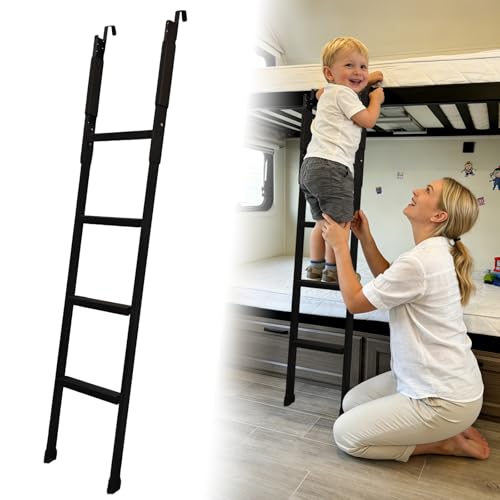 Bunk Bed Ladder, 52"-64" Height Adjustable RV Bunk
|
9.2/10 | Buy |
 Vive Bed Ladder Assist - Pull Up Assist Device
|
8.6/10 | Buy | |
| Best Value |
 Bed Ladder Assist,Pull up Helper and Sit up Helper
|
8.9/10 | Buy |
 Amarys Hearth 6.5 Ft Bunk Bed Ladder Pads
|
8.0/10 | Buy | |
| Best Budget |
 Cyrico Bunk Bed Ladder Pads 4 Pack,Ladder Step
|
8.8/10 | Buy |
 Hushee 6.5 ft College Dorm Bunk Bed Ladder Pads
|
8.9/10 | Buy | |
 Bed Ladder Assist - Pull Up Assist Device with 6
|
8.0/10 | Buy | |
| Best Premium |
 Bunk Bed Ladder Pads 6.5 Ft with 10 Adjustable
|
9.1/10 | Buy |
 50 Inch Wood Bunk Bed Ladder
|
8.0/10 | Buy |
Practical Guide to Selecting Bed Ladders and Support Systems
Determining the correct ladder setup begins with clarifying how the bed is used and who will be using it. Elevated beds like college dorm lofts, children’s bunk beds, and RV bunks demand secure climbing ladders with wide steps, stable hooks, and protective step treads. Conversely, recovering patients, seniors, or expectant mothers often search for bed ladders to aid in pulling themselves up into a seated position from a standard mattress. Understanding these distinct functions ensures you choose hardware that protects joints, fits your frame dimensions, and prevents sudden shifting during weight transitions.
Distinguishing Rigid Climbing Ladders from Bed Mobility Assist Straps
Climbing ladders and pull-up assist straps serve entirely different physical needs despite sharing common naming conventions in furniture searches. A climbing ladder is a rigid vertical or angled frame constructed from solid pine or powder-coated steel that bears the full static and dynamic weight of someone ascending to an elevated sleeping surface. Models like the UIABOPZ adjustable metal ladder or the HAOIOKSC solid pine ladder feature structural rungs designed for foot placement and upright stability. These units attach directly to the upper bunk rail or side frame using heavy-duty hooks or permanent angle brackets.
Pull-up assist ladders, by comparison, are flexible mobility aids crafted from reinforced nylon or polyester webbing. Devices from brands like Homymusy, Vive, and KkaFFe anchor to the footboard or lower bed frame, extending along the mattress with four to six cushioned hand grips. Rather than carrying standing body weight, these straps assist individuals with spinal conditions, abdominal weakness, or post-operative recovery to sit upright through incremental arm pulls. Conflating these two product types is a common purchasing error, so clarifying whether you require foot support for climbing or hand grips for sitting up is your first critical decision.
Critical Measurements: Height, Angle, and Rail Clearance
Selecting a rigid bunk or loft ladder requires accurate vertical measurements from the floor to the top edge of the supporting side rail. Vertical height determines whether a ladder will rest at a comfortable climbing incline or stand at an unnervingly steep ninety-degree angle. Adjustable designs provide significant flexibility for irregular frames, as seen with metal options that span 52 to 64 inches using pre-punched adjustment holes spaced one inch apart. This twelve-inch adjustment window allows users to customize the slant without needing to cut or modify metal structural tubes.
Fixed-length wooden ladders, such as fifty-inch solid pine units, require your bed frame height to align closely with the pre-set length of the side stringers. When measuring your space, account for the clearance required at the base of the bed so the ladder does not obstruct bedroom walkways or closet doors. Standard bedroom planning recommends maintaining at least twenty-four to thirty inches of clear walkway space around the bed perimeter. If a slanted ladder projects too far outward, it can create a tripping hazard in compact dorm rooms or travel trailers.
Mounting Styles: Fixed Angle Brackets Versus Removable Hook Anchors
The method used to secure a climbing ladder to a bed frame dictates both stability and convenience. Removable metal hooks, often featuring an opening of one and a half inches, slip directly over the top bunk guardrail without requiring permanent drilling. This mounting style works exceptionally well in college dorms, rental apartments, or RV bunks where furniture must remain unaltered or disassembled quickly. High-grade hook systems include non-slip rubber padding inside the bracket channel to stop side-to-side slipping and eliminate paint-scratching friction against the bed rail.
Permanent screw-fixed angle brackets offer superior lateral rigidity compared to drop-on hooks. Wood bunk ladders often utilize steel corner brackets fastened directly into solid wood guardrails and stringers using wood screws. This semi-permanent connection prevents the ladder from lifting upward if someone shifts their weight awkwardly or grabs the side rails from an angle. While fixed brackets eliminate movement, they require confirming that your bed frame material is thick enough to hold wood screws without splitting the lumber or stripping out pre-drilled holes.
Step Ergonomics: Tread Width, Rung Padding, and Barefoot Comfort
Climbing up to an upper bunk barefoot can be genuinely painful when stepping on thin, round metal tubing. Flat, wide steps distribute foot pressure across a larger surface area, significantly reducing arch discomfort and joint fatigue. Heavy-duty wooden ladders like the HAOIOKSC pine model provide flat steps measuring 3.7 inches deep, providing ample platform space for adult feet. When evaluating metal ladders, look for flat rungs measuring at least 1.5 inches in depth equipped with textured rubber tread pads rather than bare circular bars.
Step tread texture plays a crucial role in preventing slips, especially during nighttime descents in low lighting or when wearing socks. Factory-installed rubber pads with ribbed surfaces provide reliable traction under shifting dynamic loads. If your current bunk ladder has narrow or cold metal rungs, aftermarket step padding can dramatically improve safety. Soft foam covers that wrap around the rungs reduce impact shock, making nightly trips up and down the loft bed comfortable and quiet.
Just as choosing ergonomic seating and posture support prevents joint fatigue during long workdays, selecting ergonomic ladder steps protects feet and knees from repeated climbing strain. A flat step angled perpendicular to the climber’s foot ensures the heel and midfoot receive even support. Thin metal rungs that concentrate total body weight onto a half-inch strip can cause sleepers to rush their footing, increasing the risk of missteps. Investing in wider treads or dense foam cushioning transforms a utilitarian climbing experience into a safe, comfortable routine.
Weight Ratings and Structural Stability for Elevated Beds
Ladder weight capacities must always account for dynamic loads rather than mere static stationary weight. When an adult steps onto a rung, the downward dynamic force temporarily exceeds their resting body weight. Metal RV and loft ladders crafted from heavy-duty tubular steel with powder-coated finishes frequently support vertical capacities of 350 pounds. This rating accommodates growing teenagers, college students, and adults accessing overhead bunks with bedding and personal items.
Solid wood ladders constructed with mortise-and-tenon joinery and thick pine boards can offer even higher load thresholds, with some models tested up to 700 pounds under proper installation conditions. Beyond the ladder itself, verify that the upper bed rail can safely handle the downward torque applied at the bracket contact points. A flimsy side rail or poorly supported bunkie board can bow under ladder pressure, potentially compromising the structural integrity of the entire sleeping platform. Rubber feet at the ladder base are equally vital, as they grip the floor surface and stop kick-out motion during ascent.
Selecting In-Bed Pull-Up Ladder Assists for Recovery and Mobility
For sleepers facing physical mobility limitations, in-bed pull-up ladders provide essential independence without requiring motorized beds. These assistive devices consist of heavy-duty nylon webbing straps that loop securely around the bed frame or footboard. As the user pulls hand over hand along sequential grips, they gradually transition from a lying posture to an upright seated position. Models like the Homymusy and KkaFFe ladder assists feature four to six evenly spaced handles, letting users pull themselves up incrementally at their own pace.
Handle construction directly affects grip stability, particularly for individuals dealing with arthritis, limited grip strength, or tender hands following medical procedures. Look for handles made with cushioned EVA foam or soft sponge tubing surrounding rigid plastic cores. The outer foam prevents painful pressure points on the palms, while the inner sleeve stops the handle from collapsing under full body pulling weight. The Vive bed ladder assist incorporates cushioned, non-slip handles that remain comfortable even with repeated daily use throughout a lengthy recovery period.
Strap adjustability ensures the first hand grip sits within easy reach while the sleeper is lying completely flat. If the initial handle is positioned too far down the mattress, the individual may strain abdominal or spinal muscles trying to reach it. Webbing lengths often adjust up to 80 or even 160 inches using tri-glide slide clips and quick-release composite buckles. This broad range makes them compatible with twin, full, queen, and king mattresses, as well as hospital beds and low-profile foundations.
Strap Tension, Buckle Hardware, and Anchor Points for Bed Frames
Installing a bed ladder assist requires a secure, immovable attachment point at the foot of the bed frame. The webbing strap typically wraps around a solid wood slat, steel footboard rail, or heavy-duty center support beam. Avoid looping straps around decorative headboard finials or lightweight mattress retaining bars that might bend under tension. High-strength composite buckles rated between 300 and 400 pounds ensure the strap will not slip or release abruptly when pulling upward.
Maintaining proper strap tension prevents the ladder from tangling in bed linens or dragging onto the floor. Many assist kits supply tension lock buckles, auxiliary cotton cords, or shelf hooks to anchor the ladder neatly along the mattress edge when not in use. Proper placement keeps the grips accessible beside the sleeper without disrupting blankets or creating a tripping hazard when exiting the bed. Always double-check buckle engagement and webbing routing before relying on the device for daily transfers.
Retrofitting Rung Cushioning and Anti-Slip Traction on Existing Ladders
Replacing an entire ladder is not always necessary if your primary issue is foot discomfort, slippery rungs, or clattering noise. Self-adhesive ladder pads made from soft NBR foam or dense sponge provide an affordable and effective retrofit for hard wooden or metal rungs. Products like the Hushee and Amarys Hearth rolls offer 6.5 feet of cut-to-fit padding that can be trimmed precisely to match individual step lengths. With widths between three and 3.3 inches, these strips cover the entire standing surface and fold neatly over the sharp front edges.
Adhesion and mechanical fastening work together to ensure step pads stay firmly in place under repeated foot friction. Many modern padding kits utilize strong nano self-adhesive backing that adheres directly to clean wood or metal surfaces without leaving sticky residue upon removal. For high-traffic loft beds, combining adhesive backing with adjustable hook-and-loop straps offers dual-layer security. The Plesqui pad system includes ten adjustable straps that wrap completely around the rungs, preventing edges from curling or peeling when climbers step down with socks on.
Nighttime visibility represents another important safety consideration when upgrading bunk bed rungs. The Cyrico four-pack ladder step pads introduce reflective strips that catch ambient light, allowing climbers to pinpoint step locations clearly in the dark. Anti-slip silicone dots printed across the top fabric surface boost friction, preventing accidental slips even when descending quickly. Dense foam padding acts as an acoustic dampener, eliminating the metallic clatter and hollow thumps that can disturb sleeping roommates or family members at night.
Maintenance Checks, Hardware Tightening, and Long-Term Stability
Routine maintenance preserves ladder stability and ensures hardware connections remain safe over years of daily use. Dynamic forces from climbing naturally cause wood screws, bracket bolts, and adjustment pins to loosen over time. Inspecting your ladder hardware every few months allows you to re-tighten loose fasteners before frame wobbling causes bracket deformation or stripped screw holes. If your ladder features adjustable height pins, verify that the locking knobs remain fully seated in their designated adjustment holes.
For webbing pull-up assist straps, check the fabric periodically for fraying along the edges and inspect composite buckles for hairline cracks. Cleaning is straightforward, as foam climbing pads can be wiped down with a damp cloth, while fabric step wraps can often be machine-washed to maintain hygiene. Taking a few moments to verify floor grip pads, strap tension, and mounting bracket rigidity guarantees that your bed ladder system remains secure, supportive, and comfortable for the long haul.
About the author
Arriana Vasquez is a product writer specializing in work-from-home equipment and practical workspace solutions. Her reporting covers office chairs, standing desks, and technology designed for modern home offices. Through product research, testing, and detailed buying guides, she explores the features that influence everyday usability, comfort, and functionality. Her work helps readers compare workspace equipment and identify products suited to different working environments.