
Are Ergonomic Office Chairs Worth It: Practical Guide for 2026
Daily back fatigue makes many ask: Are Ergonomic Office Chairs Worth It for long desk shifts in November 2026? Evaluate posture, lumbar design, and mechanics.
 By Erica Puisis
Updated October 17, 2026

Spending eight to ten hours hunched over a keyboard takes a brutal toll on your lower back, neck, and hips. Sitting on a rigid dining chair or a collapsing foam task seat creates uneven pressure points that compress your lumbar spine and restrict circulation behind your knees. Many desk workers suffering from midday fatigue wonder whether are ergonomic office chairs worth it or if standard office seating provides enough daily support. Upgrading to an ergonomic office chair for lumbar support can dramatically reshape how your body tolerates prolonged seated desk shifts.
Dedicated ergonomic seating does far more than provide soft padding; it actively stabilizes your body through calibrated mechanical adjustments. Features like independent lumbar tension, synchro-tilt recline mechanisms, and contoured waterfall seat pans work together to maintain natural spinal curvature throughout the workday. When you are choosing a supportive desk setup, matching your workstation height with an adaptable chair prevents shoulder shrugging and carpal tunnel strain. Understanding the engineering differences between budget swivel seats and authentic posture-focused chairs helps you decide where to direct your workstation investment.
| Award | Product | HOF Score About HOF ScoreThe HOF Score is our own rating from 0 to 10, based on performance, design and build, ease of use, and value. It reflects independent research and is never influenced by manufacturers, retailers, or affiliate commissions. Learn more › | |
|---|---|---|---|
| Best Overall |
 Marsail Ergonomic Office Chair |
9.1/10 | Buy |
| Best Budget |
 GTPOFFICE Executive Office Chair with Comfortable |
8.9/10 | Buy |
 BestOffice Ergonomic Office Chair |
8.8/10 | Buy | |
| Best Premium |
 CLOUVOU Ergonomic Office Chair Comfy [#1 in reviews] |
8.8/10 | Buy |
| Best Value |
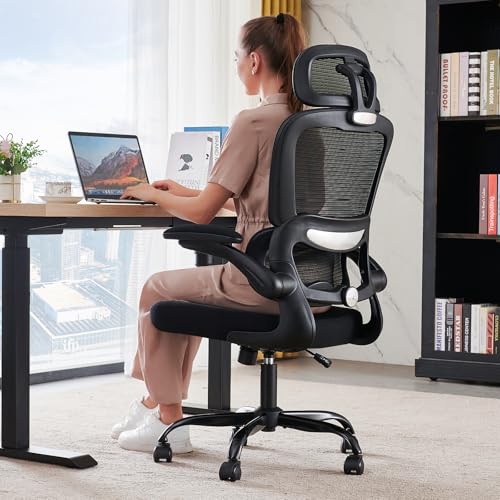 TRALT Office Chair Ergonomic Desk Chair |
8.3/10 | Buy |
 Ergonomic Office Chair for Long Hours |
8.3/10 | Buy | |
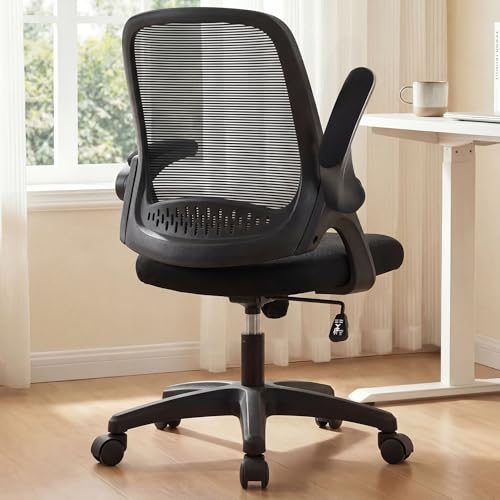 NEO CHAIR Office Desk Chair |
8.1/10 | Buy | |
 GABRYLLY Ergonomic Office Chair |
8.0/10 | Buy |
Evaluating the Real Value of Ergonomic Office Chairs for Desk Work
An ergonomic chair represents a calculated investment in musculoskeletal health rather than a mere decorative furniture upgrade. When you spend continuous hours seated, conventional office chairs force the spine to bear unnatural static loads that lead to chronic muscle tension and fatigue. High-performance ergonomic seating counteracts these pressures by redistributing your body weight across calibrated mechanical support zones. Determining whether are ergonomic office chairs worth it requires looking beyond aesthetics to understand how specific engineering features protect your spine during demanding workdays.
Biomechanical Impact on Spinal Alignment and Pelvic Pressure
Prolonged sitting fundamentally alters the biomechanics of the human spine, flattening the natural inward curve of the lumbar region known as the lordotic arc. In a standard static chair, the pelvis tends to rotate backward into a posterior pelvic tilt, which stretches spinal ligaments and increases pressure inside the intervertebral discs. This sustained compression often triggers localized lower back stiffness, muscle spasms, and radiating nerve discomfort along the sciatic pathway. Ergonomic chairs actively mitigate these risks by supporting the sacrum and pelvis, encouraging a neutral spinal posture that mirrors natural standing alignment.
Maintaining neutral posture reduces the metabolic workload on deep spinal stabilizing muscles, allowing you to remain alert and focused for extended periods. When the backrest encourages slight pelvic rotation forward, the thoracic spine remains upright without demanding forced muscular effort from the shoulders and upper back. This postural equilibrium prevents the habitual forward head slump that frequently causes tension headaches and cervical strain during intensive computer tasks. Over weeks and months of seated desk work, this subtle biomechanical correction helps preserve spinal disc integrity and prevents long-term joint wear.
Seat Pan Geometry and the Importance of Popliteal Clearance
Seat pan design plays a critical role in promoting healthy lower-body circulation and preventing soft tissue discomfort during all-day sitting. A primary anthropometric benchmark highlighted in ergonomic guidelines is maintaining a two to three finger gap between the front edge of the seat cushion and the popliteal crease behind your knees. If a seat pan is excessively deep, the front edge presses against the delicate blood vessels and sciatic nerve branches located in the popliteal fossa. This continuous mechanical pressure can lead to lower leg swelling, tingling sensations, and deep vein discomfort over an extended workday.
Chairs like the TRALT Office Chair Ergonomic Desk Chair feature a carefully calibrated seat depth of 17.3 inches, which provides proper thigh support without restricting circulation for average-height workers. Furthermore, incorporating a gentle waterfall front edge allows the seat cushion to curve downward away from the thighs, dissipating localized contact pressure. When pairing ergonomic seating with a standing desk, having an anatomically contoured seat pan makes smooth postural transitions between sitting and standing much more comfortable. Premium designs often integrate horizontal seat sliders that let users fine-tune pan depth across several inches to suit their specific femur length.
Cushion Materials: Molded Foam Versus Breathable Suspension Mesh
The debate between high-density foam cushioning and tensioned suspension mesh centers around pressure distribution versus thermal dissipation. High-density, cold-cure molded foam, featured in models like the QLTPLUS Ergonomic Office Chair for Long Hours with its 4-inch cushion, offers exceptional load distribution across the ischial tuberosities. Unlike cheap cut-sheet foam that quickly bottoms out under user weight, molded foam retains its elasticity and structural rebound over years of continuous use. This consistent resistance helps protect the sensitive tailbone and prevents the sharp pelvic pain associated with collapsing padding.
Elastomeric suspension mesh, used extensively on models like the GABRYLLY Ergonomic Office Chair and BestOffice Ergonomic Office Chair, prioritizes continuous thermal regulation and airflow. Traditional upholstery materials and non-breathable PU leather can trap body heat and humidity, causing localized perspiration and discomfort in warm office environments. Suspension mesh distributes body weight across an elastic woven lattice that conforms directly to the contours of your hips and back while keeping you cool. However, users should verify that the perimeter plastic frame of a mesh seat does not press against the outer thighs, which can create unwanted contact pressure.
Synthetic upholstery, such as the diamond-stitched PU leather on the GTPOFFICE Executive Office Chair with Comfortable, balances classic executive cushioning with easy surface maintenance. While PU leather cushions offer immediate plushness and simple wipe-clean convenience, they generally retain more warmth than open-weave mesh backs. For workers in hot or humid spaces, tensioned mesh remains the preferred choice for thermal comfort during eight-hour desk marathons. For users managing tailbone sensitivity, high-resilience molded foam typically delivers the most forgiving pressure relief and consistent pelvic stability.
Lumbar Mechanisms and Targeting the L1 to L5 Vertebrae
An effective lumbar support system must provide precise physical contact with the lower spine rather than acting as a generic, non-adjustable curve. The human lumbar region spans vertebrae L1 through L5, and supporting this specific spinal curve prevents the pelvic slump that triggers lower back fatigue. Chairs like the Marsail Ergonomic Office Chair incorporate advanced adjustability, allowing the lumbar cushion to adjust 1.18 inches forward and backward as well as 2.16 inches vertically. This dual-plane travel enables desk workers to align the support pad directly into the apex of their unique lordotic curve for targeted lower back relief.
Fixed lumbar supports found in entry-level chairs often hit users in the wrong anatomical location, either pushing too aggressively against the sacrum or sitting too high along the thoracic spine. When lumbar pressure is misaligned, it forces the lower spine into an unnatural arch that intensifies muscular soreness instead of relieving it. Independent depth and tension controls let you dictate exactly how firmly the support pad presses against your lower back as you shift postures. Dynamic lumbar units that flex and pivot with your movements ensure that your spine remains supported whether you are leaning forward to type or relaxing backward to review documents.
Recline Mechanics and Synchro-Tilt Kinematics
Dynamic sitting is essential for spinal disc health, as static posture restricts the flow of nutrient-rich fluids into the intervertebral discs. Advanced ergonomic seating utilizes synchro-tilt mechanisms, which recline the backrest and the seat pan at a synchronized ratio, typically two to one. This mechanical geometry allows the backrest to tilt backward while the seat pan tilts only slightly, opening the torso-to-thigh angle without lifting your feet off the floor. Maintaining flat foot placement on the ground preserves lower-body stability and prevents circulation cutoffs at the front edge of the cushion.
Basic office seating frequently employs simple center-tilt mechanisms, where the entire seat and back pivot backward as a rigid unit. Center-tilt mechanisms cause the front edge of the seat pan to rise sharply when reclining, lifting your knees and compressing the thighs against the frame. Chairs with tilt-lock functionality, such as the GABRYLLY Ergonomic Office Chair with its 90 to 120 degree range, allow workers to lock the backrest in multiple working angles. Engaging a relaxed recline angle of 100 to 110 degrees significantly decreases spinal disc pressure compared to sitting rigidly upright at a strict 90-degree angle.
Recline tension knobs located beneath the seat mechanism allow users to calibrate resistance based entirely on their body weight and core strength. If the tension is dialed too loose, the chair feels unstable and falls backward abruptly; if set too tight, leaning back requires exhausting muscular exertion. Proper calibration lets you recline effortlessly using gentle body weight shifts while maintaining constant back support throughout the motion. This active, dynamic sitting movement relieves pressure on the spinal column and encourages blood flow throughout prolonged working sessions.
Armrest Articulation and Upper Body Strain Reduction
Armrests play a fundamental role in offloading the weight of the arms and preventing upper trapezius muscle fatigue and shoulder impingement. Without adequate forearm support, the shoulder girdle must continuously suspend the weight of your arms, leading to neck stiffness and upper back spasms. Following OSHA computer workstation guidelines, armrests should be positioned to allow elbows to rest naturally at a 90 to 100 degree angle with shoulders fully relaxed. When armrests are set too high, they force the shoulders upward into an unnatural shrug; when set too low, they promote side-leaning and asymmetric spinal twisting.
Contemporary ergonomic models provide diverse armrest configurations ranging from simple space-saving flip-up arms to fully articulated 3D assemblies. The Marsail Ergonomic Office Chair features 3D armrests that move forward, backward, and pivot inward or outward to match your forearm angle while typing. In contrast, chairs like the NEO CHAIR Office Desk Chair utilize 90-degree flip-up arms that swing completely out of the way. Flip-up arms are particularly advantageous for compact home workspaces, as they allow the chair to roll fully flush beneath low desk aprons when not in use.
Dedicated desk workers spending full shifts at keyboards generally benefit more from 3D or 4D armrests that provide continuous forearm contact near the desk edge. Inward-pivoting arm pads support your forearms during keyboard navigation, keeping the wrists in a neutral, straight alignment that reduces median nerve pressure. Padded polyurethane arm caps also prevent hard pressure points on the sensitive ulnar nerve running along the underside of the elbow. Investing in adjustable arm support directly protects against repetitive strain injuries, including carpal tunnel syndrome and forearm tendinitis.
Structural Integrity: Pneumatic Cylinders and Base Engineering
The internal mechanical hardware of an office chair dictates both user safety and long-term operating durability under continuous daily loads. The pneumatic gas lift cylinder is the single most critical structural component, controlling smooth height adjustment and absorbing vertical sitting shock. Quality task chairs utilize Class 3 or heavy-duty Class 4 cylinders built with thickened steel walls and robust internal nitrogen seals. Lower-quality cylinders frequently fail within months, causing the dreaded sinking chair syndrome where the seat gradually drops to its lowest travel limit during work.
Chairs like the TRALT Office Chair Ergonomic Desk Chair incorporate BIFMA-certified Class 3 gas lifts, ensuring dependable height retention that prevents sudden drops. Furthermore, the five-star star base provides the essential foundation that prevents tipping and distributes user weight evenly across the casters. Heavy-duty bases made from reinforced nylon with metal cores or solid die-cast aluminum withstand high mechanical stresses up to 330 or 350 pounds. Inspecting safety certifications such as SGS or ANSI/BIFMA X5.1 compliance ensures that the base, cylinder, and tilt mechanism have passed rigorous structural load and cycle tests.
During workstation setup, following a clear home office workstation assembly guide ensures that all tapered joints and mechanism bolts are securely torqued. Pneumatic cylinders rely on precision Morse friction tapers that seat firmly into the central star base and mechanism socket under normal user weight. Ensuring these components seat squarely during initial assembly prevents wobbling, uneven tilt, and premature wear on the internal cylinder bearings. Proper mechanical assembly guarantees that the chair remains silent and stable through thousands of daily swivel and recline cycles.
Anthropometric Sizing for Varied Statures and Body Types
One of the primary reasons standard office seating fails is that it relies on a one-size-fits-all approach that ignores human anthropometric diversity. Users shorter than 5 feet 4 inches often struggle with chairs whose minimum seat height prevents their feet from resting flat on the floor. When feet dangle unsupported, the entire weight of the legs hangs from the front edge of the seat, accelerating fatigue and compressing femoral circulation. Conversely, taller individuals over 6 feet require higher gas lift cylinders and deeper seat pans to prevent their knees from rising awkwardly above hip level.
Chairs such as the CLOUVOU Ergonomic Office Chair Comfy are specifically engineered with extended backrests and orthopedic lumbar curves built for users up to 6.5 feet tall. Meanwhile, the GABRYLLY Ergonomic Office Chair accommodates users between 5 feet 2 inches and 6 feet 1 inch, offering wide seat dimensions and an adjustable headrest for cervical spine support. Accommodating broader frames also requires assessing certified load capacities, which range from 250 pounds on compact task chairs up to 350 pounds on heavy-duty models like the QLTPLUS. Selecting a chair matched to your height and weight range guarantees that lumbar supports and headrests align with your natural anatomical landmarks.
Floor Protection and Caster Wheel Selection
Caster performance is frequently overlooked, yet it directly influences mobility, spinal strain when reaching across desks, and floor surface preservation. Standard task chairs typically ship with dual-wheel hard nylon casters engineered specifically for low-pile commercial carpeting. When placed on bare hardwood, laminate, or luxury vinyl tile, hard nylon wheels can easily trap abrasive grit and grind fine scratches into delicate floor finishes. In addition, hard wheels slide aggressively on smooth surfaces, forcing your leg muscles to stay tense to keep the chair stationed properly.
Upgrading to soft polyurethane casters or rollerblade-style wheels provides superior grip and silent rolling while protecting bare wood floors from damage. Most office chairs utilize standard universal 7/16-inch by 7/8-inch (11 mm by 22 mm) grip-ring stems, making aftermarket caster swaps quick and straightforward. Smooth-rolling wheels reduce the physical exertion required to reposition your chair, minimizing repetitive twisting forces on your lumbar spine. Checking caster axle bearings periodically and clearing trapped pet hair or carpet fibers ensures that the wheels continue to roll freely without skidding or seizing.
Maintenance, Cleaning, and Prolonging Chair Lifespan
Routine maintenance protects your ergonomic investment and prevents common mechanical issues like annoying squeaks and sticky adjustment levers. Squeaking noises typically emanate from dry recline tension springs, pivot bushings, or slightly loosened mechanism mounting bolts beneath the seat. Applying a thin coat of white lithium grease or silicone-based lubricant directly to recline pivot joints and spring coils restores smooth, silent movement without attracting excess dirt. Avoid using harsh solvent degreasers, as they strip away factory lubricants and can rapidly degrade internal plastic bushings.
Cleaning chair upholstery requires methods tailored to the specific material to avoid damaging breathable weaves or delicate surface coatings. For suspension mesh chairs, vacuuming regularly with a soft brush attachment extracts trapped dust and lint from between the elastomeric fibers. Spot cleaning mesh with a damp microfiber cloth and mild dish soap effectively removes stains without weakening the tension of the weave. If your chair features PU leather, wipe surfaces with a clean damp cloth and avoid alcohol-based cleaners, which strip protective finishes and cause premature cracking and peeling.
The Final Verdict: When Ergonomic Seating Justifies the Investment
Determining whether an ergonomic office chair justifies its cost comes down to your daily sitting duration and individual physical needs. For individuals working eight or more hours a day at a computer, an ergonomic chair is an essential tool that helps protect physical health and sustain working energy. The cumulative savings in physical comfort, reduced muscle soreness, and avoided medical appointments easily outweigh the initial cost difference over a basic chair. Features like multi-plane lumbar tracking, synchro-tilt recline, and molded pressure-relief cushions actively shield your spine from the exhausting toll of sedentary work.
If your desk time is limited to casual evening browsing for an hour or two, a simpler task chair may provide adequate short-term comfort without the need for extensive adjustability. However, the moment seated desk work becomes your primary daily occupation, compromising on lumbar support and seat mechanics poses real risks to your musculoskeletal well-being. Choosing an adaptable chair that fits your body proportions transforms your desk into an inviting, supportive workspace that preserves your health year after year.
About the author
Erica Puisis is a freelance writer and product reviewer specializing in home and lifestyle products. Her work includes researching standing desks, desk converters, and practical equipment for modern living spaces. She focuses on explaining product features, comparing available options, and identifying considerations that influence everyday usability. Her experience researching and testing consumer products helps readers understand the differences between competing designs and make purchasing decisions based on their individual needs.