
Best Office Chairs for Leaning Forward of 2026 for Upright Posture
Support your spine with the Best Office Chairs For Leaning Forward of September 2026 designed for dedicated upright task comfort and pressure relief.
 By bsr_admin
Updated September 27, 2026
By bsr_admin
Updated September 27, 2026
Hunching over a keyboard during intense project sprints puts immense pressure on your lumbar spine and tightens shoulder muscles. Standard computer chairs often force you away from your desk, creating an unsupported slouch whenever you lean forward to inspect spreadsheets, design assets, or lines of code. Selecting the Best Office Chairs For Leaning Forward requires prioritizing forward seat tilt articulation, dynamic backrest tension, and targeted lower spine reinforcement. Ergonomic seating built for forward-leaning postures keeps your pelvis in a neutral position and stabilizes the lumbar curve without cutting off lower thigh circulation.
Based on product specifications and user feedback, task seating featuring adjustable lumbar support and breathable mesh backrests helps maintain full torso contact during active typing sessions. High-back designs like the MOLENTS mesh task chair and the ELABEST X100 provide targeted spinal alignment, multi-directional armrests, and sturdy bases rated up to 300 lbs. Pairing these adjustment features with generous seat widths and responsive recline locks allows you to transition smoothly between intense forward concentration and relaxed reclining breaks. Investing in proper active posture support minimizes late-day fatigue while keeping your work routine comfortable and sustainable.
| Award | Product | HOF Score About HOF ScoreThe HOF Score is our own rating from 0 to 10, based on performance, design and build, ease of use, and value. It reflects independent research and is never influenced by manufacturers, retailers, or affiliate commissions. Learn more › | |
|---|---|---|---|
| Best Overall |
 Ergonomic Office Chair, Mesh Computer Desk Chairs
|
9.2/10 | Buy |
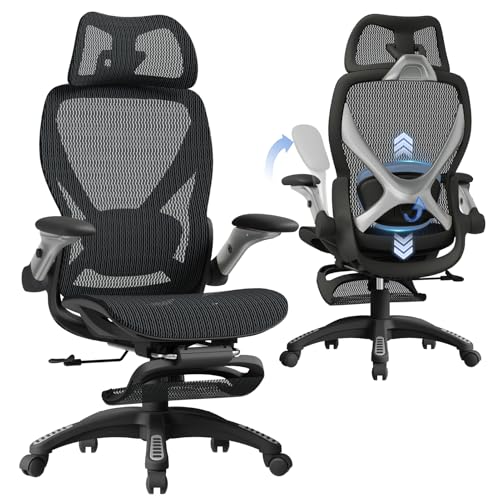 ELABEST X100 Ergonomic Mesh Office Chair
|
8.3/10 | Buy | |
 GABRYLLY Ergonomic Office Chair
|
8.0/10 | Buy |
Common Questions About Best Office Chairs For Leaning Forward
How does a forward-tilt angle reduce lower back strain during desk tasks?
Yes, tilting the seat pan slightly forward opens the hip angle and relieves lumbar pressure. A forward angle encourages an upright, lordotic spinal curve rather than a slouched posture, shifting upper body weight onto the thighs and feet. In the Best Office Chairs For Leaning Forward selections for 2026, chairs with responsive backrests or independent tilt features provide sustained contact with the lower spine even when you lean over keyboards or drafting tables.
Is a breathable mesh seat cushion better than high-density foam for leaning forward?
Breathable mesh offers superior airflow, but high-density foam provides firmer edge support when perching forward. Mesh seats distribute body weight evenly across a suspended frame, which eliminates pressure hotspots and keeps body heat down during long summer shifts. However, users who frequently sit right on the front lip often appreciate models with padded waterfall edges because rigid mesh frame borders can occasionally press against hamstring tendons.
Can 3D or flip-up armrests prevent shoulder tension when working close to a desk?
Yes, versatile armrests allow your chair to slide closer to your work surface without obstruction. Multi-directional 3D armrests adjust in height, depth, and angle to support forearms directly under keyboards, keeping shoulder joints relaxed. Flip-up arms, such as those found on the GABRYLLY and ELABEST models, fold out of the way completely so you can pull the chair flush beneath standard 29-inch desk tops.
What seat pan depth should petite or taller users look for when leaning in?
A seat pan depth between 18 and 20 inches accommodates most body heights without cutting off popliteal blood flow. Shorter users need shallower depths around 18.5 inches so the backrest continues supporting their lumbar spine when working upright. If a seat is too deep, you are forced away from the lumbar pad, leading to an unsupported forward slouch that stresses cervical and lumbar vertebrae.
Why is a heavy-duty Class-4 pneumatic gas lift important for active task chairs?
A Class-4 pneumatic cylinder guarantees smooth height adjustment and rock-solid stability under dynamic load shifts. Leaning forward shifts your center of gravity toward the front edge of the 5-star base, placing asymmetric torque on the central column. Sturdy bases and BIFMA-certified gas lifts, like those on models rated up to 300 lbs, prevent sinking, wobbling, or premature cylinder failure during repetitive movement.
Do soft polyurethane caster wheels help prevent slipping during forward movement?
Yes, soft polyurethane casters provide necessary floor grip and protect delicate hardwood surfaces from scuffs. Hard plastic wheels can skid abruptly on smooth floors when you shift your weight forward to reach monitors or writing pads. Premium mute wheels maintain controlled rolling resistance, keeping your chair securely anchored during focused typing tasks.
About the author

bsr_admin writes reviews and buying guides for HOF Review.