
How to Calibrate Standing Desk: Practical Reset Guide for 2026
Learn %how to calibrate standing desk% frames, reset control box memory, and balance pneumatic risers for smooth daily height adjustments in November 2026.
 By Arriana Vasquez
Updated November 6, 2026

Unresponsive digital controllers, uneven leg extension, and unexpected error codes can abruptly interrupt a productive workday. When an electric frame encounters resistance or loses synchronization between motorized lifting columns, learning %how to calibrate standing desk% components is the fastest way to restore smooth vertical travel. Whether dealing with a dual-motor workstation showing a reset prompt or fine-tuning a manual gas-spring riser, proper calibration ensures the lifting mechanism tracks accurately from seated to standing height. A stable, properly aligned workstation also protects internal gears from premature wear while establishing a dependable ergonomic baseline for daily task work.
Electronic control boxes rely on continuous positional feedback from internal Hall sensors to maintain an even plane across telescoping steel columns. If a minor power surge occurs or an uneven load shifts across the desktop, the controller may lock into a protective state until a manual recalibration cycle runs. Familiarizing yourself with these baseline operational procedures is just as critical as choosing an ergonomic sit-stand desk setup that fits your specific workflow. With a systematic approach to resetting electronic memory, leveling base glides, and balancing pneumatic assist springs, you can maintain reliable height adjustments without unnecessary downtime.
| Award | Product | HOF Score About HOF ScoreThe HOF Score is our own rating from 0 to 10, based on performance, design and build, ease of use, and value. It reflects independent research and is never influenced by manufacturers, retailers, or affiliate commissions. Learn more › | |
|---|---|---|---|
| Best Overall |
 VIVO Black 36 in Standing Desk Converter |
9.1/10 | Buy |
| Best Premium |
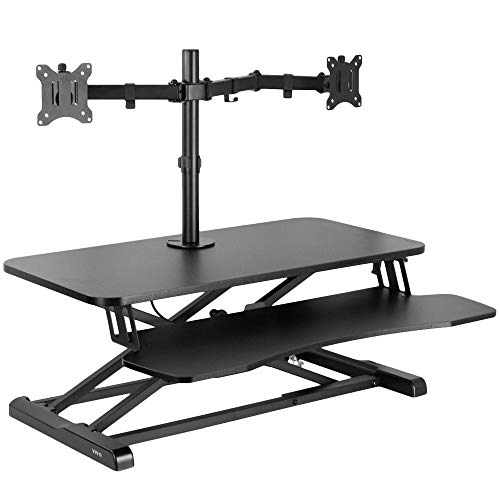 VIVO Black 32 in Standing Desk Converter |
8.6/10 | Buy |
| Best Budget |
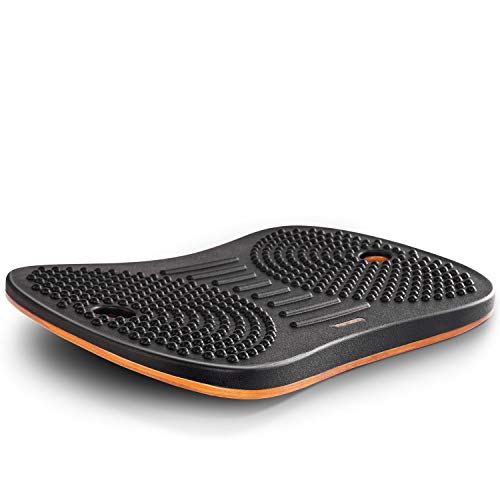 FEZIBO Standing Desk Mat Balance Board |
8.4/10 | Buy |
| Best Value |
 VIVO Black 32 in Standing Desk Converter |
8.1/10 | Buy |
 Decoholic 24 inch Height Adjustable Standing Desk |
8.0/10 | Buy | |
 VIVO Black 25 in Standing Desk Converter |
8.0/10 | Buy | |
 VIVO Black 32 inch Standing Desk Riser, DESK-V000S |
7.8/10 | Buy |
Comprehensive Calibration Guide for Motorized Frames and Desktop Risers
Calibrating an adjustable workstation involves synchronizing internal movement sensors, establishing accurate digital height boundaries, and ensuring mechanical balance across the entire lifting assembly. Whether an electric desk displays an unexpected error message or a gas-spring riser feels overly resistant during elevation, following an orderly calibration procedure restores intended operation. Taking the time to perform these adjustments properly protects internal drive gears, prevents structural strain, and delivers dependable ergonomic support for daily work.
Understanding What Calibration Means for Sit-Stand Workstations
Adjustable workstations rely on precise mechanical balance and coordinated electronic communication to move smoothly between sitting and standing elevations. In electric motorized desks, calibration is primarily an electronic procedure where the central control box recalculates the absolute lower limit of the lifting columns. Internal optical or magnetic Hall effect sensors track the revolutions of each motor spindle, counting micro-pulses to verify that both legs remain level. If the control box detects a discrepancy between these pulse counts, it enters an operational lockout to prevent frame twisting.
Manual and pneumatic units require a distinctly mechanical form of calibration. Desktop converters and gas-spring risers utilize pressurized nitrogen cylinders or counterbalance coil springs rather than digital microprocessors. Calibrating these systems involves balancing the payload of monitors, laptops, and accessories against the upward lift assist force. When the payload and counterbalance spring tension match, users can shift between working postures with light manual guidance instead of fighting excessive resistance.
Routine disruptions such as brief power outages, accidental cord disconnects, or minor desktop collisions can trigger the need for recalibration. When power cuts out mid-transit, the control module loses its stored positional coordinate and defaults to a safe reset mode. Performing a standard calibration cycle re-indexes these coordinates without harming internal hardware. Taking a few moments to understand whether your workstation requires electronic indexing or mechanical counterbalance tuning makes ongoing troubleshooting straightforward.
The Standard Electric Desk Reset Sequence
The universal reset procedure serves as the fundamental calibration method for nearly all single and dual-motor electric standing desks. To begin, clear all obstacles from underneath and around the desk perimeter, ensuring that dangling cables or under-desk storage units cannot obstruct downward travel. Press and hold the down arrow button on your digital keypad continuously until the frame lowers to its absolute minimum physical height. Once the frame stops moving, release the button momentarily to prepare for the final sensor reset.
Press and hold the down arrow a second time for approximately five to ten seconds. Most digital handsets will respond by flashing a notification such as rES, rST, or ASR on the digital display. While continuing to hold the down button, the desk will execute a brief mechanical calibration routine by lowering a fraction of an inch further, touching its bottom limit, and rebounding upward slightly. This small rebound indicates that the control box has officially recognized its bottom zero-point benchmark.
Release the keypad button once the digital display switches from the reset abbreviation to a numeric height reading. The motorized frame is now fully recalibrated and ready to resume normal upward and downward travel. Test the system immediately by elevating the desk a few inches and lowering it again to confirm smooth, responsive operation. If the desk fails to move or stops unexpectedly, power cycle the control box by unplugging the main power cord for thirty seconds before repeating the downward hold sequence.
Diagnosing and Clearing Common Keypad Error Codes
Digital handset displays provide vital diagnostic feedback when internal electronics detect an operational fault. Common error codes such as E01 or E02 frequently point to communication loss between the central control box and an individual lifting column. When these codes appear, inspect the quick-release motor cables linking each leg to the control housing to ensure pins are seated securely. A loose connector pin can interrupt low-voltage signaling, prompting the microprocessor to shut down transit to prevent asymmetrical lifting.
Thermal overload codes represent another frequent source of keypad lockouts during setup or repeated testing cycles. Electric desk actuators operate under a rated duty cycle, typically designed for two minutes of continuous transit followed by eighteen minutes of resting cooldown. Running multiple calibration cycles in rapid succession can trigger internal thermal cutoff sensors designed to protect motor windings from heat damage. If the handset displays an overload fault, leave the desk connected to power without pressing buttons for twenty minutes so internal components can cool down safely.
Some controller models incorporate a child lock or inadvertent touch protection feature indicated by a LOC display. When this lock engages, pressing standard directional buttons will yield no movement, leading some users to assume the motor has failed completely. Unlocking the handset generally requires pressing and holding the lock icon or holding the manual up and down buttons simultaneously for five seconds until a numeric readout returns. Verifying that the keypad is not simply locked saves considerable time before initiating deeper electronic diagnostics.
Mechanical Leveling and Column Alignment Checks
Electronic calibration cannot resolve physical instability caused by uneven contact with the floor. Every standing desk frame features threaded leveling glides positioned on the underside of the steel feet to compensate for floor imperfections. Place a bubble level across the central span of your desktop, checking both side-to-side and front-to-back orientations. Rotate individual foot glides clockwise to lower or counterclockwise to raise specific corners until the bubble centers cleanly across all axes.
During initial setup, improper assembly can introduce mechanical binding that mimics an electronic synchronization error. Reviewing fundamental guidelines for standing desk assembly and mechanical alignment helps verify that telescoping leg columns sit completely perpendicular to the floor. In single-motor desks equipped with an exposed hex drive rod, loosen the rod coupling and verify that both legs rest at identical physical heights before tightening set screws. A height difference of even a quarter inch between columns can cause internal gears to bind during travel.
Uneven weight distribution across the desktop surface also places disproportionate stress on individual motorized columns. Heavy multi-monitor mounting poles, desktop audio gear, or clamp-mounted computer towers positioned far off-center increase torsional friction inside the column glide pads. Distribute heavy equipment evenly over the primary lifting beam whenever possible to balance dynamic lifting loads. Centering the payload minimizes structural resistance, allowing synchronized dual motors to travel smoothly without triggering protective current spikes.
Calibrating Pneumatic and Gas-Spring Standing Desk Converters
Pneumatic standing desk risers operate on mechanical counterbalance principles rather than digital programming. Units such as the VIVO desk converters utilize gas-spring lift cylinders designed to counteract the combined weight of computer hardware and the upper desktop tier. When unpacking a new converter or altering your monitor hardware, the lift assist mechanism may feel either too stiff to lower or too weak to elevate easily. Proper calibration requires tuning the counterbalance tension to achieve neutral buoyancy across the working stroke.
Locate the tension adjustment bolt, typically found along the rear gas-spring bracket or near the central scissor pivot mechanism. Place your standard working equipment, including dual monitors, keyboard, and mouse, onto the designated platforms before making adjustments. Turn the adjustment bolt toward the plus symbol using the included hex wrench if the converter sinks under equipment weight or resists upward elevation. Conversely, turn the bolt toward the minus symbol if the platform springs upward aggressively when releasing the hand lock lever.
Compact manual risers, such as scissor-frame models with predetermined gear stops, rely on mechanical safety catches rather than continuous gas struts. On these converters, calibration involves inspecting the dual-sided locking pins to confirm simultaneous engagement across both frame tracks. Squeeze the release handle fully before raising or lowering the platform, and listen for positive clicks in the locking notches at your selected height. Ensuring both frame sides lock synchronously prevents platform tilt and keeps your keyboard level during vigorous typing sessions.
Anti-Collision Sensitivity and Travel Limit Adjustments
Modern motorized workstations incorporate sensitive anti-collision detection systems to protect furniture, cables, and users from accidental impact. These safety systems function by detecting rapid electronic current spikes in the motor circuit or by measuring directional deflection through internal gyroscope sensors. If the desktop encounters an obstacle such as a windowsill or an under-desk filing cabinet, the controller immediately stops transit and rebounds upward by an inch. However, an overly sensitive threshold can cause false reversals under normal typing vibration or heavy hardware loads.
Many digital controllers allow users to customize anti-collision sensitivity through advanced menu options. Accessing these settings typically involves holding the up and down arrow buttons simultaneously until a parameter code appears on the display. Users can toggle through sensitivity levels, usually rated from low to high, or disable the gyro sensor if room vibrations cause false stops. Setting the sensitivity to a moderate level provides dependable collision defense while maintaining uninterrupted vertical travel under full working payloads.
Setting container stop limits is another vital calibration step for protecting surrounding office equipment. If you store a mobile file pedestal beneath your desk, calibrate a minimum height boundary so the desk cannot accidentally lower into the cabinet. Move the desk to your desired clearance height, hold the designated memory and directional button combination according to the control manual, and wait for an audible confirmation beep. The control unit will permanently respect this lower threshold until you choose to clear the setting through a factory reset.
Programming Memory Presets for Ergonomic Precision
Once the base calibration and safety boundaries are established, programming digital memory buttons tailors the workstation to your body dimensions. Achieving proper seated ergonomics requires adjusting the desktop surface so forearms rest parallel to the floor with elbows forming an open ninety to one hundred degree angle. Shoulders should remain relaxed without shrugging upward or hunching forward to reach the keyboard. Elevate your chair to align with your hips and knees, then adjust the desk frame downward until your wrists rest completely flat across the input deck.
Standing height calibration requires similar attention to neutral joint alignment while accounting for floor accessories. If you stand on an active platform such as a balance board or a dense anti-fatigue mat, remember that the board adds physical height beneath your feet. Stand naturally on your chosen surface with relaxed posture, bend elbows to a neutral ninety-degree angle, and raise the desk until the keyboard platform meets your fingertips. Exploring performance features on modern motorized sit-stand workstations makes saving these exact working positions seamless across multi-user environments.
To program your preferred positions, press the memory save button on your digital handset, followed by your desired numbered preset key. Most controllers flash a confirmation code or emit a gentle tone to acknowledge that the height coordinate has been stored in memory. Test the preset with one-touch activation to verify that the desk elevates and decelerates smoothly at the programmed mark. Repeating this process for both sitting and standing heights establishes a frictionless daily transition habit that supports long-term musculoskeletal wellness.
Cable Routing Slack and Post-Calibration Verification
Overlooking dynamic cable slack is a leading cause of calibration failures and premature mechanical lockouts. Power leads, monitor display cords, and peripheral connections must have sufficient length to travel the full vertical stroke without tension. If a display cable pulls taut near maximum elevation, the sudden mechanical resistance can trigger anti-collision safety cutoffs or unplug equipment violently. Bundle power leads inside an under-desk cable raceway and route a single heavy-duty surge protector cord downward using an articulated cable spine.
Conclude the calibration process by running an unencumbered cycle across the entire height adjustment travel range. Elevate the desk from its lowest reset position to maximum extension while closely watching cable movement and listening to motor sounds. Both lifting columns should operate with uniform acoustic pitch, free from high-pitched whining, grinding, or erratic stuttering. Once the desk reaches full height, check side-to-side stability and confirm that the digital height display accurately reflects the physical distance from floor to desktop.
A properly calibrated standing desk delivers quiet, dependable performance while protecting internal mechanical actuators and control electronics from unnecessary wear. Performing a periodic lower-limit reset every few months or whenever shifting heavy desktop equipment ensures that synchronization sensors remain perfectly aligned. With a level base, balanced lift assist, and programmed memory presets, your workstation remains fully optimized to support an active, comfortable, and productive work routine throughout the day.
About the author
Arriana Vasquez is a product writer specializing in work-from-home equipment and practical workspace solutions. Her reporting covers office chairs, standing desks, and technology designed for modern home offices. Through product research, testing, and detailed buying guides, she explores the features that influence everyday usability, comfort, and functionality. Her work helps readers compare workspace equipment and identify products suited to different working environments.