
What Are the Dimensions of a Standard Picnic Table: Practical Sizing Guide for 2026
What are the dimensions of a standard picnic table? Learn key patio sizing, bench heights, and yard clearances in our October 2026 layout guide.
 By Arriana Vasquez
Updated September 30, 2026

Planning an outdoor dining area requires balancing open walking space with enough tabletop surface for family cookouts and summer entertaining. When shopping for patio furniture, asking what are the dimensions of a standard picnic table helps you map out your lawn or deck before delivery day arrives. A traditional six-foot table generally demands a substantial footprint once you factor in attached benches and the open space people need to swing their legs into position. If you are coordinating an outdoor area that also serves as a casual work zone, comparing this surface to a small standing desk footprint helps keep your outdoor walkways comfortable and open.
Outdoor tables experience intense seasonal sun, wind, and heavy rain, which makes material resilience and frame stability just as critical as raw length. Modern designs often swap out heavy, maintenance-heavy lumber for weather-resistant iron frames and molded plastic surfaces that hold up without cracking or splintering. Verifying overall clearance, bench-to-table height ratios, and static weight capacities ensures your seating area remains structurally sound and comfortable for every dinner guest.
| Award | Product | HOF Score About HOF ScoreThe HOF Score is our own rating from 0 to 10, based on performance, design and build, ease of use, and value. It reflects independent research and is never influenced by manufacturers, retailers, or affiliate commissions. Learn more › | |
|---|---|---|---|
| Best Overall |
 DWVO 4.5ft Picnic Table, Outdoor Folding Picnic |
8.3/10 | Buy |
Standard Picnic Table Dimensions and Sizing Breakdown
A standard adult rectangular picnic table measures 72 inches (6 feet) in length, with an overall width across both attached benches of 57 to 60 inches and a tabletop height of 28 to 30 inches. The tabletop surface itself measures between 28 and 30 inches wide, providing ample room for dinner plates, serving platters, and drinkware placed across from one another. Attached benches typically feature a depth of 9 to 12 inches and sit between 17 and 18 inches above the lawn or patio surface. Knowing these core measurements gives you an immediate spatial baseline before evaluating specific model variations for your deck or garden.
Tabletop Dimensions versus Overall Furniture Footprint
Many homeowners make the mistake of measuring only the tabletop when calculating patio space. While the usable eating surface of a standard 6-foot picnic table spans 72 inches by 28 to 30 inches, the actual footprint of the entire structure is significantly wider due to the outward angle of the supporting legs and the attached benches. The total width from the outer edge of one bench to the outer edge of the opposing bench typically spans 57 to 60 inches. Overlooking this total width often leads to severe crowding against deck railings, exterior walls, or garden planter boxes.
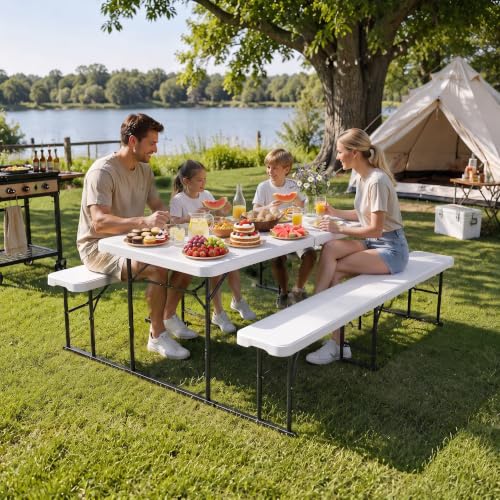
While the 6-foot length remains the residential standard across North America, commercial parks and public campgrounds frequently install 8-foot (96-inch) tables to accommodate larger gatherings. Conversely, compact residential patios and smaller family decks often benefit from 4.5-foot (54-inch) or 5-foot (60-inch) models that fit tighter outdoor footprints without dominating the entire lawn. For instance, compact models like the DWVO 4.5ft Picnic Table, Outdoor Folding Picnic measure 54 inches in length, delivering a dedicated outdoor dining platform tailored for four adults or several young children. Choosing between these length categories comes down to measuring your usable outdoor space and determining how many guests you routinely host.
Height Ratios, Bench Proportions, and Knee Clearance
Proper vertical proportions ensure diners do not feel uncomfortably cramped or unnaturally elevated while eating outdoors. Standard picnic table tops sit 28 to 30 inches above the ground, aligning precisely with indoor dining table heights for natural posture. The seating surface rests 17 to 18 inches high, which creates an ideal 10 to 12-inch vertical gap between the top of the bench and the underside of the table surface. This clearance provides sufficient room for adult thighs without trapping knees against supporting crossbars or tabletop aprons.
Diagonal braces, cross-stretchers, and under-table structural aprons heavily influence the actual usable legroom underneath. Low-hanging wooden struts or thick support ironwork can reduce effective knee clearance to less than 8 inches, causing taller diners to strike their legs repeatedly. Well-designed metal or synthetic frames position their support geometry closer to the center axis to maximize open thigh clearance. Checking the vertical clearance beneath the table surface prevents uncomfortable seating during long summer afternoon barbecues.
Seating Capacity and the 24-Inch Spacing Standard
Seating comfort at any outdoor gathering depends on providing approximately 24 inches of horizontal edge length per seated diner. A traditional 72-inch picnic table provides 36 inches per side when seating two adults per bench, creating exceptionally generous elbow room for full meals. When seating three adults per bench, the 72-inch edge divides into exactly 24 inches per person, which represents the standard minimum for simultaneous dining without knocking elbows. Squeezing four adults onto a 6-foot bench drops individual space to just 18 inches, which quickly becomes crowded once place settings, cups, and cutlery are laid out.
An 8-foot (96-inch) picnic table accommodates four adults comfortably along each bench, supporting eight adult diners in total without shoulder bumping. In comparison, a 4.5-foot (54-inch) table offers 27 inches of personal width when shared between two adults on each bench, providing a relaxed dining experience for four people. If your outdoor layout shares floor space with personal hobby setups or a compact desk under 47 inches, this 4.5-foot size preserves essential walkway boundaries while still hosting family meals. Traditional picnic tables also rarely support seating at the short ends because diagonal frame legs eliminate legroom for freestanding chairs.
Perimeter Clearance Rules and Outdoor Space Planning
Sizing outdoor furniture requires much more than simply matching the physical table footprint to your patio boundary. Residential design guidelines recommend maintaining a minimum 36-inch perimeter walkway around all sides of an outdoor dining set, expanding to 48 inches near high-traffic paths like sliding glass doors or barbecue cooking zones. For a standard 6-foot table with a 60-inch total width, the physical furniture footprint covers 72 inches by 60 inches (6 feet by 5 feet). Once you add the necessary 36-inch perimeter on all four sides, the actual clear patio area required expands to 144 inches by 132 inches (12 feet by 11 feet).
Unlike standard dining chairs that pull straight back away from the table edge, attached picnic benches require diners to swing their legs up and over the frame. This physical movement requires clear floor space adjacent to the table ends and along the sides so guests do not scrape against deck railings, flower pots, or brick walls. Restricting side clearance forces diners to uncomfortably shimmy down the entire length of the bench to reach an open middle seat. Preserving open walkways allows smooth movement around the patio without disturbing anyone already seated at the meal.
Frame Geometry: A-Frame vs. Walk-Through vs. Detachable Benches
Traditional picnic tables rely on an A-frame silhouette where heavy diagonal legs connect the tabletop directly to the bench supports. This triangular geometry creates enormous structural rigidity and resists horizontal racking forces even on uneven park turf. However, the continuous diagonal brace requires every user to lift their leg high over the frame to enter the seating area. For elderly relatives, young children, or individuals with limited mobility, navigating an A-frame leg brace can pose a significant tripping hazard.
Walk-through frames eliminate the continuous diagonal support at the bench ends, utilizing inverted T-shaped legs or sled-style bases instead. Modern convertible designs take accessibility a step further by separating the benches from the table structure entirely. The DWVO 4.5ft picnic table highlights this flexibility by allowing the central table to detach easily and function as an independent workstation, buffet table, or craft desk. Detached benches also allow users to adjust their personal distance from the tabletop edge, accommodating various body sizes better than rigid lumber benches.
Alternative Picnic Table Shapes and Footprint Demands
Round picnic tables offer an inviting, communal atmosphere that allows all seated diners to converse easily without craning their necks. A standard round tabletop measures 48 to 60 inches in diameter, surrounded by four curved benches that expand the total diameter to roughly 72 to 84 inches. Because the footprint expands equally in all directions, round units require a square patio space measuring at least 11 feet by 11 feet to preserve open perimeter walkways. Round designs work exceptionally well in square yard clearings or open lawns where traffic naturally circulates around the furniture.
Hexagonal and octagonal picnic tables feature angled benches arranged around six or eight tabletop facets, creating dedicated seating stations for larger groups. A standard octagonal table typically spans 84 to 96 inches across the complete bench perimeter, requiring a substantial 12-foot to 13-foot clear area for comfortable outdoor use. While these multi-sided layouts excel at board games and shared family meals, their sprawling base frames make them impractical for narrow decks or elongated balconies. Rectangular silhouettes remain the most space-efficient choice for long, narrow patios.
Material Construction, Weather Resistance, and Load Limits
Traditional wooden picnic tables built from cedar, redwood, or pressure-treated yellow pine deliver a classic rustic appearance but demand consistent seasonal upkeep. Wood naturally absorbs atmospheric humidity and direct rainwater, leading to surface checking, warping, and eventual splintering if left untreated. Solid timber tables also carry immense weight, often exceeding 120 to 180 pounds, which makes moving them across the lawn for mowing or winter storage a grueling two-person task. Periodic pressure washing, sanding, and sealing with outdoor polyurethane or exterior deck stain are mandatory to maintain a smooth, safe seating surface.
High-Density Polyethylene (HDPE) tabletops paired with powder-coated iron frames provide a low-maintenance alternative engineered to withstand harsh exterior climates. As featured on the DWVO outdoor table, HDPE surfaces resist fading from ultraviolet sunlight, do not crack in sub-freezing temperatures, and repel grease and barbecue sauces without staining. The DWVO table supports 309 pounds across the desktop and 551 pounds on the seating area, delivering dependable stability when multiple adults share the bench. Wiping down the molded plastic surface with a damp microfiber cloth removes sticky outdoor spills in seconds without damaging the finish.
Portability, Folding Mechanics, and Off-Season Storage
Fold-in-half picnic tables provide significant storage advantages over bulky stationary lumber models, particularly for homes with limited yard space. Modern portable tables incorporate heavy-duty center locking mechanisms, gravity ring slide locks, and reinforced hinge brackets that secure the frame in its fully open position. Engaging these primary frame locks prevents accidental table folding while guests are seated or leaning against the surface. Non-slip foot pads on the frame base help maintain a level grip whether the table rests on smooth concrete pavers, wooden deck boards, or damp lawn grass.
Storing outdoor furniture inside a garage, shed, or basement during harsh winter months dramatically extends the overall lifespan of metal joints and plastic surfaces. A 4.5-foot folding table collapses down into a compact suitcase profile with built-in carry handles, allowing one person to lift, pack, and transport the unit without assistance. Flat-folding profiles slide effortlessly behind storage shelves or hang securely from heavy-duty wall hooks, keeping floor areas clear. When warm weather returns, setting up the dining area requires just a few minutes without searching for tools or loose hardware.
Measuring Your Patio Before Ordering: A Practical Layout Checklist
Before settling on a specific picnic table size, mapping out the dimensions directly on your deck or patio using blue painter’s tape prevents costly layout surprises. Outline both the physical tabletop boundaries and the bench footprint to visualize how much space the furniture will occupy during daily use. Walk completely around the taped perimeter while holding a serving tray to confirm you have at least 36 inches of unobstructed walkway. Open nearby sliding screen doors, check grill clearance, and verify that bench seating will not block access to hose bibs or garden gates.
Selecting the right outdoor table comes down to harmonizing physical room dimensions with your real-world entertaining habits. A standard 6-foot table remains the premier choice for large backyards hosting six to eight guests on a routine basis. For modest suburban decks, urban patios, or flexible camping setups, a 4.5-foot folding design provides an ideal balance of generous elbow room, weather-resistant durability, and effortless storage. Taking accurate spatial measurements today guarantees an inviting, comfortable outdoor dining space that your family will enjoy across every season.
About the author
Arriana Vasquez is a product writer specializing in work-from-home equipment and practical workspace solutions. Her reporting covers office chairs, standing desks, and technology designed for modern home offices. Through product research, testing, and detailed buying guides, she explores the features that influence everyday usability, comfort, and functionality. Her work helps readers compare workspace equipment and identify products suited to different working environments.