
Is It Best Rated Ergonomic Office Chairs? What You Need to Know in 2026
Evaluating if is it best rated ergonomic office chairs matches your posture needs. Explore key lumbar and mechanical benchmarks for November 2026.
 By Camryn Rabideau
Updated October 17, 2026

Desk workers often struggle with afternoon lower back fatigue, shoulder tightness, and sluggish circulation after long hours seated at a workstation. Determining whether a model qualifies when asking is it best rated ergonomic office chairs requires looking far beyond marketing labels and surface aesthetics. True seated comfort depends on biomechanical alignment, such as maintaining proper lumbar curvature and preventing sciatic nerve compression beneath the thighs. If you want a dependable seat, inspecting adjustability features like a dedicated lumbar support office chair provides a baseline for evaluating posture performance.
Standard task seating frequently fails because generic dimensions cannot match individual human proportions. A chair must accommodate specific anthropometric requirements, including pneumatic cylinder height travel and sufficient clearance behind the popliteal crease. Without adjustable armrests and responsive recline tension, daily computer tasks place excessive stress on the cervical and lumbar spine. Examining structural integrity, mechanism calibration, and material durability ensures you choose seating that actively sustains musculoskeletal health throughout extended workdays.
| Award | Product | HOF Score About HOF ScoreThe HOF Score is our own rating from 0 to 10, based on performance, design and build, ease of use, and value. It reflects independent research and is never influenced by manufacturers, retailers, or affiliate commissions. Learn more › | |
|---|---|---|---|
| Best Overall |
 Marsail Ergonomic Office Chair |
9.1/10 | Buy |
| Best Budget |
 COMHOMA Big and Tall Office Chair Heavy Duty Wide |
8.9/10 | Buy |
| Best Value |
 CLOUVOU Ergonomic Office Chair Comfy [#1 in reviews] |
8.8/10 | Buy |
| Best Premium |
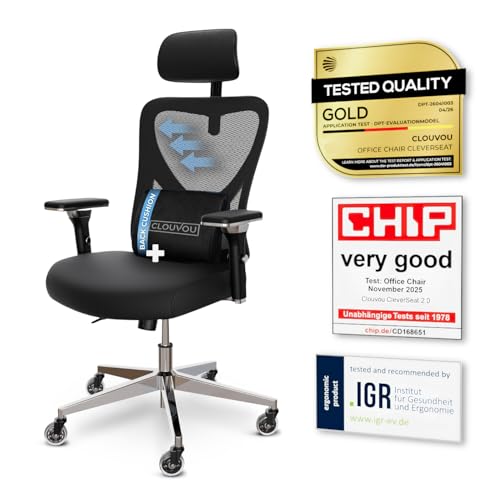 CLOUVOU Ergonomic Office Chair Comfy [#1 in reviews] |
8.8/10 | Buy |
 Ergonomic Office Chair for Long Hours |
8.3/10 | Buy | |
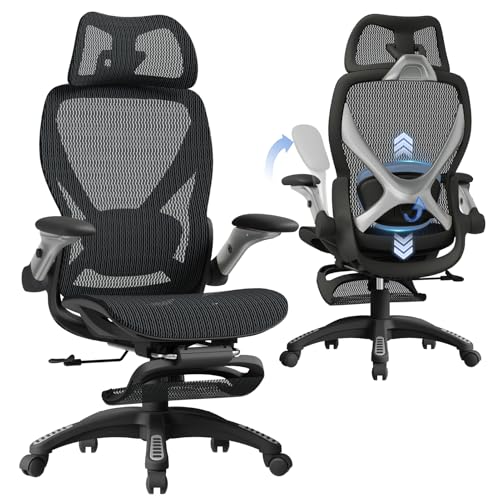 ELABEST X100 Ergonomic Mesh Office Chair |
8.3/10 | Buy | |
 GABRYLLY Ergonomic Office Chair |
8.0/10 | Buy |
Evaluating Ergonomic Office Chair Ratings, Mechanics, and Workstation Fit
Determining whether a model deserves genuine praise when asking is it best rated ergonomic office chairs comes down to measurable engineering rather than marketing hype. A high rating is only meaningful if the chair provides targeted musculoskeletal support, durable structural components, and precise anthropometric adjustability. True ergonomic performance requires that a chair adapts directly to your body mechanics instead of forcing you to conform to a rigid frame. By examining spinal alignment systems, seat pan mechanics, and material durability, desk workers can separate well-engineered seating from poorly constructed alternatives.
Understanding What Earns a Chair Top Ergonomic Ratings
Ergonomic seating ratings reflect how effectively a chair maintains neutral spinal alignment during extended desk shifts. Everyday computer use places substantial static loads on the lumbar discs and upper back muscles. When an office chair earns positive evaluations, it usually offers multi-point adjustment systems that target the head, thoracic spine, lumbar curve, and arms. Models like the Marsail Ergonomic Office Chair and the GABRYLLY Ergonomic Office Chair focus on multi-point support structures to distribute body weight evenly across the entire seating surface.
Another critical factor in chair ratings is structural longevity under continuous daily use. Lower-tier task chairs often suffer from premature foam flattening, cracking plastic joints, or slipping pneumatic cylinders within months of assembly. Highly rated options utilize reinforced star bases, robust tilt mechanisms, and resilient upholstery capable of sustaining prolonged pressure. Evaluating certified weight thresholds, such as the 330-pound limit on Marsail or the 350-pound rating on the Ergonomic Office Chair for Long Hours, provides concrete insight into frame durability.
Biomechanical Alignment and the L1 to L5 Lumbar Curve
The lower back bears substantial physical stress when an individual remains seated for multiple hours. Without adequate support, the natural inward curve of the lumbar spine, encompassing the L1 through L5 vertebrae, tends to flatten out into a slumped posture. This postural collapse increases pressure on intervertebral discs and strains surrounding connective tissue. Highly rated designs counter this slouching effect by incorporating independent lumbar adjustment mechanisms that can shift vertically and horizontally.
Adjustable depth and height mechanisms allow users to position the lumbar curve directly against their lower back. For example, the Marsail chair provides lumbar movement that shifts over two inches vertically and more than an inch in depth, ensuring targeted contact. More specialized engineering, such as the dynamic 3D synchro-tilt lumbar system found on the ELABEST X100 Ergonomic Mesh Office Chair, incorporates spring-loaded auto-tracking that follows spinal flexion. Meanwhile, designs like the COMHOMA Big and Tall Office Chair utilize pocket springs inside the backrest to deliver localized responsive firmness across the lower spine.
Seat Pan Geometry and Popliteal Pressure Relief
Seat pan dimensions and edge profiling directly influence blood circulation throughout the lower extremities. When a seat pan is excessively deep, the front edge presses against the delicate blood vessels and tendons located in the popliteal crease behind the knees. Over several hours, this contact can cause numbness, tingling, and aggravated sciatic nerve irritation. Ergonomic best practices call for a gap of two to three fingers between the front of the seat cushion and the back of your knees.
A waterfall front edge slopes gently downward to eliminate sharp contact angles under the thighs. Generous seat dimensions, such as the twenty-inch width and depth featured on the GABRYLLY chair, accommodate various body profiles while preventing femoral vein constriction. In big and tall seating like the COMHOMA model, an expansive seat platform provides additional width, allowing users to shift hip positions comfortably. Choosing a chair with proportional seat depth ensures stable pelvic placement against the rear backrest.
Recline Mechanics and Tilt Tension Dynamics
Static seated postures accelerate spinal fatigue by limiting blood flow to vertebral tissues. Dynamic recline mechanisms encourage movement throughout the day, allowing the user to transition from focused tasking to relaxed contemplation. Standard recline angles typically span from 90 to 120 degrees, as seen in the Marsail and GABRYLLY models, which suits conventional typing and drafting work. Chairs engineered for greater relaxation, including the CLOUVOU Ergonomic Office Chair Comfy [#1 in Tests] with its 135-degree tilt or the COMHOMA with a 145-degree angle, support deeper recline postures.
Effective tilt mechanisms must include smooth tension controls and dependable locking positions. A tilt tension knob alters the resistance required to lean back, preventing sudden drops for heavier individuals or excessive stiffness for lighter frames. Advanced multi-stage recline systems, like the three-stage lock on the ELABEST X100, allow users to secure their preferred backrest angle securely. Pairing dynamic recline with extendable footrests, present on the COMHOMA and ELABEST models, elevates the legs and relieves pelvic pressure during breaks.
Armrest Articulation and Shoulder Impingement Prevention
Armrests play a pivotal role in preventing shoulder elevation, trapezius tightness, and wrist strain. When arm pads sit too high, they push the shoulders upward into an unnatural shrug that triggers neck discomfort. Conversely, low armrests force users to lean to one side or drop their forearms, placing torque on the lower back. Neutral ergonomic posture requires that elbows rest comfortably at approximately ninety to one hundred degrees, aligning forearms parallel with the work surface.
Modern ergonomic chairs offer diverse armrest configurations to suit different spaces and typing habits. Flip-up arms, such as those on the QLTPLUS Ergonomic Office Chair for Long Hours and the GABRYLLY chair, fold back forty-five degrees to slide smoothly under shallow work desks. For users requiring multi-axis customization, 3D armrests move forward, backward, and pivot inward, while the 5D armrests on the ELABEST X100 adjust across height, width, depth, and rotation. These articulations keep wrists in a neutral alignment while typing or navigating a mouse.
Cushion Core Construction: Molded Foam, Pocket Springs, and Breathable Mesh
Seat cushion materials dictate both pressure distribution and temperature regulation during long desk shifts. High-density molded foam cushions, such as the four-inch molded core on the QLTPLUS chair and the 3.14-inch thick seat on the Marsail, distribute body weight across the sit bones without bottoming out over time. Molded foam retains its rebound elasticity significantly better than low-density cut foam, preventing the tailbone from impacting the rigid seat plate beneath.
Alternative cushion constructions offer unique comfort characteristics depending on user priorities. The COMHOMA executive chair combines pocket spring units with padded upholstery, creating a sofa-like seating sensation that absorbs shifting body weight. On the other hand, all-mesh designs like the GABRYLLY chair utilize high-tension elastomeric polymer webbing for both the seat and backrest. Full mesh construction maximizes convective airflow to keep desk workers cool in warmer office environments, though users must ensure the perimeter frame does not pinch the thighs.
Structural Integrity, Cylinder Ratings, and Star Base Stability
The mechanical foundation of any desk chair relies on the central pneumatic cylinder and the five-star base. Pneumatic gas lifts are classified by wall thickness and nitrogen pressure tolerance, with Class 3 and heavy-duty Class 4 columns representing commercial-grade durability. High-end builds like the ELABEST X100 explicitly utilize Grade-4 gas columns paired with reinforced nylon bases to safely support up to 300 pounds. Choosing robust cylinder engineering prevents the frustrating phenomenon of a chair slowly sinking under load throughout the workday.
Star base composition and caster design dictate rolling stability and floor protection. Reinforced metal bases, featured on the QLTPLUS 350-pound model, provide rigid foundational strength that resists torsional twisting. Caster wheel selection also matters for workspace maintenance, as quiet-rolling wheels, like those highlighted on the CLOUVOU chair, reduce rolling friction on hard surfaces. Utilizing smooth-rolling polyurethane casters prevents floor scuffing and ensures quiet, effortless mobility across your workstation.
Integrating Your Seating into a Balanced Workstation
Even a high-performing ergonomic office chair cannot deliver optimal posture support if your overall workstation is misaligned. Your desk surface, monitor height, and keyboard placement must work in unison with your seated elevation. When calibrating your workspace, review our home office desk selection guide to ensure your work surface height accommodates your armrest clearance and natural elbow angles. Maintaining an unobstructed knee cavity allows you to pull the chair close to the desk edge without bumping into drawers or aprons.
Pairing an adjustable task chair with alternating work postures can further reduce cumulative musculoskeletal strain. Incorporating periodic standing intervals helps decompress spinal discs and reactivates core muscle groups that remain dormant while seated. Exploring compatible electric standing desks gives you the flexibility to transition smoothly between seated tasking and upright standing postures throughout the week. This combination ensures that your office chair serves as an active recovery tool rather than a static confinement.
Routine Maintenance and Upholstery Care Protocols
Maintaining your office chair preserves mechanical performance and extends upholstery lifespan. High-back mesh chairs, including models from CLOUVOU and Marsail, trap dust, lint, and skin flakes inside the open weave over time. Vacuuming the mesh surface weekly with a soft brush attachment removes abrasive particles before they can degrade the elastic polymer fibers. For spot cleaning, apply a mild solution of dish detergent and lukewarm water using a microfiber cloth, avoiding harsh scrubbing that could disrupt weave tension.
Chairs upholstered in synthetic leather, like the COMHOMA executive model, require specific care to prevent premature surface degradation. Never use alcohol-based cleaning sprays or aggressive solvent degreasers on PU leather, as these chemicals strip protective topcoats and cause brittle cracking. Wipe down faux leather surfaces with a lightly damp cloth followed by a dry towel to manage moisture. Additionally, periodically check and hand-tighten assembly fasteners beneath the mechanism plate and armrests to prevent annoying squeaks and structural wobble.
Practical Criteria for Selecting Your Ideal Desk Chair
Choosing the right ergonomic model requires matching specific design dimensions to your height and weight profile. Manufacturers often design task chairs around specific anthropometric ranges, as shown by GABRYLLY recommending their chair for users between 5 feet 2 inches and 6 feet 1 inch, while CLOUVOU accommodates users up to 6 feet 5 inches. Taller individuals need extended backrests and higher gas cylinders, whereas shorter users require lower minimum seat heights to keep feet flat on the floor.
Consider your daily seating duration and primary work tasks when balancing adjustability against simplicity. Desk workers spending eight or more hours on high-concentration computer tasks benefit from advanced features like 3D or 5D armrests and dynamic lumbar tracking. Conversely, hybrid workers with compact home offices may prioritize space-saving 45-degree flip-up armrests that tuck neatly beneath table aprons. Focusing on proven component mechanics and personalized body fit will guide you toward seating that delivers lasting ergonomic support.
Evaluating seating options through the lens of mechanical adjustability, structural stability, and tailored lumbar support cuts through confusing marketing claims. A top-performing office chair is fundamentally one that adapts to your unique anatomical measurements, maintains natural spinal lordosis, and withstands daily physical demands. By auditing seat pan clearance, recline functionality, and core cushioning before making a purchase, you invest directly in your long-term comfort, physical well-being, and daily productivity.
About the author
Camryn Rabideau is a freelance writer and product reviewer with a background in product design and journalism. Since becoming a full-time freelance writer in 2016, she has developed extensive experience researching and testing consumer products for the home. Her work focuses on practical product performance, usability, and purchasing considerations. Her combination of product design knowledge and hands-on testing experience provides a useful perspective on furniture, household products, and everyday living.