What Size Table Seats 8 10: Clear Answer
What size table seats 8 10? Most rectangular dining tables require 78 to 94 inches of length and 35 to 48 inches of width to fit eight to ten guests comfortably. This guide covers dimensions, clearance, and layout tips for November 2026.
 By Melanie Pinola
Updated November 6, 2026

For a dining setup that comfortably accommodates eight to ten people, a rectangular table measuring between 78 and 94 inches in length and 35 to 48 inches in width is the standard recommendation. This sizing ensures that each diner has adequate elbow room and space for plates, glasses, and serving dishes without feeling cramped.
The specific what size table seats 8 10 answer depends largely on the table shape, the size of the chairs, and the traffic flow in the room. Round tables often require a larger diameter to seat the same number of people compared to rectangular layouts, while extendable models offer flexibility for varying guest counts.
Understanding these dimensions is crucial for maintaining proper walk-around clearance and ensuring that chairs can tuck in neatly. A table that is too narrow will cause elbows to collide, while one that is too long can dominate a smaller dining area. By focusing on the interplay between tabletop surface area and seating geometry, you can select a piece that fits both your physical space and your social needs. The options listed below reflect these standard proportions, ranging from fixed-width designs to extendable farmhouse styles.
| Award | Product | HOF Score About HOF ScoreThe HOF Score is our own rating from 0 to 10, based on performance, design and build, ease of use, and value. It reflects independent research and is never influenced by manufacturers, retailers, or affiliate commissions. Learn more › | |
|---|---|---|---|
| Best Overall |
 WOODTIME 86.6" W Dining Table for 8-10 People |
9.1/10 | Buy |
| Best Premium |
 Signature Design by Ashley Extendable Dining |
9.1/10 | Buy |
| Best Budget |
 Garvee 78.7″ Dining Table for 8-10 People |
8.8/10 | Buy |
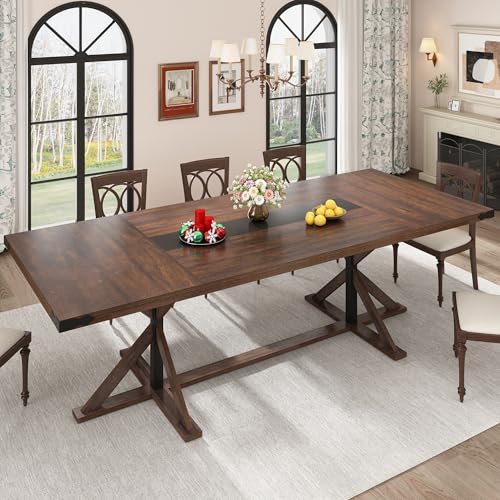 Hlivelood 94" Large Dining Table for 10 People |
8.6/10 | Buy | |
| Best Value |
 Hlivelood 94Inch Large Dining Table for 8 10 |
8.4/10 | Buy |
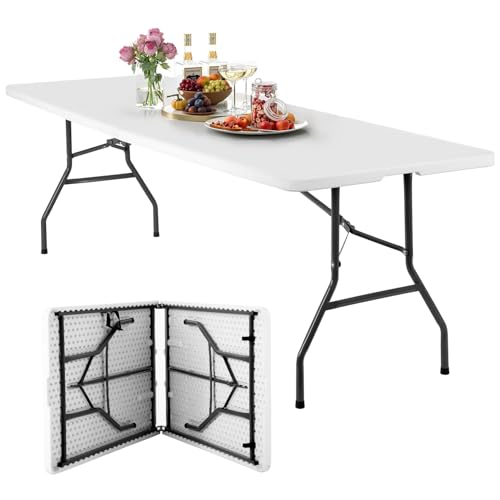 FDW | 8FT Folding Table | White |
8.0/10 | Buy | |
 Sweetcrispy 8 FT Folding Picnic Table |
7.8/10 | Buy |
Understanding Table Dimensions for Large Groups
Seating eight to ten people requires a significant amount of linear surface area. For rectangular tables, the length is the primary factor determining how many people can sit on the long sides. A general rule of thumb is to allocate 24 inches of width per person along the long edges.
If you plan to seat four people on each long side, a table length of 96 inches provides the ideal 24-inch allocation per person. However, many modern dining tables are designed to be slightly more compact, allowing for seating of eight to ten people in lengths ranging from 78 to 94 inches by utilizing efficient layouts and slightly narrower widths.
| Table Shape | Recommended Length | Recommended Width | Seating Configuration |
|---|---|---|---|
| Rectangular | 78 – 94 inches | 35 – 48 inches | 4-5 per side, 1 at each end |
| Round | 72 – 96 inches (Diameter) | N/A | Evenly spaced around perimeter |
| Extendable | 62 – 86 inches (Base) | 36 – 40 inches | Varies by leaf insertion |
The width of the table is equally critical for comfort and functionality. A minimum width of 36 inches is generally required to allow for place settings and a central serving area. Tables with a width of 40 to 48 inches offer more space for centerpieces, shared dishes, and armrest clearance. If the width drops below 35 inches, diners may find their elbows touching, which can make extended meals uncomfortable. Conversely, an overly wide table in a narrow room can block traffic flow, making it difficult for people to pass behind seated guests.
When considering the height, standard dining tables are typically 29 to 30 inches tall. This height aligns with standard dining chairs that have seat heights of 18 to 19 inches, creating a vertical gap of 10 to 12 inches between the seat and the tabletop. This gap is essential for allowing legs to fit comfortably under the table. If you are using counter-height chairs, the table height must be adjusted accordingly, but for traditional dining setups, the 29.5-inch standard is the most versatile choice for accommodating a wide range of body types and chair styles.
It is also important to consider the apron depth, which is the vertical distance between the bottom of the tabletop and the top of the legs or stretchers. A deeper apron can restrict knee clearance, making it difficult to sit close to the table edge.
For tables seating eight to ten people, where space is at a premium, a lower apron or a pedestal base can maximize usable knee space. This is particularly relevant for users with mobility limitations or those who prefer to sit close to the table for conversation.
Calculating Perimeter Clearance and Room Fit
Before finalizing a table size, you must measure your dining area to ensure sufficient walk-around clearance. The standard recommendation is to leave at least 36 inches of space between the edge of the table and the nearest wall or furniture. This allows a person to walk behind a seated guest without disturbing them. If your room is tighter, 30 inches is the absolute minimum, but this will feel cramped during serving or when chairs are pulled out.
To determine if a specific table will fit, add the table’s width to 72 inches (36 inches on each side) and compare this total to the room’s width. For example, a table that is 40 inches wide requires a room at least 112 inches wide to maintain standard clearance. If the room is narrower, you may need to choose a table with a smaller width or opt for a layout where the table is placed against one wall, though this is less common for dining tables seating more than four people.
Traffic flow is another key consideration. In open-concept spaces, the table often serves as a divider between the kitchen and living area. In these cases, it is helpful to leave an extra 12 inches of clearance on the side that serves as the main walkway. This prevents the table from feeling like a barrier and allows for smooth movement throughout the home. Measuring the path from the kitchen to the living room and ensuring it is not obstructed by the table or chairs is a practical step that prevents daily frustration.
If you are considering a round table, the diameter measurement includes the space where people sit. A round table with a 72-inch diameter can seat eight people comfortably, but adding two more may feel tight. For ten people, a diameter of 84 to 96 inches is often recommended.
Round tables have no corners, which can improve traffic flow in tight rooms, but they take up more floor space relative to the number of seats compared to rectangular tables. This makes them a better fit for larger, square dining rooms rather than narrow rectangular ones.
Rectangular vs. Round: Space Efficiency
Rectangular tables are generally more space-efficient for seating large groups in standard dining rooms. The linear shape allows for easier placement against a wall or in the center of a rectangular room.
The corners of a rectangular table can create dead space if not positioned correctly, but the long sides maximize the number of seats per linear foot. For a group of eight to ten, a rectangular table typically allows for a more organized seating arrangement, with hosts often sitting at the ends or in the center of the long sides.
Round tables, on the other hand, promote a more egalitarian seating arrangement where no one is at the head of the table. This can be beneficial for social gatherings where conversation is the focus. However, the circular shape requires more floor space to accommodate the same number of people. A 96-inch round table occupies a circular area that is difficult to fit into a rectangular room without encroaching on walkways. Therefore, rectangular tables are often the safer choice for most home dining rooms, especially those with limited square footage.
Extendable tables offer a hybrid solution. They allow you to have a compact footprint during daily use and expand to accommodate larger groups for holidays or parties. When choosing an extendable table, check the dimensions of the table without leaves to ensure it fits your room, and the dimensions with leaves to ensure it fits your largest gatherings.
The mechanism for extending should be smooth and reliable, as frequent use can wear out low-quality hardware. Butterfly leaves are a common design that stores leaves in the center of the table, making them easy to access and store.
Chair Size and Elbow Room Considerations
The size of the chairs you plan to use significantly impacts the required table size. Wider chairs with armrests require more linear space per person than slim, armless chairs. If you are using chairs with a seat width of 20 inches or more, you should aim for the higher end of the table length range to ensure comfortable elbow room. Armrests can also interfere with the apron of the table, so check the clearance between the chair arms and the table edge to avoid collisions.
Elbow room is a key comfort factor. A minimum of 24 inches of linear space per person is recommended to allow for comfortable eating and conversation. If the table is shorter than this allocation, diners may feel crowded and may have to keep their elbows tucked in, which can be uncomfortable during long meals. This is particularly important for formal dinners or holiday gatherings where guests may be wearing bulkier clothing or where multiple courses are served.
Bench seating is another option to consider for large tables. Benches can seat more people per linear foot than chairs because they do not require the same amount of space for leg clearance. A bench can be tucked completely under the table, whereas chairs may need to be pulled out. However, benches require more knee clearance, so ensure the table has a low apron or a pedestal base to accommodate this seating style. Mixing chairs and benches can also add visual interest and flexibility to the seating arrangement.
Material Durability for High-Traffic Use
Tables seating eight to ten people are subject to more wear and tear than smaller tables. The surface will be exposed to more plates, glasses, and utensils, increasing the risk of scratches, stains, and heat damage. Solid hardwood tables are durable but require regular maintenance to protect the finish. Veneered tables are more dimensionally stable and easier to maintain, but the surface may be more susceptible to scratches that cannot be easily refinished. Consider the maintenance requirements when choosing a material for a high-traffic dining area.
Laminate and sintered stone surfaces offer high resistance to stains, heat, and scratches, making them practical choices for busy households.
- These materials are easy to clean and can withstand the rigors of daily use without requiring special care.
- However, they may not have the same aesthetic appeal as natural wood for some design preferences.
- For outdoor or semi-outdoor use, weather-resistant materials like polywood or powder-coated metal are essential to prevent rust, warping, and fading.
- Always check the manufacturer’s recommendations for care and maintenance to ensure the longevity of your table.
Weight capacity is another important factor for large tables. A table seating eight to ten people will hold significantly more weight than a smaller table, especially during holiday meals with heavy dishes and centerpieces. Ensure the table’s construction can support the distributed load of multiple people and their belongings. Look for tables with robust joinery, such as mortise-and-tenon joints or metal reinforcements, to ensure structural stability over time. A wobbly table is not only uncomfortable but also poses a safety risk, especially in homes with children or pets.
Assembly and Delivery Logistics
Large tables are often shipped in flat-pack boxes that can be heavy and unwieldy. Before purchasing, check the shipping weight and box dimensions to ensure you can maneuver them through your doorways, stairwells, and elevators. If you live in an apartment or a home with narrow hallways, you may need to arrange for white-glove delivery or have assistance moving the boxes. Some tables require assembly, which can be a multi-step process involving multiple people. Review the assembly instructions and hardware included to gauge the complexity of the build.
Folding tables offer a convenient alternative for those who need flexibility and easy storage. These tables can be folded in half and stored in a closet, garage, or under a bed when not in use. They are ideal for outdoor entertaining, temporary dining setups, or small spaces where a permanent table is not feasible.
However, folding tables may not be as sturdy or aesthetically pleasing as permanent dining tables, so they are best suited for casual use. Check the weight capacity and stability of the folding mechanism to ensure it can support the number of people and items you plan to place on it.
When assembling a large table, it is important to follow the manufacturer’s instructions carefully to ensure proper alignment and stability. Use the provided hardware and tools, and do not skip any steps. If you are unsure about the assembly process, consider hiring a professional assembler. A properly assembled table will be more stable and durable, and it will look better in your dining room. Take your time with the assembly process to avoid mistakes that could compromise the table’s integrity or appearance.
Style and Aesthetic Integration
The style of the table should complement the overall aesthetic of your dining room. Farmhouse-style tables with thick, planked tops and sturdy legs add warmth and character to a space. Modern tables with clean lines and minimalistic designs suit contemporary interiors. Traditional tables with ornate details and rich finishes fit well in formal dining rooms. Consider the color, texture, and shape of the table when selecting a piece that will enhance the look and feel of your home.
Lighting is also an important factor to consider when choosing a table. The table should be positioned under a light fixture that provides adequate illumination for dining. The height of the light fixture should be appropriate for the table height to avoid glare or shadows. A well-lit dining table creates a welcoming atmosphere and makes it easier to see food and conversation partners. Consider the color temperature of the lighting as well, as warm white light is generally more flattering for dining than cool white light.
Accessories such as table runners, centerpieces, and placemats can help define the style of the table and add visual interest. However, ensure that these accessories do not interfere with the functionality of the table or the comfort of the diners.
A large centerpiece may block sightlines or take up too much space, so choose a size that is proportional to the table. Placemats can help protect the table surface and add a layer of texture and color to the setting. These small details can make a big difference in the overall look and feel of your dining space.
Ultimately, the best table size for seating eight to ten people is one that fits your room, your lifestyle, and your budget.
- By considering the dimensions, clearance, material, and style, you can select a table that serves its purpose well and enhances your dining experience.
- Take the time to measure your space, visualize the layout, and compare options to find the perfect fit for your home.
- A well-chosen table will be a focal point in your dining room for years to come.
If you are looking for more guidance on maintaining your furniture, our guide on removing stains from wood tables offers practical tips for keeping surfaces looking new. This is especially useful for the large surfaces that seat many guests.
For those interested in outdoor options, our article on outdoor dining sets can help you extend your dining space to the patio or garden. These sets are designed to withstand weather conditions and provide comfortable seating for large groups.
About the author
Melanie Pinola is an experienced technology and productivity writer whose work includes researching home office equipment and ergonomic furniture. She has contributed to detailed office chair buying guides, examining the considerations involved in selecting comfortable and functional seating. Her writing focuses on practical technology, productivity, and the equipment people use in everyday working environments, helping readers make more informed purchasing decisions.