
How Much Is a Standing Desk: Practical Cost Breakdown for 2026
Explore how much is a standing desk dynamics in November 2026 with practical insights on motor types, desktop builds, weight limits, and real-world value.
 By Arriana Vasquez
Updated October 9, 2026

Upgrading a workspace to reduce sedentary spinal compression and neck stiffness often leads straight to workstation ergonomics. Investing in dynamic height adjustability lets remote workers alternate between sitting and standing throughout long workdays. While looking at different workspace configurations, understanding how much is a standing desk becomes an essential step in planning an ergonomic home office. Buyers encounter a broad spectrum of motorized frames, desktop converters, and spacious corner layouts with varying weight capacities and frame geometries. Exploring value-focused height adjustable desks can provide a realistic starting point for calculating overall workstation investments.
The overall financial investment depends heavily on frame engineering, motor configurations, and tabletop materials rather than mere brand prestige. Entry-level models frequently use single-motor drivetrains and lightweight composite boards, whereas advanced setups incorporate heavy-duty dual-motor lifting columns and integrated electronic presets. Deciding on the right model requires weighing personal payload requirements, height travel limits, and daily stability against your overall budget. Evaluating these foundational elements ensures you select a dependable workstation that promotes active movement without straining your wallet.
| Award | Product | HOF Score About HOF ScoreThe HOF Score is our own rating from 0 to 10, based on performance, design and build, ease of use, and value. It reflects independent research and is never influenced by manufacturers, retailers, or affiliate commissions. Learn more › | |
|---|---|---|---|
| Best Overall |
 VIVO Black 32 in Standing Desk Converter |
8.1/10 | Buy |
| Best Premium |
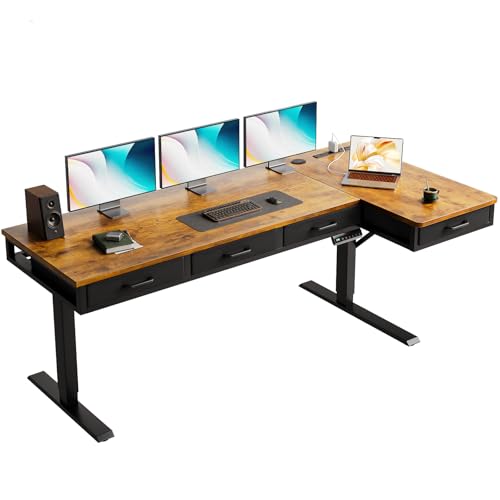 OffiGo 63 Inch L Shaped Electric Standing Desk |
8.1/10 | Buy |
| Best Budget |
 DUMOS 48 Inch Electric Standing Desk |
8.0/10 | Buy |
| Best Value |
 ErGear Height Adjustable Electric Standing Desk |
8.0/10 | Buy |
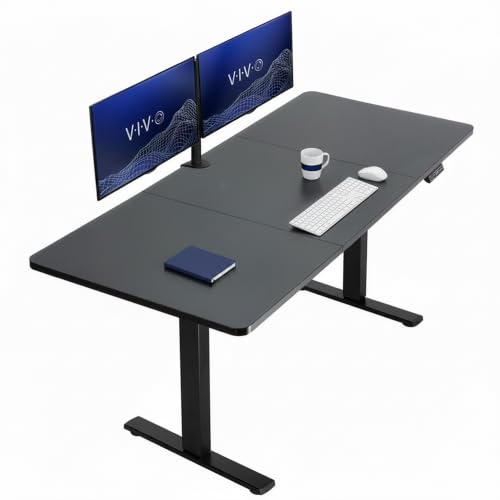 VIVO Black 71 x 30 in Standing Desk, DESK-KIT-1B7B |
7.8/10 | Buy |
Analyzing Standing Desk Price Tiers and Structural Value
Determining the real investment required for an active workstation involves looking past surface aesthetics and examining foundational mechanical engineering. Shoppers evaluating how much is a standing desk quickly realize that total expenditure scales with surface dimensions, motorized drive systems, lifting capacity, and built-in accessories. An entry-level riser requires a vastly different budget than an expansive corner workstation equipped with multi-stage lifting legs. Reviewing our comprehensive ergonomic home office workstation guide clarifies how these different furniture tiers fit distinct telecommuting routines. Navigating these tiers allows remote workers to balance ergonomic needs against practical financial expectations.
Entry-Level Motorized Desks and Core Workstation Utility
Entry-tier electric workstations cater directly to users who need reliable sit-stand movement without unnecessary aesthetic luxuries. Compact platforms such as the DUMOS 48 Inch Electric Standing Desk demonstrate how manufacturers deliver smart height adjustments on an accessible budget. These workstations typically incorporate steel T-leg architectures paired with quiet motorized columns operating at sound levels below 50 decibels. They often provide a respectable height adjustment stroke ranging from roughly 28.7 inches to 46.5 inches. Such adjustment ranges accommodate standard seated postures while allowing average-height professionals to stand comfortably throughout the workday.
Cost reductions in this foundational category usually stem from desktop engineering and simplified single-motor drivetrains. Rather than utilizing single-slab solid wood surfaces, budget platforms often rely on multi-piece laminated particleboard tops that ship in smaller cartons. Weight ratings typically top out around 176 pounds, which is plenty of support for a standard dual-monitor arm, a laptop, and everyday stationery. Many of these streamlined packages also include thoughtful convenience features like dual utility hooks and integrated wire collectors. These additions help maintain order in compact spaces without driving manufacturing expenses upward.
Mid-Tier Standard Workstations for Daily Productivity
Stepping into the intermediate category yields noticeable enhancements in structural rigidity, surface dimensions, and motor refinement. Options like the ErGear Height Adjustable Electric Standing Desk provide larger 55 by 28 inch work surfaces that better serve multi-screen office demands. Frames in this bracket frequently utilize heavy-duty alloy steel components and aerospace-grade lifting columns designed to minimize lateral wobble. The motorized lift mechanisms offer smooth transitions across travel strokes from 28.35 inches to 46.46 inches. Furthermore, programmable digital memory controllers in this tier commonly provide up to four distinct presets for multiple household users.
Material safety and component longevity become prominent selling points as build quality steps up from basic entry models. Manufacturers often highlight low-VOC materials designed to reduce indoor emissions, which is particularly beneficial for enclosed home offices. Alloy steel frame joints undergo rigorous cycle testing to ensure dependable performance over tens of thousands of height adjustments. Investing in this intermediate workstation class strikes an attractive balance between long-term reliability and accessible pricing. You gain greater desktop real estate and tighter mechanical tolerances without paying top-tier industrial premiums.
Expansive Desktops and Heavy-Duty Frame Engineering
Larger desks designed for power users, content creators, and corporate professionals occupy an upper-tier category of standalone workstations. Units like the VIVO Black 71 x 30 in Standing Desk provide generous 70.9 by 29.5 inch platforms capable of supporting extensive monitor arrays and desktop hardware. To support this expanded surface area, frames require robust all-steel construction with substantial foot plates and reinforced upper brackets. These heavy-duty frames frequently boast maximum safe load capacities of 220 pounds or more. That extra dynamic lifting capacity ensures smooth travel even when the surface is loaded down with hefty audio interfaces and large computer towers.
Extended vertical travel represents another defining attribute of these larger, more capable standing desks. The VIVO 71-inch model provides an expansive height range extending from 29.2 inches up to 48.4 inches. That upper limit proves crucial for taller individuals who often find entry-level frames too low for ergonomic standing alignment. The digital handset on these platforms incorporates multi-button memory controllers that remember preferred sit-to-stand heights with simple push-button convenience. The added investment directly buys superior structural stability, taller lifting heights, and sufficient space to mount heavy hardware without risking frame sag.
Corner Workstations and Integrated Storage Solutions
Corner configurations and integrated utility features represent a specialized branch of sit-stand furniture that commands different budget considerations. Workstations such as the OffiGo 63 Inch L Shaped Electric Standing Desk maximize corner spaces by providing wraparound desktop utility. An L-shaped footprint offers separated zones for active computing, paperwork, and creative drawing without requiring multiple distinct desks. Reversible secondary returns allow users to configure the longer wing on either the left or right side based on room geometry. This modular flexibility ensures the workstation adapts seamlessly to specific architectural layouts.
Additional cost in these models often reflects integrated organization hardware, onboard electronics, and multi-tier storage compartments. The OffiGo desk incorporates four fabric drawers alongside integrated power strips featuring standard three-prong outlets, USB ports, and modern Type-C connections. Building power distribution directly into the lifting surface eliminates cable strain when elevating the frame between 29.9 and 46.1 inches. Industrial-grade steel frame structures support the segmented desktop while maintaining consistent leveling across both workspace wings. For workers needing substantial surface storage alongside motorized adjustability, this style offers tremendous utility in a single footprint.
Desktop Converters as a Practical Retrofit Alternative
A complete motorized desk replacement is not the only way to introduce active sit-stand movement into your daily work routine. Standing desk converters, exemplified by the VIVO Black 32 in Standing Desk Converter, present a compact and cost-effective retrofit solution. Instead of replacing an entire executive credenza or custom built-in counter, you simply place a heavy-duty steel riser directly on top of existing furniture. The VIVO converter features a 31.5 by 15.7 inch upper surface paired with a synchronized lower keyboard tray. Pneumatic lift assist mechanisms support up to 33 pounds of equipment while elevating straight upward across a 4.5 to 20 inch range.
Choosing a converter significantly reduces overall expenses while practically eliminating tedious workstation assembly. Because the unit arrives almost ready to use right out of the box, installation involves little more than attaching the keyboard platform. Sturdy steel scissor-lift linkages and mechanical locking levers provide smooth vertical transitions without relying on electric motors or wall outlets. These risers are supported by manufacturer warranties spanning several years, giving buyers peace of mind regarding mechanical durability. For renters or professionals working in furnished corporate offices, a converter delivers genuine ergonomic relief with minimal financial commitment.
Mechanical Components That Drive Manufacturing Costs
Understanding why standing desk prices vary widely across manufacturers requires looking at internal lifting components. Motorized frames rely on either a single centralized motor connected to a hex spindle rod or dual independent motors housed inside each telescoping leg. Single-motor designs keep manufacturing costs down, but they generally lift slower and feature lower overall weight capacities. Dual-motor systems cost more to engineer because they require sophisticated electronic control boxes to keep both columns synchronized in real time. If one motor encounters resistance, current sensors or gyro chips must halt movement instantly to prevent desktop tipping.
Column design also heavily dictates the final price tag of any height-adjustable steel frame. Two-stage telescoping columns utilize two nested steel tubes, which provides a standard travel stroke suitable for average adult heights. Three-stage lifting columns incorporate three overlapping segments, which expands the travel window to accommodate both petite sitters and tall standing users. The extra machining, internal Delrin glide pads, and precision tolerances required for three-stage legs inherently increase retail costs. However, that expanded range ensures true ergonomic compliance for multi-user households and shared office environments.
Desktop Materials and Structural Durability Factors
Tabletop composition represents another major variable influencing the financial investment needed for an ergonomic workstation. Budget-conscious options frequently feature multi-piece particleboard tops wrapped in durable melamine or scratch-resistant laminate films. While these segmented surfaces keep shipping weights low and reduce parcel costs, they require careful assembly along central seams. Mid-grade alternatives utilize one-piece medium-density fiberboard (MDF) cores, which provide continuous flat surfaces with enhanced resistance to moisture and bowing. Premium configurations move toward solid bamboo slabs or solid hardwood butcher blocks, which command higher production and freight costs.
Desktop density plays a vital role when attaching heavy aftermarket accessories like clamp-on monitor arms. High-density fiberboard and solid timber tops handle the localized twisting pressure of heavy C-clamps without cracking or indenting the core. In contrast, hollow-core or low-density particleboard tops may require steel reinforcement plates to distribute clamping stress evenly across the underside. When budgeting for your setup, matching desktop material to your anticipated equipment load prevents costly surface damage down the road. Selecting a durable top ensures your investment holds up against years of daily keyboard impact and shifting gear.
Assembly Requirements and Ongoing Ownership Value
The total value of any height-adjustable desk also involves the ease of assembly and long-term ownership experience. Reviewing modern standing desk assembly techniques reveals how streamlined engineering can save hours of frustrating setup time. Some entry-level models now incorporate tool-free frame connections and pre-installed crossbars that assemble in under fifteen minutes. Other complex desks with multiple fabric storage drawers, integrated power channels, and segmented L-shaped wings demand more meticulous hardware alignment. Factoring in your personal patience and available assembly tools helps you choose a product that fits your comfort level.
Long-term reliability is largely governed by warranty coverage on electronic control modules, drive motors, and structural steel joints. Leading manufacturers typically back structural frames with warranties ranging from three to five years, while providing dedicated technical support for keypad troubleshooting. Investing in a frame with comprehensive warranty support protects your budget against unexpected motor failures or electronic desynchronization faults. Practical extras like built-in cord trays, headphone hooks, and leveling glides further enhance the daily user experience without requiring extra purchases. Selecting a desk with solid after-sale support ensures your ergonomic workstation remains functional and supportive for years to come.
Aligning Your Budget with Practical Workstation Needs
Calculating how much you should spend on a standing desk ultimately depends on your personal equipment setup and daily routine. Remote telecommuters using a single lightweight laptop can easily thrive with an entry-level compact frame or a desktop converter. Power users with triple-monitor arrays, audio gear, and heavy desktop towers benefit substantially from investing in expansive heavy-duty steel frames. Likewise, workers dealing with tight room corners will find that an L-shaped motorized desk provides optimal space utilization despite its mechanical complexity. Prioritizing essential ergonomic travel, safe lifting capacity, and trusted warranty terms ensures you find an ideal balance of performance and price.
About the author
Arriana Vasquez is a product writer specializing in work-from-home equipment and practical workspace solutions. Her reporting covers office chairs, standing desks, and technology designed for modern home offices. Through product research, testing, and detailed buying guides, she explores the features that influence everyday usability, comfort, and functionality. Her work helps readers compare workspace equipment and identify products suited to different working environments.