
How to Use Foot Rest Under Desk: A Practical Guide for 2026
Learn how to use foot rest under desk to improve posture, relieve back tension, and balance sit-stand workstation routines in November 2026.
 By Anthony Spadafora
Updated November 6, 2026

Prolonged static sitting at a desk often leads to lower back compression, restricted circulation in the lower limbs, and awkward spinal curvature. Knowing how to use foot rest under desk setups correctly allows remote workers and office professionals to achieve neutral joint alignment. Placing your feet on a supportive, elevated platform relieves pressure behind the knees, promotes better pelvic tilt, and pairs seamlessly with ergonomic seating. Understanding this balance is just as vital as finding the right work surface when consulting a desk selection guide for your workspace.
Standard office chairs and height-adjustable desks often leave shorter or average-height individuals dangling slightly, forcing poor posture or slouching to reach the floor. Integrating an adjustable foot platform bridges the gap between your seat pan and the floor, ensuring your thighs rest parallel to the ground while your elbows align at ninety degrees. Whether you spend hours seated or alternate postures alongside a sit-stand workstation routine, positioning your footrest accurately establishes a stable foundation. Exploring how to use foot rest under desk accessories ensures your body stays aligned and refreshed across long workdays.
| Award | Product | HOF Score About HOF ScoreThe HOF Score is our own rating from 0 to 10, based on performance, design and build, ease of use, and value. It reflects independent research and is never influenced by manufacturers, retailers, or affiliate commissions. Learn more › | |
|---|---|---|---|
| Best Overall |
 TranquilRelax Foot Rest Under Desk |
9.2/10 | Buy |
| Best Budget |
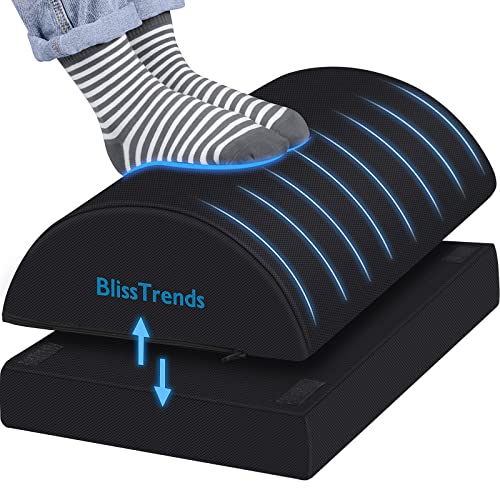 BlissTrends Foot Rest Under Desk |
8.8/10 | Buy |
 CasaZenith Foot Rest, Six Heights Adjustable Foot |
8.4/10 | Buy | |
| Best Premium |
 Everlasting Comfort Foot Rest for Under Desk at |
8.3/10 | Buy |
 ComfiLife Foot Rest for Under Desk at Work |
7.8/10 | Buy |
Ergonomic Principles and Practical Techniques for Under-Desk Footrests
Using an under-desk footrest correctly transforms your daily posture by grounding your lower body and stabilizing your spine. Many people believe that simply sliding a cushion under their workstation is enough, but improper positioning can introduce subtle muscular imbalances. To experience genuine physical relief, you must align the platform height with your chair, keep your joints at supportive angles, and encourage healthy blood circulation. Following proven ergonomic principles ensures that your workstation actively supports your body throughout long hours of focused work.
Determining the Correct Height for Your Foot Platform
The primary purpose of an under-desk footrest is to bridge the vertical distance between your feet and the floor when your office chair is positioned at the correct working height. Your chair height should always be set based on your desk surface, ensuring your elbows rest comfortably at a ninety-degree angle with relaxed shoulders. If raising your chair to meet the desk leaves your feet dangling or causes uncomfortable pressure on your thighs, you require an elevated foot platform. Measuring the floor-to-sole gap while seated in this ideal posture indicates your necessary platform thickness.
Adjustability is critical because a single fixed thickness rarely accommodates every shoe type or user build. Modular foam cushions like the TranquilRelax design use stacked layers, combining a 3.7-inch curved top with two 2-inch base extensions to customize your elevation. Similarly, mechanical options like the CasaZenith footrest feature side-mounted rotary knobs to lock the footplate into six distinct height positions ranging from 3.1 inches to 7.3 inches. Choosing a model that adjusts in defined increments ensures you can fine-tune your elevation whenever you swap footwear or modify your seating configuration.
When testing a new height setting, pay attention to the sensation beneath your hamstrings. If you feel pressure along the front edge of your chair cushion, the footrest is likely too low to relieve thigh compression. If your knees are pushed upward toward your desk frame, the platform is adjusted too high and needs to be lowered by a layer or notch. Achieving a balanced resting height allows your thighs to distribute contact evenly along the seat cushion without pinch points.
Ideal Foot Placement and Neutral Joint Alignment
Proper foot placement requires planting both feet flat on the support surface rather than perching on the edge of your heels or toes. Position the platform directly in front of your chair base so your knees bend at approximately a ninety to one-hundred-degree angle. Your knees should sit level with or slightly below your hips to maintain an open pelvic angle and preserve the natural lumbar curve of your lower back. When your feet are fully supported, your thighs experience uniform weight distribution across the seat pan without concentrated front-edge pressure.
Distance from your chair matters just as much as vertical height when establishing your setup. Sliding the footrest too far beneath your desk forces your legs to stretch forward, which tilts your pelvis backward and encourages slumping. Conversely, pulling the platform too close under your chair curls your feet backward, creating acute knee angles that restrict venous blood flow. Placing the unit so your shins remain vertical or angled slightly forward establishes a stable, fatigue-reducing foundation that stabilizes your torso.
Foot spacing across the platform also influences your hip alignment and spinal stability. Position your feet shoulder-width apart to encourage a symmetrical posture that avoids twisting the sacroiliac joints. Avoid tucking one foot beneath the other or crossing your ankles on top of the cushion, as these habits introduce uneven rotation through your lower back. Keeping both soles planted evenly ensures your weight remains distributed symmetrically across your pelvis throughout your work shift.
Integrating Dynamic Movement and Rocking Motions
Static sitting restricts blood flow in your calf muscles and lower legs, often leading to swelling, stiffness, and fatigue by mid-afternoon. Dynamic footrests solve this issue by allowing active calf activation and ankle flexion while you continue typing or attending meetings. Many ergonomic foam models, such as the Everlasting Comfort and ComfiLife units, feature a curved teardrop profile that can be flipped over on flat floors. Inverting the cushion turns it into a smooth rocker, enabling gentle back-and-forth ankle rocking that engages the calf muscle pump and stimulates circulation.
Mechanical footrests introduce targeted foot stimulation through textured footplates and integrated roller assemblies. The CasaZenith adjustable platform, for instance, incorporates four central rollers surrounded by a textured tactile surface. Rolling the arches of your feet across these textured rollers relieves plantar tension, stimulates nerve endings, and reduces mental fatigue during stressful work sessions. Alternating between steady flat support and active rocking throughout your workday prevents static muscle locking and keeps your lower body feeling energized.
Engaging in periodic ankle circles and toe extensions while using your platform further enhances joint mobility. Flexing your feet forward and backward every twenty minutes keeps synovial fluid moving through your ankle joints and prevents stiffness. If you experience restless legs while focusing on computer tasks, a rocking footrest provides an unobtrusive outlet for subconscious movement that does not disrupt your typing posture. Integrating these subtle movements turns passive seated time into an active, health-conscious routine.
Choosing Between High-Density Foam Cushions and Rigid Platforms
Selecting the right footrest material depends largely on your working environment and whether you work barefoot, in socks, or wearing shoes. High-density foam foot cushions provide plush contouring that cushions sensitive pressure points along the soles and heels. Models like the Everlasting Comfort utilize foam rated at 50 on the Shore 00 firmness scale, which yields slightly for comfort while preventing full bottoming out under sustained foot pressure. These soft fabric-covered options are especially comfortable for barefoot home office professionals who prioritize soft underfoot cushioning.
Rigid platforms constructed from durable ABS plastic offer structural longevity and firm resistance for office environments where footwear is mandatory. Sturdy plastic frames withstand heavy work shoes and outdoor soles without compressing, fraying, or absorbing moisture over time. While foam cushions rely on removable zippered layers connected by touch fasteners to adjust height, plastic units rely on locking brackets and mechanical screws for precise elevation changes. Evaluating whether you prefer forgiving arch contouring or rigid elevation will guide you to the most practical material for your workstation.
Thermal comfort and maintenance differences also distinguish these two construction categories. Foam cushions with breathable mesh or velvet covers trap body warmth, which can feel soothing during winter months but may require frequent washing. Plastic footrests remain cool to the touch and resist dirt, making them well-suited for corporate offices or shared workspaces where multiple people rotate through workstations. Considering your daily footwear habits and cleaning preferences helps ensure your investment matches your daily office reality.
Coordinating Footrests with Height-Adjustable Workstations
Ergonomic footrests are not designed exclusively for seated work; they also serve a valuable function when paired with height-adjustable electric desks during standing sessions. Prolonged standing on flat, hard floors can cause lumbar compression, tight hip flexors, and sore heels. Resting one foot periodically on an elevated platform while standing alters your pelvic tilt and unloads significant tension from your lower back. Swapping feet every ten to fifteen minutes redistributes your body weight, eases strain on your psoas muscles, and helps you stand comfortably for longer intervals.
Managing your under-desk floor area becomes essential when switching between seated and standing configurations. When lowering your desk to sit, ensure the footrest is positioned so your chair casters do not roll against it or push it out of alignment. Choose units with textured silicone or non-slip rubber grip bases, like those found on the BlissTrends and ComfiLife models, so the platform stays anchored when you push off. A stable base prevents you from chasing the footrest across slick hardwood, tile, or commercial carpet during busy transitions.
Floor surface compatibility is an overlooked detail that directly affects workstation stability. On thick carpet, lightweight plastic footrests may wobble if their base legs lack broad contact pads, whereas wide foam cushions distribute pressure evenly without tipping. On slick tile or polished timber, non-slip rubberized dots on the bottom of foam covers prevent unintended skidding when you shift your weight. Testing your platform across your floor type ensures that posture transitions remain seamless and secure.
Avoiding Common Ergonomic and Posture Mistakes
One of the most frequent errors users make is raising their footrest too high relative to their chair height. When the platform is excessively elevated, your knees rise above your hip joints, shifting your body weight back onto your tailbone and rounding your lower spine. This awkward posture compresses abdominal organs, strains the lumbar discs, and negates the benefits of an ergonomic chair. Ensure your thighs remain parallel to the floor, adjusting your platform downward if you notice your knees pointing noticeably upward.
Another common mistake involves placing the platform off-center or crossing your ankles over the cushion while working. Asymmetrical foot placement tilts your pelvis to one side, introducing uneven rotational torque into your lumbar spine and hips. Resting only your heels on the cushion edge while letting your toes droop also strains the Achilles tendons and tightens the calf muscles. Cultivating the habit of placing both feet evenly across the center of the platform ensures balanced bilateral support and prevents repetitive postural imbalances.
Users also frequently forget to adjust their footrest after altering their chair height or replacing their shoes. Wearing thick-soled boots adds measurable stack height compared to working in thin socks or flat slippers, which changes your knee angle. Whenever you adjust your seating position or switch footwear styles, take thirty seconds to verify that your feet still rest naturally without pushing your knees upward. Regular small adjustments prevent minor posture errors from turning into persistent physical aches.
Maintenance, Cleaning, and Hardware Assembly Considerations
Keeping your workstation hygienic requires selecting a footrest that is straightforward to clean, especially if you alternate between shoes and bare feet. Fabric foam cushions from brands like BlissTrends and TranquilRelax feature zippered outer covers that detach easily for routine machine washing. Washing the breathable velvet or mesh covers periodically prevents odors, removes dust accumulation, and extends the operational lifespan of the internal foam core. For hard ABS plastic models, a simple wipe down with a mild disinfectant cloth removes dirt and keeps textured roller surfaces rolling smoothly.
Setting up your workspace thoughtfully ensures your ergonomic accessories integrate smoothly with the rest of your equipment. When reviewing workstation assembly and setup guides, pay close attention to under-desk crossbar clearance and power cord routing. Keep dangling cables elevated in raceways so they never snag on your footrest or interfere with your legroom. Choosing modular accessories that require minimal mechanical assembly allows you to set up your support platform quickly and focus on productive, pain-free daily work.
Inspecting mechanical components and fasteners periodically prevents unexpected wobbles or squeaks during use. On adjustable plastic models, make sure the side-locking screws or tension knobs remain snug so the angle does not slip under foot pressure. For multi-layer foam rests, confirm that the touch-fastener strips between layers remain clean of lint and debris so the sections stay firmly bonded. Taking a few moments to maintain your foot platform preserves its stability and ensures uninterrupted ergonomic support.
Developing a Healthy Daily Sit-Stand-Move Cadence
An ergonomic footrest delivers its greatest benefits when integrated into a structured movement schedule throughout your working day. Ergonomists frequently suggest the twenty-eight-two routine, which involves sitting with proper foot support for twenty minutes, standing for eight minutes, and moving for two minutes. While seated, alternate between static flat-foot support and gentle rocking cycles every half hour to keep your joints loose. When you transition to standing, use the foot platform as an asymmetrical foot prop to relieve lower back stiffness before taking a brief walking break.
Listening to your body cues will help you adjust your movement patterns before fatigue sets in. If you feel tightness developing in your lower back or hips, switch from a seated position to standing, or invert your foam cushion to start rocking your ankles. Shifting your weight regularly stimulates circulation in your deep veins, reducing the swelling and heaviness often experienced after long desk sessions. Using your footrest dynamically transforms static desk work into an active, responsive routine that supports sustained physical energy.
Mastering the practical techniques of under-desk foot support allows you to customize your workspace to your unique anatomical needs. By pairing accurate platform elevation with intentional movement, you eliminate dangling feet, relieve thigh compression, and protect spinal alignment. Consistent attention to your seating geometry turns a simple accessory into a foundational ergonomic tool that supports sustained focus, physical comfort, and lasting workplace wellness.
About the author
Anthony Spadafora is an experienced technology journalist and home office furniture reviewer specializing in ergonomic office chairs, standing desks, and workspace accessories. Having worked remotely since 2018, he brings extensive hands-on experience to evaluating furniture for modern home offices. His reviews explore comfort, adjustability, build quality, cable management, and practical workspace improvements, helping readers understand the features that matter when investing in a home office setup.