
What Is the Height of a Desk: Practical Guide for 2026
Understand What Is The Height Of A Desk standards, calculate proper seated and standing elbow height, and improve your daily posture in November 2026.
 By Camryn Rabideau
Updated November 6, 2026

Finding the proper working clearance can completely redefine how your neck, shoulders, and lower back feel after hours at a computer. Most commercial office furniture is built to a single fixed measurement, yet human bodies come in vastly different proportions. Understanding what is the height of a desk is crucial when setting up an ergonomic workstation that prevents chronic posture fatigue and wrist strain. Exploring basic workstation dimensions and understanding how standing desks function can help you tailor your setup to your exact physical requirements.
A standard traditional work surface typically rests between 28 and 30 inches off the floor, which actually forces many individuals into awkward shoulder elevation or slouched spinal posture. Modern height-adjustable workstations solve this dilemma by offering a continuous vertical travel span that accommodates both seated and upright working positions. Whether you are selecting a reliable home office desk or upgrading an existing workspace, measuring your natural elbow height provides the foundation for all-day physical comfort. Let us break down standard dimensions, ergonomic calculations, and adjustable options to help you establish the perfect desk height.
| Award | Product | HOF Score About HOF ScoreThe HOF Score is our own rating from 0 to 10, based on performance, design and build, ease of use, and value. It reflects independent research and is never influenced by manufacturers, retailers, or affiliate commissions. Learn more › | |
|---|---|---|---|
| Best Overall |
 YOLEZO 35" Electric Standing Desk |
9.2/10 | Buy |
| Best Value |
 Veken 55 Inch Large Electric Standing Desk |
9.1/10 | Buy |
 ErGear 48 X 24 Inch Height Adjustable Electric |
8.9/10 | Buy | |
| Best Budget |
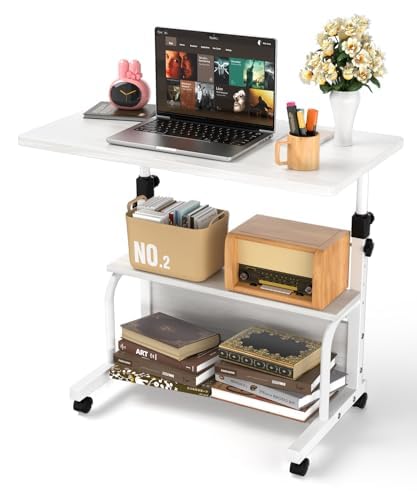 QZMDSM Portable Desk with Wheels Small Standing |
8.8/10 | Buy |
| Best Premium |
 OffiGo 79 Inch Executive Electric Standing Desk |
8.8/10 | Buy |
 CasaZenith Foot Rest, Six Heights Adjustable Foot |
8.4/10 | Buy |
The Comprehensive Guide to Ergonomic Desk Height and Workstation Geometry
Standard office furniture has followed rigid manufacturing baselines for decades, yet human bodies rarely conform to a single static measurement. When exploring what is the height of a desk, you must look beyond factory conventions and examine how physical proportions interact with daily work tasks. Aligning your working plane with your natural seated and upright posture protects joints, decompresses the spine, and boosts productivity.
The Historical 29-Inch Standard and Its Modern Pitfalls
For more than half a century, office furniture manufacturers have treated 28 to 30 inches as the default standard height for commercial writing desks and executive tables. This dimension originated in the mid-twentieth century when typical office duties revolved around handwriting documents with pen and paper. Standardizing mass production around a single height allowed corporations to furnish entire office buildings efficiently, but it assumed an average male user height of around five feet ten inches. Today, that fixed dimension poses serious challenges for modern workers who interact primarily with mechanical keyboards, computer mice, and flat-panel displays.
Using a computer keyboard on a traditional 29-inch surface forces the majority of workers to elevate their forearms unnaturally. When your desk surface is even slightly too high, you must shrug your shoulders upward to rest your hands on the keys. Maintaining this constant muscular contraction throughout an eight-hour workday leads to chronic tension across the upper trapezius and cervical spine. Over months of computer work, this sustained muscular load frequently manifests as tension headaches, upper back spasms, and diminished blood flow to the hands.
Biomechanical Breakdown of Seated Forearm and Elbow Geometry
Determining your ideal seated surface begins with establishing a balanced, supportive posture in your office chair. Adjust your chair cylinder so your feet rest flat against the floor, allowing your thighs to run roughly parallel to the ground with your knees bent at approximately ninety degrees. Slide your hips fully back against the lumbar support and relax your shoulders downward without slouching. Let your upper arms hang naturally alongside your torso, then bend your elbows forward to form an open angle between ninety and one hundred degrees.
Your working desk surface or keyboard platform should align directly with the underside of your forearms in this neutral position. When your fingers rest upon the keyboard keys, your wrists should remain straight without bending upward or downward. If your desk surface sits higher than your resting elbows, your wrists will bend backward into continuous extension, creating sustained compression inside the carpal tunnel. Taking the time to calculate your personal seated elbow height establishes the foundation for a pain-free computing setup.
Determining Precise Standing Workstation Elevation
Transitioning from a seated posture to an upright standing stance fundamentally changes your spinal alignment and joint geometry. Stand upright with your shoulders relaxed, chest open, and feet spaced shoulder-width apart to distribute your body weight evenly. Keep a slight, subtle softness in your knees rather than locking your joints backward, which can restrict blood flow and create lower back tension. Bend your elbows forward to that same relaxed ninety-degree resting angle, keeping your forearms parallel to the floor.
Measure the vertical clearance from the floor surface straight up to the underside of your bent forearms to establish your baseline standing height. Your adjustable desk should elevate to bring the keyboard plane flush with this exact forearm measurement. Positioning the standing surface too high forces you to hunch your shoulders upward, which rapidly tires your upper back and neck muscles. Conversely, a surface set too low causes you to lean forward onto your wrists, rounding your spine and placing excessive strain on your lumbar discs.
Footwear, Anti-Fatigue Mats, and Effective Stack Height
A frequent mistake in setting up a standing workstation is measuring standing height while barefoot and then working in cushioned footwear. The shoes you wear throughout the day can easily add anywhere from half an inch to nearly two inches of physical elevation. Thick running sneakers, boots, or supportive orthopedic shoes immediately raise your resting elbow height relative to the floor. If your desk height was calibrated while standing in socks, stepping into structured shoes will force you to lean forward uncomfortably.
Using a supportive anti-fatigue mat introduces an additional layer of cushioning that directly influences your standing operational height. High-density polyurethane standing mats typically measure between three-quarters of an inch and one inch in uncompressed thickness. Under your full body weight, that mat material will compress slightly while still adding a measurable stack height beneath your feet. Always record your final standing height while standing directly on your anti-fatigue mat wearing your everyday work shoes.
Telescoping Lifting Columns and Adjustment Spans
Modern motorized workstations solve the limitations of fixed furniture by incorporating telescoping motorized steel columns with continuous height travel. Many standard electric desks provide an operational adjustment span running from roughly 28.3 inches up to 46.5 inches from floor to desktop. The YOLEZO 35″ Electric Standing Desk illustrates this versatile range, packing smooth motorized travel into a compact footprint that suits tight apartments and home office corners. With multiple programmable memory presets, such desks allow you to return to your exact preferred levels at the push of a button.
Larger executive workstations often broaden this elevation window to accommodate a wider spectrum of body heights and intensive equipment setups. The OffiGo 79 Inch Executive Electric Standing Desk extends from 29.1 inches up to 48 inches, pairing expansive surface area with heavy-duty dual-beam structural stability. A generous vertical reach ensures that taller professionals can stand fully upright with neutral posture without hunching over their keyboards. Reviewing affordable motorized sit-stand desks reveals how accessible these versatile lifting mechanisms have become for everyday home workers.
Bridging the Height Gap for Shorter and Taller Individuals
Standard electric desks with a minimum lower limit of 28 or 29 inches can still prove problematic for shorter adults under five feet four inches tall. For petite workers, a 28-inch desk is often several inches too tall to allow neutral forearm posture while keeping feet flat on the floor. Lowering an office chair to achieve proper floor contact leaves the tabletop towering uncomfortably high above the wrists. Raising the chair to match the high desk surface leaves the feet dangling unsupported, which pinches the femoral artery and causes leg numbness.
An adjustable ergonomic footrest resolves this seated mismatch by creating a stable foundation beneath your feet when your chair is elevated. The CasaZenith Foot Rest offers six distinct height settings ranging from 3.1 inches to 7.3 inches to accommodate varied chair heights and leg lengths. Using a dedicated footrest allows petite professionals to lift their chairs to meet fixed or higher desks without sacrificing lower body support. This ergonomic accommodation is equally valuable when evaluating height-adjustable desks for younger students whose rapidly changing proportions demand flexible support solutions.
Tabletop Thickness, Beveled Profiles, and Under-Desk Legroom
Calculating the true working elevation of your desk requires paying close attention to the thickness of the desktop surface itself. Manufacturers often report the travel range of the metal frame columns alone, but the wooden board adds significant height. A typical laminated particleboard or MDF top adds between 0.6 and 1.0 inch, while premium solid wood surfaces can reach 1.38 inches in thickness. If your frame displays a digital height readout, remember that the actual typing surface sits higher by the exact thickness of that desktop slab.
Under-desk clearance is just as critical for long-term seated health because your knees and thighs require sufficient room to move freely. Workstation frames equipped with central support beams or crossbars must leave at least six to eight inches of vertical space between your thighs and the frame. If you decide to install a slide-out keyboard tray beneath your desktop, that platform will lower your active typing plane by two to three inches. Always measure both the top surface elevation and the lower under-desk clearance to ensure your legs never feel cramped during long workdays.
Decoupling Keyboard Elevation from Visual Display Height
Aligning your desk surface with your resting elbow height is only the first half of creating a balanced ergonomic workstation. Your computer monitor must be positioned independently because your eyes and hands require completely different vertical working elevations. Placing a laptop or monitor directly on your desk surface forces your gaze downward, bending your cervical spine into continuous flexion. The top third of your computer display should align directly with your horizontal eye level when looking straight ahead with relaxed neck muscles.
Accommodating wide displays or dual-screen setups, such as on the Veken 55 Inch Large Electric Standing Desk, requires adequate depth and height adjustments to avoid neck strain. Utilizing an adjustable monitor arm or a dedicated desktop riser allows you to elevate your screen while keeping the main surface at forearm level. Position the monitor roughly an arm length away from your face so you can read text comfortably without leaning forward. This clear separation between input surface height and display height protects your upper back, neck, and shoulders throughout the day.
Structural Rigidity, Frame Architecture, and Sway Mitigation
As height-adjustable workstations travel toward their maximum extension limits, stability becomes an essential performance factor. Telescoping steel legs experience increased mechanical leverage when extended past forty inches, which can amplify natural typing vibrations into noticeable monitor wobble. High-gauge steel frames, reinforced leg columns, and broad foot pads help counteract this sway by anchoring the desk firmly to the floor. Ensuring that all frame bolts and leveling glides are adjusted properly eliminates wobble caused by uneven flooring surfaces.
Compact rolling workstations require similar attention to stability, especially when moving between different rooms or operating on carpeted floors. A mobile design like the QZMDSM Portable Desk with Wheels offers versatile height adjustments from 28 to 35.4 inches while riding on lockable caster wheels. Engaging the wheel locks firmly before working prevents unintended shifting while typing or writing by hand. Distributing your computing gear evenly across the desktop surface keeps the center of gravity centered over the support columns, enhancing stability at every height.
Programming Handset Presets and Building Sustainable Sit-Stand Routines
Modern electric sit-stand desks feature smart digital control panels that simplify height adjustments into seamless one-touch operations. Desks like the ErGear 48 X 24 Inch Height Adjustable Electric desk provide up to four programmable memory presets to save distinct seated and standing levels. Once you determine your ideal forearm elevations, saving those numbers directly into the digital handset prevents the need for manual adjustments later. You can transition smoothly between work postures throughout the day without interrupting your concentration or workflow.
Maintaining a successful sit-stand routine requires alternating postures regularly rather than attempting to stand for eight hours consecutively. Prolonged static standing puts significant pressure on your lower leg veins, knee joints, and plantar fascia, leading to discomfort and fatigue. A balanced schedule, such as sitting for forty minutes followed by standing for twenty minutes, keeps your postural muscles active without causing physical exhaustion. Listening to your body and switching positions before muscular fatigue sets in ensures that your height-adjustable desk delivers maximum health benefits.
Practical Workstation Height Summary and Routine Maintenance
Achieving the right desk elevation is an ongoing ergonomic practice rather than a static, one-time calculation. Periodic changes in your everyday footwear, alterations to your chair cushioning, or shifting to a new display mount will subtly influence your body mechanics. Take a few moments every few months to reassess your seated forearm angles and standing shoulder comfort to verify that your workstation settings remain accurate. Simple visual checks in a mirror or asking a colleague to observe your typing posture can quickly highlight subtle slouching habits.
Routine hardware care also keeps your height-adjustable desk functioning reliably across thousands of vertical transitions over its lifespan. Inspect the steel column joints periodically to ensure dust and debris do not accumulate along the telescoping glides. Check that cable harnesses retain ample slack across the entire travel range so cords do not snag or pull free when elevating to standing height. By combining accurate personalized measurements with attentive hardware maintenance, your workstation will provide ergonomic comfort and reliable support through every workday.
About the author
Camryn Rabideau is a freelance writer and product reviewer with a background in product design and journalism. Since becoming a full-time freelance writer in 2016, she has developed extensive experience researching and testing consumer products for the home. Her work focuses on practical product performance, usability, and purchasing considerations. Her combination of product design knowledge and hands-on testing experience provides a useful perspective on furniture, household products, and everyday living.