
Should I Get an Ergonomic Chair: Practical Guide for 2026
Wondering if should i get an ergonomic chair is right for your desk setup? Explore posture support, lumbar adjustments, and seat choices for November 2026.
 By Erica Puisis
Updated October 17, 2026

Midday spinal fatigue and persistent lower back tightness frequently prompt desk workers to reconsider their seating habits. When you spend six to ten hours parked in front of a computer screen, a standard kitchen seat or rigid gaming bucket often leaves your lumbar spine flattened and your neck strained. Asking yourself, should i get an ergonomic chair, is usually the first step toward reclaiming physical comfort and avoiding repetitive strain injuries during extended work shifts. Selecting a model with dedicated lower back reinforcement, such as an ergonomic office chair for back relief, can immediately help restore your natural lordotic spinal curvature.
Traditional stationary furniture forces your body to adapt to an inflexible frame, whereas responsive ergonomic task chairs adjust directly to your skeletal proportions. By incorporating customizable features like Class 4 pneumatic height cylinders, multi-directional armrests, and synchro-tilt recline tensions, modern seating accommodates dynamic movement rather than locking you into rigid stillness. When paired with active workplace habits and understanding standing desk benefits compared to sitting, the right chair distributes your body weight evenly across your thighs and pelvic structure. This comprehensive evaluation covers the biomechanical benefits, hardware adjustments, and key selection criteria to help you determine whether upgrading your desk chair is truly worth the investment.
| Award | Product | HOF Score About HOF ScoreThe HOF Score is our own rating from 0 to 10, based on performance, design and build, ease of use, and value. It reflects independent research and is never influenced by manufacturers, retailers, or affiliate commissions. Learn more › | |
|---|---|---|---|
| Best Overall |
 COMHOMA Office Chair with Flip-up Armrests |
9.1/10 | Buy |
| Best Value |
 CLOUVOU Ergonomic Office Chair Comfy [#1 in reviews] |
8.8/10 | Buy |
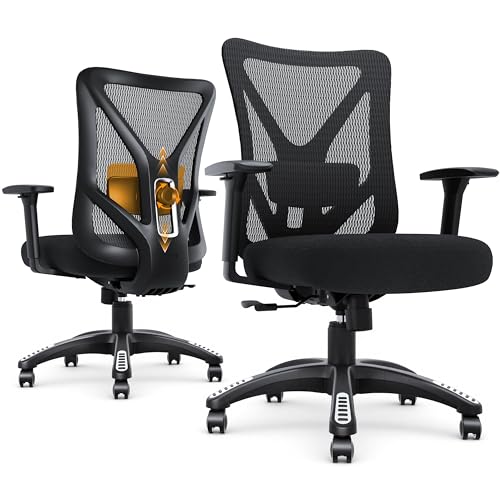 Ergonomic Office Chair, Mesh Computer Desk Chairs |
8.8/10 | Buy | |
| Best Premium |
 GABRYLLY Ergonomic Office Chair |
8.8/10 | Buy |
 GABRYLLY Ergonomic Office Chair with Footrest |
8.8/10 | Buy | |
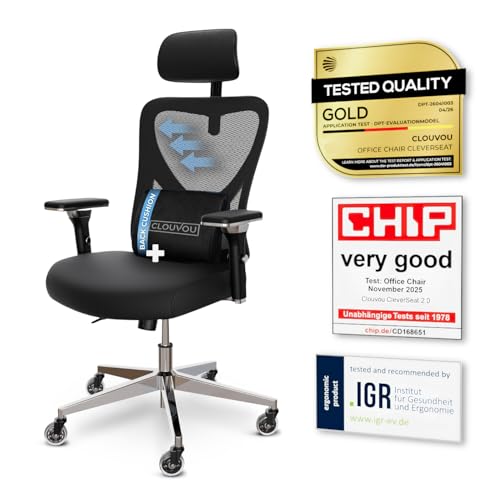 CLOUVOU Ergonomic Office Chair Comfy [#1 in reviews] |
8.8/10 | Buy | |
| Best Budget |
 MALOL Ergonomic Mesh Office Chair with Footrest |
8.6/10 | Buy |
 GTPLAYER Ergonomic Office Chair with Flip-up |
8.1/10 | Buy | |
 Nexthro Ergonomic Office Chair,Mesh Office Chair |
8.1/10 | Buy | |
 Ticova Ergonomic Office Chair |
8.0/10 | Buy |
Evaluating the Practical Value and Health Impact of Ergonomic Desk Seating
Deciding whether to purchase an ergonomic chair comes down to how many hours you spend at your desk and how your body feels at the end of each workday. Standard office chairs and decorative task seating are manufactured with static frames that force your spine into fixed, unnatural positions. If you sit for four or more hours daily, investing in ergonomic seating provides immediate physiological advantages by accommodating your unique posture and skeletal structure. Upgrading your workstation transforms your daily desk endurance, turning passive physical strain into dynamic, restorative support.
Biomechanical Support and Spinal Alignment Fundamentals
Human spinal anatomy naturally forms an inward curving S-shape known as the lordotic curve in the lumbar and cervical regions. When you settle into an unsupportive seat pan, your pelvis tends to rotate backward into a posterior tilt, causing your lumbar spine to flatten and bow outward. This slouching posture increases hydrostatic pressure on your intervertebral discs, compressing nerve pathways and overworking your lower back muscles. Ergonomic seating counteracts this slouching tendency by stabilizing your sacrum and supporting neutral pelvic positioning throughout the day.
Neutral spinal alignment evenly distributes your upper body mass across the pelvic bones and thighs rather than concentrating mechanical load on localized vertebrae. Maintaining this balanced posture reduces static muscle fatigue, preventing the dull aches that commonly strike during late afternoon working sessions. Ergonomic designs actively encourage micro-movements, allowing your spine to flex and decompress naturally while you type, read, or take phone calls. When your skeletal framework remains properly aligned, your breathing improves and your core muscles avoid unnecessary strain.
Essential Lumbar Mechanisms and Lower Back Fatigue Relief
The foundation of any high-performance desk chair is its lumbar support system, which must adapt to the unique curvature of your lower spine. Rigid, non-adjustable pads often create painful pressure points or sit too high against the thoracic region where they offer zero lumbar benefit. Flexible designs like the GABRYLLY Ergonomic Office Chair with Footrest feature two-way adjustable lumbar mechanisms that provide three inches of vertical travel and 1.6 inches of horizontal depth. Having both height and depth adjustments ensures the support pad nests directly into the lordotic curve between your lower vertebrae.
Different manufacturers approach lower back relief through distinct mechanical engineering solutions. For example, the Nexthro Ergonomic Office Chair incorporates a split mesh lower back design equipped with a rotary adjustment knob, allowing users to fine-tune lumbar tension precisely. Other models, such as the Ticova Ergonomic Office Chair, pair independent depth knobs with vertical slider brackets to maintain firm, stabilizing pressure even when leaning back. Choosing a chair with multi-level lumbar calibration prevents involuntary slouching and shields your lower back from chronic postural fatigue.
Seat Pan Ergonomics and Popliteal Pressure Clearance
A supportive backrest cannot compensate for an improperly proportioned seat pan that restricts blood flow or pinches sensitive nerves. When a seat is too deep, its leading edge presses firmly against the popliteal fossa, the sensitive area located directly behind your knees. This excessive compression can pinch the sciatic nerve, causing numbness, tingling, and reduced venous return in your lower legs. Ergonomic guidelines recommend maintaining a clearance gap of two to three fingers between the front of the seat and the back of your calves.
Seat contouring plays an equally critical role in dispersing your seated body weight across the ischial tuberosities. The Ticova Ergonomic Office Chair addresses pelvic pressure by employing a 3.4-inch high-density foam cushion with a specialized W-shaped profile and a waterfall front edge. This waterfall curvature slopes gently downward, preventing sharp frame perimeters from digging into your hamstrings. Similarly, models like the MOLENTS Ergonomic Office Chair provide an optimal seat depth of 18.9 inches and a generous 19.8-inch width, allowing comfortable weight distribution for varied body shapes.
Articulated Armrests and Upper Body Tension Relief
Stationary armrests are one of the most overlooked causes of persistent shoulder impingement, neck stiffness, and upper back tightness. When armrests sit too high, they force your trapezius muscles to remain constantly shrugged, creating chronic tension headaches and muscle knots. Conversely, armrests that sit too low or too wide leave your forearms dangling, which places continuous strain on your shoulder joints and cervical spine. Ergonomic task seating resolves this issue by integrating multi-directional armrests that adjust to meet your elbows at a natural ninety-degree angle.
The level of armrest adjustability varies substantially depending on your daily workflow and workspace constraints. Models like the GABRYLLY High Back Chair feature two-dimensional flip-up arms that raise forty-five degrees and adjust 1.8 inches vertically, making it easy to stow the chair neatly under compact desks. If you play musical instruments or switch between close-up typing and casual reading, the COMHOMA Office Chair and GTPLAYER Ergonomic Office Chair offer ninety-degree flip-up armrests to convert quickly into armless seats. Meanwhile, three-dimensional armrests found on the MOLENTS and MALOL chairs slide forward, backward, and pivot inward to support your wrists during extensive typing tasks.
Dynamic Recline Kinematics and Multi-Angle Locking Systems
Static sitting places prolonged, uninterrupted loads on your spine, which is why movement-friendly recline mechanisms are essential for long workdays. High-grade ergonomic office chairs incorporate advanced tilt mechanisms that let you transition smoothly between focused upright tasks and relaxed reading postures. The GABRYLLY Ergonomic Office Chair with Footrest provides three lockable recline angles at 90, 110, and 135 degrees, paired with an 18.1-inch retractable steel footrest for rest periods. Reclining your torso back beyond one hundred degrees significantly reduces compressive stress on lumbar discs by shifting upper body weight onto the backrest.
Even budget-friendly models often include tilt-tension knobs and rocking capabilities ranging from 90 to 120 degrees, as seen on the COMHOMA and GTPLAYER chairs. A responsive tilt mechanism encourages active sitting, allowing you to rock gently and engage your core muscles without losing back contact. The MALOL Ergonomic Mesh Office Chair allows smooth reclining up to 130 degrees with customizable tilt tension, letting you calibrate the resistance to match your body weight. By varying your seated posture throughout the day, you promote healthy circulation and prevent joint stiffness from setting in.
Breathable Elastomeric Mesh Versus Contoured High-Density Foam
Selecting between an all-mesh seating surface and a padded foam cushion is one of the most critical comfort choices you will make. All-mesh chairs, such as the GABRYLLY models and the CLOUVOU Ergonomic Office Chair Comfy, utilize tensile knitted mesh that allows continuous air circulation. This breathable construction prevents heat buildup and humidity retention, keeping you cool during warm afternoons in home offices lacking central air conditioning. High-tensile elastomeric mesh also yields dynamically to your body contours, distributing pressure evenly across the backrest without creating localized hot spots.
High-density molded foam cushions, on the other hand, deliver plush, resilient padding that supports deeper pelvic contouring and coccyx relief. The Nexthro Ergonomic Office Chair pairs a ventilated mesh backrest with a 2.75-inch thick high-density foam seat pad designed to minimize gluteal compression. High-resilience foam provides consistent surface softness, making it an excellent choice for users who find rigid mesh perimeter frames uncomfortable against their thighs. Balancing your personal preference for thermal breathability against localized seat cushioning will help you pinpoint the ideal seat construction for your work habits.
Anthropometric Sizing and Weight Capacity Considerations
Ergonomic chairs are engineered around specific anthropometric envelopes, meaning one standard chair frame cannot fit every user body type equally. A chair designed for someone standing six feet tall may leave a petite user with their feet dangling uncomfortably above the floor. If your workstation setup requires tailored dimensions for shorter statures, pairing an adjustable chair with dedicated standing desks for shorter frames can establish proper ergonomic alignment from the ground up. Standard pneumatic cylinders typically offer three to four inches of height adjustment, covering users between roughly 5’2″ and 6’1″.
Taller and heavier users require heavy-duty components capable of sustaining substantial loads without compromising stability or mechanical safety. The Nexthro Ergonomic Office Chair features a rugged frame, an SGS certified Class 4 gas lift cylinder, and a verified 400-pound weight rating to comfortably support larger frames. Meanwhile, the CLOUVOU chair states targeted orthopedic support for users up to 6.5 feet in height, preventing tall workers from outgrowing their backrest support. Brands like MOLENTS and GABRYLLY even offer manufacturer-assisted gas lift cylinder swaps if your unique desk height or leg length demands a customized stroke range.
Headrest Articulation and Cervical Spine Support
While lumbar support protects the lower back, an articulated headrest provides vital relief for your cervical spine, neck, and shoulder girdles. During prolonged monitor viewing, many desk workers subconsciously drift into a forward-head posture that multiplies the gravitational load on neck vertebrae. A contoured headrest offers a stable resting boundary, allowing you to lean back slightly and relieve tension from your suboccipital and trapezius muscles. High-performance task seating incorporates multi-directional headrests that adjust in both height and pivot angle to cradle the base of your skull.
The GABRYLLY, Ticova, and MALOL chairs utilize three-dimensional headrests that adjust vertically and tilt to match your natural neck curvature. This multi-axis articulation ensures that whether you sit upright at ninety degrees or recline to 120 degrees, your neck remains supported in a neutral posture. Having reliable cervical support is especially valuable during lengthy virtual meetings, phone calls, or reading sessions when you step back from intensive typing. Adding neck support prevents cumulative cervical strain, ensuring your entire spinal column receives balanced reinforcement from top to bottom.
Practical Workspace Integration and Floor Mobility
An ergonomic chair must operate smoothly within your broader physical work environment, coordinating with your desk clearance and flooring materials. Standard commercial desks typically feature a fixed twenty-nine-inch work surface, which can create fit challenges if chair armrests cannot slide underneath. Choosing models with flip-up armrests or broad height-travel ranges allows the chair to tuck fully under your desktop, saving valuable floor space in compact rooms. For larger layouts, integrating an ergonomic chair into a versatile height-adjustable workstation guide setup allows effortless transitions between seated productivity and standing intervals.
Base stability and caster construction also dictate your daily mobility and long-term floor preservation. Heavy-duty five-star bases, like the 27.5-inch diameter steel base on the GABRYLLY chair, provide robust tipping resistance even when fully reclined with an extended footrest. Smooth-rolling casters, such as the ultra-quiet wheels featured on the CLOUVOU and GTPLAYER models, glide effortlessly across hard floors without generating distracting noise or scratching surfaces. Investing in sturdy base hardware and reliable casters ensures your chair moves quietly and remains stable throughout years of continuous desk work.
Identifying the Tipping Point for an Ergonomic Chair Upgrade
Recognizing when your current seating setup is harming your health involves assessing both physical discomfort and hardware wear. If you consistently experience mid-afternoon lower back stiffness, tailbone tenderness, or tight neck muscles, your current chair is failing to support your posture. Visual cues like sagging seat foam, cracked faux leather, or an uncommanded sinking gas cylinder indicate that your chair has reached the end of its useful lifespan. Continuing to use broken or unsupportive furniture can turn minor postural fatigue into persistent musculoskeletal discomfort over time.
Modern ergonomic chairs offer accessible solutions backed by multi-year manufacturer warranties, such as the three-year coverage provided by GABRYLLY and MOLENTS. These structural warranties, combined with rigorous safety testing like BIFMA X5.1 compliance, provide peace of mind regarding mechanical durability and long-term joint health. If you spend significant portions of your week working from a desk, the cumulative benefits of tailored lumbar support, breathable materials, and dynamic tilt easily justify the upgrade. Prioritizing your spinal alignment today creates a more comfortable, productive, and sustainable desk working routine for years to come.
Deciding to invest in an ergonomic chair is fundamentally a commitment to your long-term physical wellbeing and everyday workday comfort. By matching your body dimensions to customizable features like adjustable lumbar depth, 3D armrests, and responsive recline tension, you eliminate the primary sources of desk fatigue. Take time to evaluate your workspace dimensions, daily sitting hours, and preferred cushion materials before choosing a specific model. With the right ergonomic support beneath you, maintaining healthy posture becomes an effortless, natural part of your daily routine.
About the author
Erica Puisis is a freelance writer and product reviewer specializing in home and lifestyle products. Her work includes researching standing desks, desk converters, and practical equipment for modern living spaces. She focuses on explaining product features, comparing available options, and identifying considerations that influence everyday usability. Her experience researching and testing consumer products helps readers understand the differences between competing designs and make purchasing decisions based on their individual needs.