
How to Make a Desk a Standing Desk: Practical Guide for 2026
Learn how to make a desk a standing desk using ergonomic converters or motorized frames to relieve back strain and boost daily energy in October 2026.
 By Camryn Rabideau
Updated October 9, 2026
By Camryn Rabideau
Updated October 9, 2026

Long working hours spent sitting in a standard office chair frequently lead to tight hip flexors, shoulder strain, and midday energy crashes. Learning %how to make a desk a standing desk% provides a practical route to active posture without discarding your existing furniture. Converting a traditional work surface allows remote professionals to alternate positions easily throughout the day, which supports better circulation and spinal alignment. Understanding the differences in equipment can help anyone explore sit-stand desk fundamentals before making structural changes to their office setup.
Workplace upgrades do not always require a completely new motorized furniture system or major room reorganizations. Choosing between manual scissor risers, pneumatic desktop platforms, and dedicated electric frames depends heavily on current gear weight and available surface area. Compact single-tier risers suit minimal laptop arrangements, while dual-tier pneumatic converters give dedicated space for external displays and mechanical keyboards. Evaluating equipment weight ratings, lifting mechanisms, and desk footprints ensures a smooth transition to dynamic standing throughout the workweek.
| Award | Product | HOF Score About HOF ScoreThe HOF Score is our own rating from 0 to 10, based on performance, design and build, ease of use, and value. It reflects independent research and is never influenced by manufacturers, retailers, or affiliate commissions. Learn more › | |
|---|---|---|---|
| Best Overall |
 yoopin Standing Desk Converter
|
9.2/10 | Buy |
| Best Value |
 VIVO Black 26 in Single Top Standing Desk
|
8.6/10 | Buy |
 TechOrbits Black 32 in Standing Desk Converter
|
8.6/10 | Buy | |
| Best Budget |
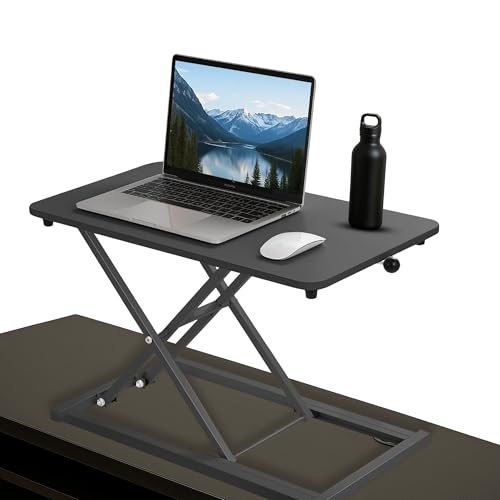 ANTHOSPACE Standing Desk Converter 23.6" x 13.4"
|
8.4/10 | Buy |
| Best Premium |
 VIVO Black 32 in Standing Desk Converter
|
8.1/10 | Buy |
 FLEXISPOT Standing Desk Converter, 36", Black
|
8.0/10 | Buy | |
 Furmax 45 Inches Electric Standing Desk
|
7.8/10 | Buy |
Methods and Ergonomics for Converting Your Workstation
Transforming a traditional workspace into an active standing station involves either adding an adjustable riser or replacing the base with an electric frame. Desktop converters provide the fastest conversion because they sit directly on top of an existing table without structural changes. Complete motorized frames replace fixed legs entirely, letting users preserve their desktop surface or install a split-board top. The best method depends on equipment payload, available footprint, and preference for manual or motorized adjustment.
Desktop Converters Versus Full Desk Replacements
Desktop risers offer a straightforward way to add vertical adjustability without dismantling existing office furniture. Models such as the ANTHOSPACE converter and the VIVO 26 inch single top unit arrive fully assembled out of the box. These compact platforms rest right on your tabletop, allowing immediate use for laptops and lightweight monitors. Users with built-in cabinetry or compact cubicles often find converters practical because they do not alter the underlying desk.
Full motorized desks adjust the entire work surface from the floor up. Systems like the Furmax 45 inch electric standing desk feature an integrated frame and motorized lift mechanism that raises monitors and accessories together. This design eliminates the elevation tier difference found on desktop converters, giving users a completely flat work area. While a full desk requires assembly and dedicated floor space, it provides a unified surface without raising your seated typing level.
Evaluating the depth and material of your current furniture is essential before adding a riser. Converters work well on solid wood and dense composite desks, but they require adequate surface depth to maintain balance. If your existing table is shallow or lightweight, placing a heavy steel riser on top can make the setup front-heavy. Exploring broader home office desk selection parameters helps determine whether your current table can support concentrated riser weight.
Lifting Mechanisms: Manual Racks, Mechanical Springs, and Gas Struts
Manual risers rely on mechanical locking pins, notched settings, or hand-operated levers to control height adjustments. The VIVO DESK-V001J converter uses a patented handle squeeze mechanism featuring five lockable height settings from 8.5 inches up to 15.9 inches. Because manual lifts do not contain pressurized cylinders, they operate with minimal internal wear over years of daily repositioning. However, users must supply some upward lifting effort when elevating heavier hardware between preset increments.
Pneumatic systems assist your lift by using pressurized nitrogen cylinders to counterbalance equipment weight. The TechOrbits 32 inch standing desk converter utilizes pneumatic assist to travel across a continuous range from 4.3 inches up to 19.7 inches. Squeezing the side adjustment handle lets the user glide the platform upward or downward using minimal arm force. Gas struts allow micro-adjustments at any point along the stroke rather than locking into rigid preset notches.
Mechanical wire spring designs provide an alternative lifting method that sidesteps pressurized gas components. The FLEXISPOT 36 inch standing desk converter incorporates a mechanical spring system engineered from high-grade steel wire. This mechanical system avoids potential pneumatic air leakage or performance drops that can occasionally occur in pressurized cylinders over time. The spring tension counterbalances the top deck smoothly, making daily height adjustments predictable.
Electric motorized frames remove physical lifting effort completely through internal motor assemblies. The Furmax electric desk relies on an integrated motor that elevates between 30.71 inches and 46.46 inches with operating sound below 55 decibels. Motorized designs allow users to program specific height preferences into digital memory presets for push-button transitions. While motorized systems require electrical wall power, they deliver seamless vertical travel without manual pulling.
Assessing Weight Capacities and Monitor Support
Matching your equipment weight to the rated capacity of a sit-stand mechanism is critical for stability and mechanical longevity. Compact single-tier risers like the VIVO 26 inch platform support up to 17.6 pounds, making them ideal for single screens or laptop setups. Exceeding this limit can strain the locking pin mechanism and increase platform vibration while typing. Reviewing the weight specifications of your monitor and accessories prevents unexpected sagging or operational stiffness.
Wider dual-tier converters expand your weight threshold to handle larger displays and dual-screen arrays. The TechOrbits 32 inch unit and the VIVO DESK-V000K converter both support up to 33 pounds across their upper decks. The FLEXISPOT 36 inch platform also supports 33 pounds on the primary deck while dedicating 4.4 pounds of capacity to its lower keyboard surface. Steel frames with heavy-duty construction, like the ANTHOSPACE converter, feature ratings up to 88 pounds for heavy hardware arrays.
Full electric desks offer substantially higher payload ratings due to rigid commercial-grade steel column structures. The Furmax electric model supports up to 154 pounds across its two-part desktop surface. This elevated threshold easily accommodates heavy PC towers, desktop audio speakers, dual-monitor swing arms, and peripheral equipment without slowing motor transit. For users with complex gear, choosing a dedicated motorized frame eliminates strict riser payload limits.
Worksurface Layout and Keyboard Tray Ergonomics
Desktop converters are divided into single-surface platforms and dual-tier designs with dedicated keyboard decks. Single-surface converters, such as the yoopin standing desk converter and the ANTHOSPACE model, provide one continuous flat deck for all equipment. This layout works well for minimalist laptop workers who prefer keeping notebook pads and mice on the exact same plane. However, placing a keyboard and monitor on the same level can create an ergonomic compromise for taller users.
Dual-tier converters solve this vertical disparity by dropping the keyboard tray below the primary screen surface. On the VIVO DESK-V000K, the 31.5 inch wide main deck sits above a synchronized 31.3 inch by 11.8 inch lower keyboard tray. This tiered separation allows the computer display to sit closer to eye level while keeping your wrists and forearms in a relaxed downward position. The drop prevents elevated shoulder tension that often develops when typing on a single high platform.
Keyboard tray attachment designs also affect how quickly you can complete your workstation assembly. Most desktop risers ship with the upper scissor frame fully assembled, requiring only simple attachment of the lower keyboard tray brackets. For users who prefer skipping bracket installation entirely, easy assembly standing desks or pre-assembled one-piece risers allow instant placement without tools. Selecting a layout that matches your assembly comfort level ensures a quick transition.
Calculating Ergonomic Standing Heights and Eye Alignment
Achieving a neutral standing posture requires matching your workstation elevation to your natural body geometry. When standing upright with relaxed shoulders, your elbows should bend at approximately a 90-degree angle with forearms parallel to the floor. The top surface of your keyboard should rest directly at this forearm height to prevent wrist extension or shoulder shrugging. Measuring the distance from the floor to your resting elbow point establishes the target height for your keyboard tray.
Monitor positioning requires equal attention to prevent cervical spine compression and neck fatigue during long work sessions. The top third of your computer display screen should sit directly at eye level when looking straight ahead. Viewing distances should remain between 20 and 28 inches from your eyes, roughly an arm length away. If your converter leaves the screen too low, adding an adjustable monitor riser or display arm restores proper eye alignment.
Resting thickness from the converter base is another important factor when working in a seated position. When fully lowered, some desktop converters add between 1.8 inches and 4.5 inches of elevation to your existing tabletop surface. The VIVO DESK-V001J maintains a low-profile resting height of just 1.8 inches, minimizing typing disruption when seated. If a lowered converter raises your keyboard too high while sitting, raising your chair and adding an ergonomic footrest restores balanced support.
Cable Management and Vertical Travel Slack
Converting a static desk to a height-adjustable workstation introduces dynamic cable movement that requires careful routing. Cords running from desktop monitors, keyboards, and power adapters must have sufficient slack to reach maximum standing height without pulling tight. If cables are bundled too tightly at sitting height, elevating the platform can yank plugs out of wall outlets or strain delicate device ports. Leaving a loose slack loop along the scissor frame hinge prevents cable pinching during height transitions.
Dedicated electric desks often include integrated wire pathways beneath the surface to keep power bricks and excess wire organized. The Furmax electric desk includes an integrated cable management tray and utility hooks for headphones and bags to keep the floor clear. For desktop converters, securing cables to the rear scissor legs using hook-and-loop straps keeps power leads away from the mechanical lift arms. Keeping cords centered along the rear frame ensures they glide smoothly upward without catching on desk edges.
Wall clearance is equally vital when operating mechanical scissor risers or motorized lifting frames. Many converter models elevate straight up and down in a compact vertical footprint, such as the VIVO DESK-V000K, preserving clearance against walls. Other risers arc slightly forward toward the user as they rise, which alters your standing distance from the back edge. Positioning your base desk a few inches away from the wall prevents scuffs and ensures cables do not get crushed behind the frame.
Establishing an Active Sit-Stand Routine for Daily Work
Switching abruptly from full-day sitting to continuous standing can lead to foot discomfort, knee soreness, and lower-back fatigue. A practical transition begins by standing for 15 to 20 minutes out of every hour during the first week of use. As leg stamina and core endurance improve, you can gradually increase standing periods to 30 minutes per cycle. Alternating between sitting and standing keeps muscles active without introducing the static fatigue associated with standing still for hours.
Using memory presets or setting simple phone timers helps reinforce regular posture transitions during busy focus periods. Motorized systems equipped with programmable controllers allow one-touch elevation shifts, making posture changes effortless between video calls and focused writing tasks. The Furmax electric desk provides four memory presets to save distinct sitting and standing elevations for quick recall. On manual and pneumatic converters, squeezing the adjustment lever becomes a brief, deliberate pause to stretch and reset your physical posture.
Footwear and floor support play a decisive role in sustaining comfort while working at an elevated station. Standing on hard tile, thin rugs, or rigid hardwood surfaces concentrates body weight directly on your heels and lumbar joints. Placing a supportive anti-fatigue mat beneath your feet cushions foot pressure and encourages subtle muscular movements in the calves. Wearing supportive shoes rather than working barefoot further stabilizes the feet, keeping you comfortable throughout dynamic working sessions.
Workstation Stability and Structural Verification
Verifying structural stability across both resting and fully elevated positions ensures your hardware remains secure during typing. Desktop converters rely on a balanced steel base that must seat completely flat across your current desk surface. Check that all rubber foot pads on the riser make firm contact with your tabletop to prevent slipping or rocking. If your base table has an uneven top, placing thin leveling shims beneath the converter frame eliminates unwanted play.
Typing vibration can occasionally transmit to monitors when a riser is extended to its maximum height stroke. Choosing converters built with thickened square tubing, such as the FLEXISPOT 36 inch platform, reinforces rigidity against front-to-back deflection. Placing your heaviest computer screens directly over the center of the lifting column balances the converter center of gravity. Centering equipment weight minimizes frame torque and keeps displays steady while typing rapidly on the keyboard tray.
Performing a complete travel test with all hardware connected confirms that your converted workstation is ready for daily productivity. Slowly raise and lower the platform through its entire height range while observing cable movement, hinge clearance, and screen stability. Ensure that no power leads snag on scissor joints and that the lift assist mechanism locks firmly into position. Taking a few moments to verify these mechanical details creates a safe, comfortable standing workstation that supports productive daily habits.
About the author
Camryn Rabideau is a freelance writer and product reviewer with a background in product design and journalism. Since becoming a full-time freelance writer in 2016, she has developed extensive experience researching and testing consumer products for the home. Her work focuses on practical product performance, usability, and purchasing considerations. Her combination of product design knowledge and hands-on testing experience provides a useful perspective on furniture, household products, and everyday living.