
Are Standing Desk Converters Worth It? A Practical Workstation Guide for 2026
Are Standing Desk Converters Worth It? Explore ergonomic benefits, setup tradeoffs, and daily usability for your home office in October 2026.
 By Camryn Rabideau
Updated October 9, 2026
By Camryn Rabideau
Updated October 9, 2026

Sitting for eight or more hours every workday often leads to stiff hip flexors, shoulder tightness, and nagging lower back fatigue. Many office workers look for ways to introduce movement into their daily routine without replacing an existing, sturdy workstation. As a result, many remote workers ask themselves are standing desk converters worth it before spending money on new office furniture. Evaluating your daily physical posture and the layout of your current furniture helps clarify whether a desktop riser provides the ergonomic relief you need or if full standing desk workstations are a better long-term choice.
A standing desk converter sits directly on top of your current tabletop, using either pneumatic gas springs or an electric motor to lift your screen and keyboard to standing eye level. These units offer an accessible way to alternate between sitting and standing throughout the day, helping you avoid static posture. Understanding the balance between convenience, weight capacity, stability, and usable work surface ensures you make the right investment for your home office. By examining how these risers function in real work environments, you can determine if are standing desk converters worth it for your specific routine.
| Award | Product | HOF Score About HOF ScoreThe HOF Score is our own rating from 0 to 10, based on performance, design and build, ease of use, and value. It reflects independent research and is never influenced by manufacturers, retailers, or affiliate commissions. Learn more › | |
|---|---|---|---|
| Best Overall |
 Mount-It! 48.5" Electric Standing Desk Converter
|
9.2/10 | Buy |
| Best Premium |
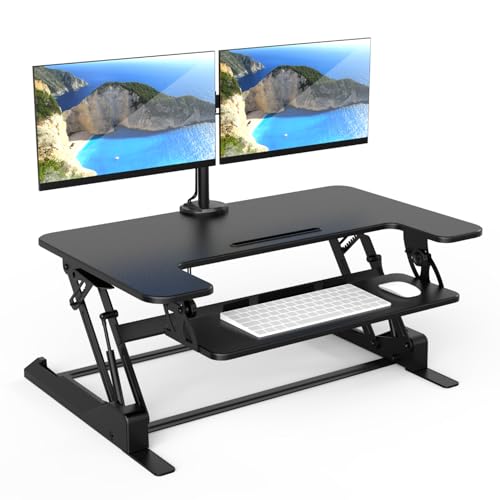 Mount-It! Standing Desk Converter Dual Monitor
|
8.9/10 | Buy |
| Best Value |
 Mount-It! Standing Desk Converter
|
8.4/10 | Buy |
| Best Budget |
 VIVO Black 32 in Standing Desk Converter
|
8.1/10 | Buy |
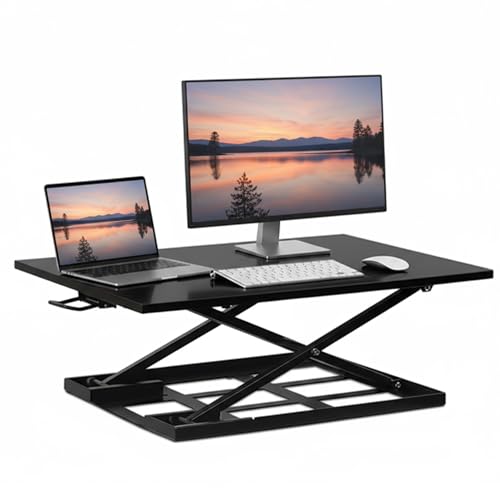 Mount-It! Standing Desk Converter 32" x 22"
|
8.1/10 | Buy |
Analyzing Desktop Risers: Are Standing Desk Converters Worth It for Your Office?
Deciding whether to add a standing desk converter depends largely on how you work, the furniture you already own, and your physical comfort throughout the day. A standing desk converter transforms an existing static table into an adjustable workstation without requiring a complete room overhaul. For professionals who own built-in cabinetry, heavy executive desks, or cubicle surfaces, these risers provide a sensible way to introduce sit-stand intervals. They eliminate the physical strain of sitting all day while saving you the effort of disassembling your current office setup.
The primary advantage of a desktop converter is immediate functional flexibility. Rather than purchasing an entirely new motorized desk frame, you simply place a self-contained lifting unit directly onto your existing surface. Quality models allow you to shift from seated typing to standing work in just a few seconds. However, these units also introduce physical tradeoffs in desktop space, weight distribution, and typing height that every buyer must consider.
Biomechanical and Postural Benefits of Sit-Stand Transitions
Prolonged static sitting compresses the lumbar spine and reduces blood flow to the lower extremities. Over time, this static load contributes to rounded shoulders, forward head posture, and chronic muscle fatigue. Incorporating dynamic posture changes throughout the workday helps decompress spinal discs and re-engages postural stabilizer muscles. Ergonomists frequently suggest the 20-8-2 routine, which involves sitting for twenty minutes, standing for eight minutes, and moving or stretching for two minutes.
A reliable desktop riser makes following these regular intervals practical during busy workdays. When you alternate posture regularly, your body experiences less cumulative fatigue compared to standing or sitting continuously. Standing encourages an open hip angle, which helps maintain the natural inward curve of the lower back. This posture variation can relieve localized tension in the trapezius muscles and cervical spine, especially during intensive typing sessions.
Manual Gas-Spring vs Electric Motorized Lift Mechanisms
Desktop risers rely on two distinct operating mechanisms to adjust height: pneumatic gas springs and electric motorized systems. Manual gas-spring risers, such as the VIVO 32-inch converter and various Mount-It! models, utilize internal pressurized cylinders counterbalanced against your equipment weight. You release a side lever, and the pneumatic assist smoothly counterbalances the load, allowing you to lift or lower the platform with minimal physical effort. These mechanical models require no electrical outlet, operate silently, and feature fewer electronic components that could fail over time.
Electric motorized converters, such as the Mount-It! 48.5-inch electric riser, replace manual lifting with a dedicated internal motor. These units adjust height smoothly with the touch of a button, which is especially beneficial for users with shoulder injuries or limited upper-body strength. Electric models also manage heavier, wider workstations effortlessly without requiring you to pull upward or push down against gas cylinders. However, motorized converters require proximity to a wall outlet and introduce motor housing components that add extra base weight to your desktop.
Your choice between gas-spring and electric power should align with your gear payload and physical preferences. Gas-spring models offer rapid manual adjustments, letting you shift heights in two or three seconds. Motorized risers provide precise, continuous height targeting, ensuring you stop at the exact millimeter needed for comfortable forearm alignment. Both mechanisms can provide reliable daily operation when operated within their rated structural load parameters.
The Seated Height Penalty and Ergonomic Geometry
One major ergonomic compromise of any desktop converter is the slight elevation it adds to your seated work surface. When a converter sits on your desk, its base plate and keyboard platform rest on top of the original desktop. This design raises your keyboard anywhere from one-half inch to several inches above its original resting level. If your existing desk is already high, this extra thickness can force your shoulders to shrug slightly while typing in a seated position.
To combat this seated height penalty, manufacturers develop specialized tiered platforms or ultra-slim low-profile designs. For example, some compact models collapse down to a slim 2.5-inch resting profile, minimizing the gap between your wrists and the underlying desk. Tiered converters position the keyboard tray below the main display platform, allowing your elbows to rest at an ideal 90-degree angle. Checking your seated chair height and armrest adjustability helps ensure your wrists remain neutral when the unit is fully lowered.
When you stand, the geometry shifts, requiring separate positioning for your screen and your hands. Your keyboard should align with your resting elbow height, while the top third of your computer monitor should align with your natural eye line. Converters with stepped platforms naturally separate these two heights, promoting comfortable neck posture without forcing you to look down at your screen. Ensuring this vertical separation is critical for preventing neck strain during long standing intervals.
Workspace Footprint and Usable Desktop Surface
Adding a desktop riser fundamentally alters how much usable surface area remains on your underlying desk. A wide converter, such as a 48.5-inch platform, can span the entire width of a standard workstation, converting almost all your desk space into a dynamic platform. Smaller models, like 31.5-inch or 32-inch units, occupy the center of the desk while leaving the perimeter open for writing pads, coffee mugs, and desk lamps. You must evaluate how much traditional flat desktop space you need for analog paperwork before choosing a size.
Converters lift your monitor and keyboard upward, which actually creates temporary open space underneath certain models. Some designs elevate straight up on an X-frame or vertical scissor track, preserving the exact footprint of your existing table. Other models swing outward toward the user as they rise, which can crowd smaller home offices or narrow walkways. Vertical-lift designs are generally preferable in tight spaces because they keep your workstation center of gravity balanced over the main desk.
Many modern risers also incorporate thoughtful organizational features to maximize utility on their upper tiers. Built-in device slots hold smartphones and tablets upright for easy viewing while keeping cords organized. Integrated charging ports on electric models provide immediate power access without requiring separate desktop power hubs. These small surface additions help keep your workspace tidy, compensating for the physical desk area consumed by the riser base.
Weight Limits, Structural Stability, and Typing Deflection
Every standing desk converter features a strict safe working weight capacity that dictates how much hardware it can safely support. Popular desktop converters typically support around 33 pounds on the main platform. This weight limit easily accommodates a standard laptop, a docking station, and either a single large monitor or a pair of lightweight office displays. Exceeding this weight threshold strains pneumatic gas cylinders and can cause electric lift motors to stall or overheat.
Stability is another vital consideration, especially when a converter reaches its maximum vertical extension. Taller extension heights, often reaching between 16 and 20 inches above the desk, can amplify subtle typing vibrations. If a riser lacks a rigid steel base or durable cross-bracing, energetic keyboard typing can cause noticeable monitor shake. Steel frame construction and non-skid rubber foot pads help anchor the converter securely against the underlying furniture.
You must also verify that your underlying furniture is sturdy enough to bear the combined weight of the riser and your equipment. A heavy-duty converter can weigh between 25 and 45 pounds on its own before adding displays and accessories. Placing this concentrated load on a lightweight hollow-core particleboard desk can cause the surface to bow or bend over time. Solid wood, thick laminate, or reinforced metal desks provide the most dependable structural foundation for heavy desktop risers.
Integrated Monitor Mounts vs Flat Platform Surfaces
Desktop risers handle screen placement in two primary ways: flat platforms designed for factory monitor stands, or built-in VESA mounting columns. Flat platform converters let you place computer monitors or laptop stands directly onto the top tier without tools. This setup is convenient and adaptable, allowing you to reposition displays freely or swap screens quickly. However, factory display bases consume valuable platform surface area, leaving less room for notebooks or accessories.
Risers equipped with integrated monitor mounts, such as select Mount-It! dual-screen models, attach directly to the converter frame via standard VESA 75×75 or 100×100 brackets. Suspending your monitors on articulating arms frees up the entire upper shelf for reference materials and compact peripherals. Integrated arms also allow you to adjust monitor tilt, swivel, and height independently of the keyboard platform. This independent adjustability ensures optimal focal distance and reduces eye strain across multi-screen setups.
When selecting a converter with built-in monitor arms, check the rated capacity per screen arm, which often ranges around 17 to 22 pounds per display. Heavy gaming monitors or ultra-wide curved screens can test these limits, so matching screen weight to arm ratings is essential. Integrated mounts also create a cleaner, more rigid setup that reduces screen wobbling during vertical adjustments.
Cable Routing and Vertical Travel Clearance
Moving a workstation up and down introduces dynamic cable tension that static desks never experience. Power cables, video display connections, and USB cords must travel smoothly through the full vertical stroke without binding or pulling loose. If a monitor cord is too short, elevating the converter to standing height can rip the connector out of your computer port or tip over external hardware. Providing generous cable slack across the entire travel range prevents costly equipment damage.
Many quality risers provide integrated cable management clips and channels along the rear scissor arms or center support columns. Routing your cords through these dedicated channels keeps wiring neat and prevents cables from getting pinched in moving mechanical hinges. Bundling display cords and peripheral cables inside flexible spiral wraps or hook-and-loop ties creates a clean, snag-free path. Checking cord tension at maximum height extension should always be your final step before regular daily use.
Comparing Desktop Converters Against Full Standing Desks
While desktop risers offer tremendous flexibility, they are not the only solution for active working. When evaluating desks for home office setups, you must weigh the benefits of a converter against a complete furniture replacement. A full height-adjustable desk replaces the entire tabletop, elevating your complete work surface, speakers, desk accessories, and paperwork together. This creates an expansive, uniform work surface without the tiered tiers or elevated seams inherent to desktop risers.
However, full standing desks require substantial room space, complete disassembly of existing furniture, and a significantly larger financial commitment. For renters, people in shared corporate offices, or those with built-in wooden desks, a complete desk replacement is often impractical. Many buyers find that desktop risers provide 90 percent of the physical benefits of budget-friendly electric standing desks while preserving their existing furniture investments. If you already love your current desk and want an easy, modular sit-stand solution, a converter represents exceptional functional value.
Full standing desks also feature broader height adjustment ranges that cater better to very tall users or shorter individuals. A desktop converter is limited by the baseline height of your existing table, typically around 29 to 30 inches from the floor. If that starting height does not suit your seated posture, a converter will not correct the underlying issue. A dedicated desk frame, by contrast, can drop lower to accommodate proper neutral ergonomics for shorter torso heights.
Making the Final Decision: Is a Converter Right for You?
Answering whether a standing desk converter is worth it ultimately comes down to your workspace constraints, physical habits, and equipment layout. If you want to break up sedentary sitting patterns without drilling holes, assembling complex motorized leg frames, or abandoning a high-quality desk, a converter is an ideal upgrade. These units arrive mostly preassembled, set up in minutes, and deliver immediate postural relief for back, neck, and shoulder discomfort.
Before purchasing, measure your existing desk depth to ensure the converter base fits securely without hanging over the edge. Calculate the total weight of your monitors, laptop, and accessories to choose a model with ample lift capacity. By selecting the right platform width, lift mechanism, and ergonomic profile for your daily routine, you can create a dynamic, health-conscious workstation that supports productive work for years to come.
About the author
Camryn Rabideau is a freelance writer and product reviewer with a background in product design and journalism. Since becoming a full-time freelance writer in 2016, she has developed extensive experience researching and testing consumer products for the home. Her work focuses on practical product performance, usability, and purchasing considerations. Her combination of product design knowledge and hands-on testing experience provides a useful perspective on furniture, household products, and everyday living.