
How to Reset a Stand up Desk: Reset and Setup Guide for 2026
Learn how to reset a stand up desk steps in November 2026 to clear digital error codes, recalibrate uneven lifting columns, and restore smooth height adjustment.
 By Kaitlyn Wells
Updated November 6, 2026

An unresponsive height-adjustable frame can halt productivity immediately, especially when a digital handset freezes mid-transition or flashes an unexpected error code. Motorized workstations rely on synchronized linear actuators and sensitive control boxes that occasionally lose their baseline reference points following power interruptions, accidental cable disconnections, or physical obstructions. Understanding how to reset a stand up desk allows you to restore smooth motorized travel without calling technical support or dismantling your entire office workstation. When a desk stops responding, initiating a standard calibration sequence usually clears lingering software locks and realigns the lifting columns.
Modern sit-stand setups often incorporate electronic overload protection, anti-collision sensors, and programmed travel limits to safeguard delicate equipment and internal gearboxes. Whether you manage dual-motor frames or use compact electric height-adjustable desks, performing a basic manual reset forces the control module to recognize its absolute minimum floor height. This straightforward procedure re-establishes electronic synchronization between independent legs, ensuring level movement and steady load balancing across your desktop surface. Taking a methodical approach prevents motor strain, extends electronic component longevity, and gets your daily sit-stand work routine moving forward without frustration.
| Award | Product | HOF Score About HOF ScoreThe HOF Score is our own rating from 0 to 10, based on performance, design and build, ease of use, and value. It reflects independent research and is never influenced by manufacturers, retailers, or affiliate commissions. Learn more › | |
|---|---|---|---|
| Best Overall |
 yoopin Standing Desk Converter |
9.2/10 | Buy |
| Best Value |
 SANODESK 36" Standing Desk Converter |
9.2/10 | Buy |
| Best Budget |
 VIVO Black 29 in Single Top Standing Desk |
9.1/10 | Buy |
| Best Premium |
 TechOrbits Black 32 in Standing Desk Converter |
8.6/10 | Buy |
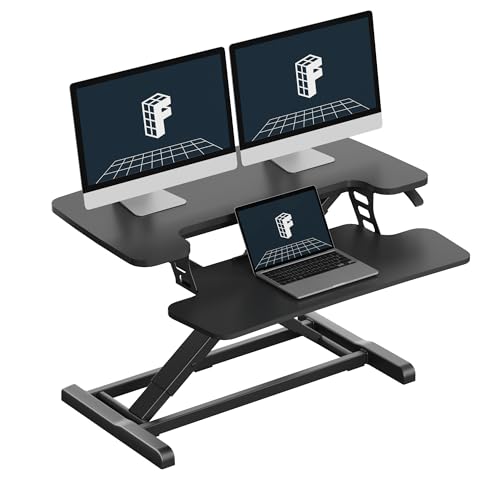 FLEXISPOT 32" Standing Desk Converter, Black |
8.1/10 | Buy | |
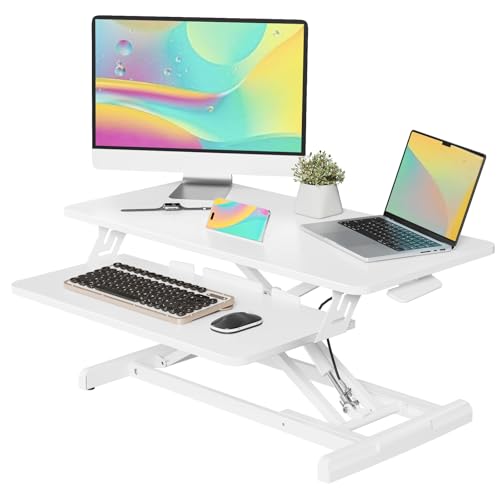 JOY worker 32" Standing Desk Converter |
8.1/10 | Buy | |
 VIVO Black 32 in Standing Desk Converter |
8.1/10 | Buy | |
 Decoholic 24 inch Height Adjustable Standing Desk |
8.0/10 | Buy |
Complete Guide to Resetting and Calibrating a Standing Desk Workstation
A height-adjustable desk requires an electronic baseline calibration whenever its control box detects a voltage fluctuation, weight imbalance, or travel discrepancy. In most motorized systems, executing a reset forces the lifting columns to travel to their lowest mechanical stop, establishing a reliable zero-point coordinate for the internal processor. This straightforward procedure clears temporary safety locks, resynchronizes dual lifting actuators, and restores normal keypad operation without requiring specialized tools. Once the desk confirms its lowest travel limit with an audible click or a short physical bounce, the controller re-enables regular sit-stand height adjustments.
The Standard Downward Reset Sequence for Electric Frames
The vast majority of motorized sit-stand desks share a universal lower-limit calibration sequence designed to protect the internal gearbox and drive spindles. To begin, clear all obstructions from underneath the desk surface, including wastebaskets, filing cabinets, and chair armrests that could impede downward travel. Press and hold the down arrow button on your digital handset continuously until the frame reaches its absolute lowest physical position. Once the desk stops descending, release the button briefly, then immediately press and hold the down arrow again for five to ten seconds.
During this secondary hold, the digital display typically flashes a prompt such as rST, ASO, or a flashing zero, indicating the control box has entered calibration mode. The lifting columns will perform a subtle downward pulse against the lower mechanical stops and bounce back upward by a fraction of an inch. An audible click from the internal control box relay usually signals that the controller has successfully logged the baseline height. Once this motion stops and the display shows a normal numeric height measurement, release the button and test upward travel using your standard keypad controls.
Decoding Common Handset Error Codes and Diagnostics
Digital handsets often communicate internal diagnostic alerts through alphanumeric codes when the control module senses an operational fault. A persistent rST or RESET message simply indicates that the desk requires a manual baseline cycle before normal height adjustment can resume. If your controller displays an E01 or E02 code, the system is generally alerting you to motor thermal overload or excessive duty cycle usage. Most motorized standing desks operate on a ten percent duty cycle, which equates to roughly two minutes of continuous transit followed by eighteen minutes of required motor rest.
Codes such as E07 or E08 typically point toward communication faults or speed discrepancies between independent lifting columns. These errors often occur when a motor connection cable wiggles loose, a Hall effect sensor loses pulse tracking, or one leg experiences higher mechanical resistance than the other. If the display shows LOC, the handset has engaged an integrated child-lock or safety lockout mode to prevent accidental button presses. Unlocking this mode usually requires holding the lock button or pressing the up and down arrows simultaneously for five seconds until the numeric readout returns.
Troubleshooting Uneven Legs and Motor Desynchronization
Dual-motor standing desks rely on precise electronic pulse counters known as Hall sensors to ensure both telescoping columns lift at identical speeds. If one column lags behind the other, the desktop can develop a visible tilt that places immense twisting torque on the crossbar and leg glides. This tilt frequently triggers the electronic current-sensing overload protection, locking the desk to prevent structural warping. Attempting to force the higher side down manually will damage internal drive gears, so electrical recalibration remains the only safe corrective measure.
To resolve an uneven leg condition, start by measuring the height differential between the left and right sides of your desk frame using a standard tape measure. If the difference is minor, a standard downward reset sequence will drive both legs into their lowest physical stops, mechanically bottoming out both sides so the control module can re-zero both pulse counts simultaneously. For desks with straightforward standing desk assembly features, inspecting the motor connection harnesses along the underside of the crossbeam ensures that loose communication pins are not preventing the lagging motor from receiving control signals. Ensuring each electrical lead is seated firmly prevents persistent leveling errors from recurring during everyday height adjustments.
Performing a Hard Electronic Power Cycle
When standard keypad combinations fail to trigger a calibration cycle, the internal microchips within the control box may be caught in a persistent logic loop. Modern power supplies contain capacitors that store residual electrical charges long after the primary power cord is removed from the wall outlet. To execute a thorough hard reset, unplug the main power cord from the electrical outlet and leave the workstation completely disconnected for at least fifteen to twenty minutes. This waiting period allows internal capacitors to discharge fully, wiping temporary volatile memory banks inside the processor.
While the power is disconnected, systematically inspect every physical cable connection leading into the central control box housing. Unplug and firmly reseat the handset connector, both primary motor lead cables, and any auxiliary power jumper cords to confirm every locking tab clicks securely into place. Examine the physical wiring for pinched insulation, crimped conductors, or bent metal pins that could distort low-voltage signaling. After verifying all physical connections, plug the desk directly into a grounded wall outlet without using power strips, then repeat the downward button hold to initialize the baseline sequence.
Anti-Collision Sensor Sensitivity and Obstacle Triggers
Modern sit-stand frames utilize integrated anti-collision detection mechanisms to halt travel when the desktop encounters resistance from an obstacle. Some frames employ electrical current-spike sensing that detects sudden amperage surges in the motor windings, while others utilize integrated 6-axis gyroscope sensors to detect structural tilt. If your desk repeatedly reverses direction after moving only an inch or two, the anti-collision module may be false-triggering due to uneven floor surfaces or excessive mechanical vibration. Adjusting the sensitivity setting through your handset configuration menu often eliminates these premature travel reversals.
Uneven leveling glides at the base of the feet represent another common source of anti-collision false triggers during upward or downward travel. When one leveling foot sits loose, the entire frame experiences micro-twisting during motor startup, registering as an obstacle impact in gyro-based control modules. Use a bubble level across both the front and side edges of your desktop surface to verify proper alignment, adjusting the threaded foot pads by hand until the base rests firmly against the floor. Eliminating structural frame rock ensures the anti-collision module only activates during genuine physical contact events.
Dynamic Cable Slack and Wire Raceway Management
Snagged peripheral cords and taut power cables represent one of the primary culprits behind unexpected standing desk shutdowns and reset requirements. When a monitor power lead or computer display cable lacks sufficient travel slack, it acts as a mechanical brake as the frame elevates toward standing height. This sudden mechanical resistance creates an amperage spike within the control box, tripping safety cutoffs and frequently forcing the system into an emergency rST lock. Adhering to balanced ergonomic sit-stand workstation principles includes planning dynamic cord routing across your entire vertical adjustment stroke.
To verify proper cable routing, lower the workstation to its absolute seated baseline and bundle cords cleanly within an under-desk wire raceway or mesh tray. Next, elevate the desk to its maximum standing height while closely monitoring every cable lead exiting your desktop equipment. Ensure power strips, monitor cables, and peripheral leads retain relaxed loops at full extension rather than stretching taut against wall outlets or grommet edges. Maintaining adequate vertical wire travel prevents accidental port damage, protects control box harness pins from pulling loose, and minimizes unexpected sensor tripping.
Mechanical Risers and Converter Troubleshooting
While motorized desks depend on electronic microcontrollers, non-electric desktop converters rely on mechanical springs, pneumatic gas cylinders, and manual locking latches to control height transitions. Units featuring mechanical spring lift systems, such as the SANODESK 36″ Standing Desk Converter or the FLEXISPOT 32″ Standing Desk Converter, utilize internal steel wire springs to counterbalance equipment weight. These mechanical systems avoid common gas spring issues like air leakage or performance drops over time, offering reliable daily tension. When a manual or mechanical riser fails to lock or refuses to elevate smoothly, the issue typically stems from misaligned release cable linkages or binding scissor tracks rather than an electronic failure.
To troubleshoot a manual converter riser, start by verifying that the release handles engage their internal mechanical pins simultaneously when squeezed. If one handle cable has stretched or slipped from its tension bracket, the locking pin on that side will remain seated in the adjustment gear, preventing level vertical lift. Inspect the scissor hinge joints for debris, loose pivot hardware, or dry friction points that could cause binding during travel. For compact manual platforms like the Decoholic 24 inch Height Adjustable Standing Desk, ensuring the safety lock gears seat evenly across each step maintains steady typing support across all six adjustment heights.
Dynamic Payload Limits and Gear Load Distribution
Exceeding maximum rated weight capacities places immense mechanical strain on motorized gearboxes and gas-spring lift cylinders, frequently triggering control box shutdowns. Motorized desk frames specify a safe lifting capacity that accounts for both your desktop slab and all mounted hardware, such as monitors, computer towers, and audio gear. When a desktop is loaded unevenly, with heavy multi-monitor mounts clamped far off-center, one lifting column bears a disproportionate share of the total load. This uneven distribution causes the heavier column’s motor to draw excess amperage, triggering system error codes and requiring frequent recalibration resets.
Desktop converters also feature specific weight boundaries across their upper surface and lower keyboard platforms. For example, units like the TechOrbits Black 32 in Standing Desk Converter or the VIVO Black 32 in Standing Desk Converter support up to 33 pounds on the main tier, while the JOY worker 32″ Standing Desk Converter balances 28.6 pounds on top and 4.4 pounds on the keyboard tray. Single-tier models like the VIVO Black 29 in Single Top Standing Desk provide a 22-pound capacity, whereas compact units like the yoopin Standing Desk Converter offer a smooth manual lift across a 25.16-inch by 15.75-inch surface. Balancing your computer hardware evenly across the primary work surface ensures smooth height transitions and prevents uneven wear on internal lift components.
Preventive Care and Long-Term Frame Maintenance
Consistent mechanical upkeep reduces the frequency of electronic faults and keeps sit-stand mechanisms operating reliably through years of daily height transitions. Over time, micro-vibrations from typing and daily lifting cycles can loosen the structural bolts securing the legs to the desktop frame and foot brackets. Inspecting and tightening these frame fasteners every few months minimizes lateral frame play and prevents slight column misalignments that can trigger anti-collision sensors. Keeping the telescoping column surfaces wiped clean of dust and debris also protects internal glide pads from premature friction wear.
Respecting internal motor duty cycles remains equally vital for preserving sensitive control box relays and motor armatures over the life of your furniture. Avoid cycling your motorized frame repeatedly between seated and standing heights in short intervals, as rapid consecutive adjustments trigger thermal overload protection circuits. If you notice sluggish transit speeds or a persistent humming sound from the motor housing, pause operation and allow the system to cool down before initiating any further travel. Establishing stable seated and standing memory presets minimizes unnecessary travel cycles and protects your investment over the long haul.
Mastering the correct reset protocol ensures your sit-stand workstation remains an effective, dependable tool for promoting active posture and comfort throughout your workday. By methodically checking physical cable connections, clearing floor obstructions, and allowing motors to complete their baseline downward calibration stroke, you can resolve the majority of error codes quickly and safely. Maintaining balanced equipment loads and organized cable slack prevents recurring electrical faults, keeping your workstation level, responsive, and ready whenever you transition from sitting to standing.
About the author
Kaitlyn Wells is an experienced product journalist covering home office equipment, productivity, and technology. With more than a decade of experience working from home in various capacities, she understands the importance of creating comfortable and functional workspaces. Her reporting on office chairs and workplace equipment combines product research with practical considerations, helping consumers understand how furniture features, comfort, and individual needs influence purchasing decisions.