
Why Is Standing Desk Better? Key Benefits and Setup Guide for 2026
Explore why is standing desk better for posture and daily energy in November 2026, covering ergonomic benefits, movement tips, and workstation options.
 By Camryn Rabideau
Updated November 6, 2026

Sitting in a fixed chair for eight or more hours a day frequently leads to tight hip flexors, slouching shoulders, and persistent lumbar strain. Many professionals wonder why is standing desk better when modern ergonomic office chairs already offer adjustable lumbar support. The core advantage lies in dynamic postural variation, which alternates the physical load across different muscle groups instead of trapping the spine in sustained compression. Exploring sit-stand workstation fundamentals reveals how introducing vertical adjustment transforms a static workstation into an active environment that supports steady blood flow.
Alternating between seated tasks and standing intervals encourages natural micro-movements that can relieve tension in the neck, mid-back, and glutes. Anyone evaluating workspace upgrades should consider how vertical adjustments integrate with monitor alignment, keyboard height, and daily typing comfort. When selecting a good desk for home office work, recognizing how adjustable height mechanisms function can help you choose between dedicated motorized platforms and compact desktop risers.
| Award | Product | HOF Score About HOF ScoreThe HOF Score is our own rating from 0 to 10, based on performance, design and build, ease of use, and value. It reflects independent research and is never influenced by manufacturers, retailers, or affiliate commissions. Learn more › | |
|---|---|---|---|
| Best Overall |
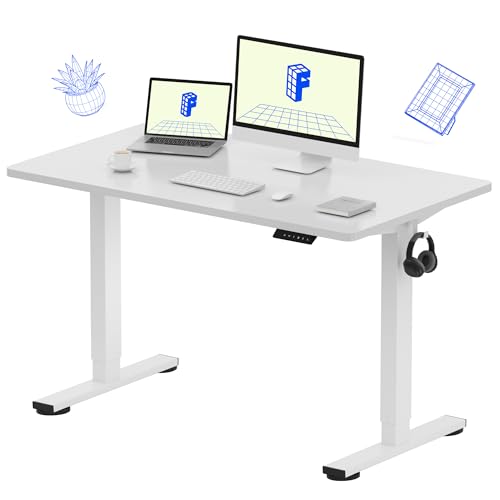 FLEXISPOT EN1 48"x24" One-Piece Standing Desk |
9.2/10 | Buy |
| Best Budget |
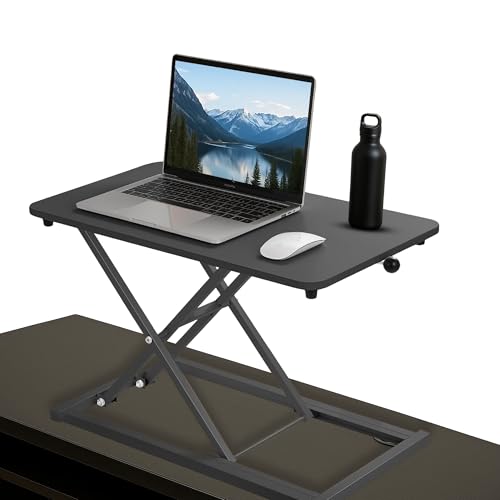 ANTHOSPACE Standing Desk Converter 23.6" x 13.4" |
8.4/10 | Buy |
 The Standing Desk Mat - Topo by Ergodriven |
8.3/10 | Buy | |
| Best Value |
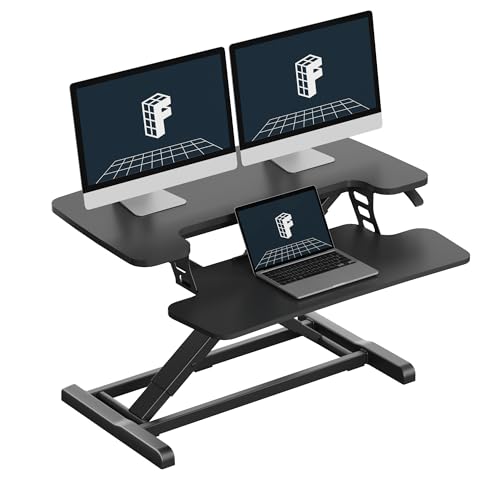 FLEXISPOT 32" Standing Desk Converter, Black |
8.1/10 | Buy |
| Best Premium |
 VIVO Black 32 in Standing Desk Converter |
8.1/10 | Buy |
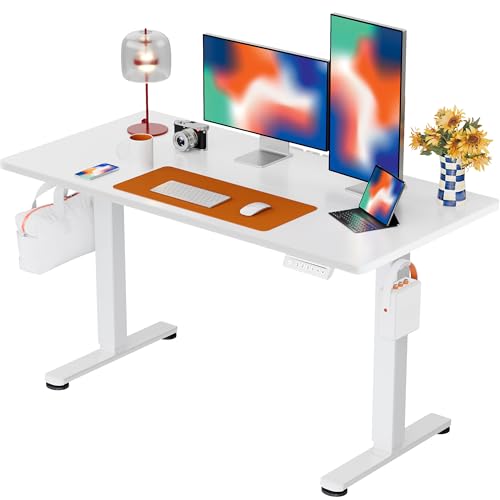 ErGear Height Adjustable Electric Standing Desk |
8.1/10 | Buy | |
 Standing Desk Mat - Topo Mini by Ergodriven |
8.0/10 | Buy | |
 FLEXISPOT EN1 One-Piece Standing Desk |
8.0/10 | Buy |
Biomechanical and Ergonomic Advantages of Sit-Stand Workstations
Transitioning from a fixed seated desk to an adjustable sit-stand workstation transforms the physical relationship between a worker and their environment. Understanding why is standing desk better begins with recognizing that the human body evolved for regular movement rather than prolonged static positioning. When an individual remains seated in an office chair for extended stretches, the hip flexors tighten, the pelvic girdle tilts forward, and the natural lumbar curve flattens under passive loading. Integrating deliberate standing intervals re-engages major postural stabilizers, prompts subtle weight shifts, and restores the spine to an anatomically balanced vertical alignment.
Spinal Decompression and Musculoskeletal Load Distribution
Prolonged sitting places sustained hydrostatic pressure on the intervertebral discs within the lower lumbar spine. Over several hours, this continuous gravitational compression forces the back muscles to work in an overstretched, weakened state, which frequently results in localized aching and chronic stiffness. Standing up redistributes that gravitational force away from isolated spinal segments and spreads it across the pelvis, hips, knees, and ankles. This postural reset decompresses the lumbar discs and encourages the surrounding musculature to maintain natural trunk stability without straining connective tissue.
The primary ergonomic objective is never to replace eight hours of continuous sitting with eight hours of uninterrupted standing. Standing rigidly in one place creates its own set of mechanical stressors, including pooling of blood in the lower legs and static loading on the knee joints. True physical relief comes from continuous posture variation throughout the workday. Alternating between sitting and standing resets joint angles, relaxes fatigued muscle groups, and prevents the repetitive strain injuries commonly associated with locked desk postures.
Metabolic Activation and Circulation Improvements
Remaining seated for long periods essentially powers down large skeletal muscle groups, particularly the gluteal muscles and quadriceps. When these expansive lower body muscles remain inactive, systemic circulation slows, which can cause fluid to accumulate in the feet and lower legs. Transitioning to a standing posture instantly activates those postural muscles to maintain upright balance. This basic muscular engagement stimulates venous return, assisting the cardiovascular system in pumping oxygenated blood back toward the heart and brain.
This uptick in muscle activation also generates a subtle but meaningful increase in daily metabolic activity. While standing does not replace structured aerobic exercise, it burns slightly more energy per hour than passive sitting while preventing muscular atrophy. Many remote workers discover that standing during mentally demanding tasks or afternoon video conferences sharpens alertness. That renewed focus stems from increased peripheral blood flow, which helps stave off the sluggish mental fatigue that often follows a heavy lunch.
Implementing the 20-8-2 Sit-Stand-Move Cadence
Ergonomic specialists frequently point to the research-backed 20-8-2 routine developed by Cornell University as the gold standard for daily computer work. This practical guideline suggests spending twenty minutes sitting in a neutral posture, followed by eight minutes of standing, and finishing with two minutes of gentle movement or stretching. Adopting this thirty-minute cycle keeps the body in active motion without exhausting the legs or overloading the lower back. It also eliminates the temptation to stay standing for hours until joints begin to ache.
Executing this cadence becomes remarkably easy when using modern height-adjustable desks equipped with digital memory keypads. Instead of manually cranking a table or guessing the correct elevation several times a day, users can program dedicated height presets for their seated and standing positions. Desks such as the FLEXISPOT EN1 and the ErGear Height Adjustable Electric Standing Desk include programmable memory controllers that adjust between seated and standing heights at the push of a button. These automated transitions eliminate friction, making it simple to maintain a healthy movement rhythm throughout long work sessions.
Calculating Proper Ergonomic Alignment at Standing Heights
A sit-stand workstation only delivers true physical benefits when configured to match an individual user’s unique anthropometric measurements. When standing at the desk, the keyboard and mouse should sit at an elevation where the elbows rest at a ninety to one-hundred-degree angle with the upper arms hanging loosely beside the torso. Wrists should remain straight and parallel to the desktop surface rather than angled upward or downward against the edge. Placing the working surface too high forces the trapezius and shoulder muscles to hunch, leading to persistent neck tension.
Monitor positioning requires equal attention to prevent forward head tilt and cervical spine strain. The top third of the computer screen should sit roughly level with horizontal eye height, positioned at an arm’s length distance from the user. When switching between sitting and standing, the distance between the keyboard surface and the monitor screen should remain constant. Dedicated monitor arms or dual-tiered converters allow users to maintain this vital relationship, ensuring that the neck stays in neutral alignment regardless of working posture.
Users must also account for footwear and floor accessories when determining their standing desk height. Standing in thick-soled sneakers or stepping onto a cushioned anti-fatigue mat can easily raise a user’s working height by one to two inches compared to bare feet. Failing to compensate for this added elevation forces wrists into an awkward extension angle during typing. Taking a quick measurement from the floor to the resting elbow while standing on your typical footwear or mat surface ensures you program your motorized memory presets accurately.
Electric Motorized Desks Versus Desktop Converters
Buyers exploring sit-stand solutions typically choose between full motorized desks and tabletop converters that sit directly on existing furniture. Full electric desks, such as the FLEXISPOT EN1 48″x24″ One-Piece Standing Desk, provide an expansive, uninterrupted surface that accommodates dual monitors, laptops, and peripheral hardware. These motorized desks feature generous travel ranges, often moving from around twenty-eight inches up to forty-six inches or higher to suit diverse user heights. Exploring budget-friendly electric sit-stand desks demonstrates that motorized stability and spacious worktops can fit practical home office budgets.
Desktop converters offer a functional alternative for individuals who want sit-stand capabilities without discarding an existing desk. Units like the ANTHOSPACE Standing Desk Converter and the VIVO Black 32 in Standing Desk Converter rest on top of an existing table and use gas-spring or mechanical lift assists to elevate computer gear. These converters feature dedicated keyboard trays that drop below the primary display surface to preserve healthy wrist angles. They are especially practical for leased office spaces, compact study corners, or antique desks where replacing the entire furniture piece is not feasible.
Choosing between these two form factors comes down to available floor space, payload requirements, and intended work style. Desktop risers typically provide a more compact footprint and carry lower dynamic load limits, often rated between thirty and eighty-eight pounds. Full electric desks, by contrast, utilize heavy-duty alloy steel frames capable of lifting larger payloads, such as the one-hundred-seventy-six-pound capacity found on the FLEXISPOT frames. If you use multiple heavy displays or large desktop audio equipment, a full motorized desk generally provides greater structural stability and freedom of movement.
The Crucial Role of Anti-Fatigue Mats and Dynamic Foot Terrain
Standing on hard surfaces like hardwood, tile, or commercial thin carpeting for extended periods can cause discomfort in the heels and lower back. Standing without adequate underfoot cushioning concentrates downward body weight directly onto the calcaneus bone and plantar fascia. An ergonomic anti-fatigue mat acts as a shock-absorbing buffer, reducing joint impact and encouraging subtle micro-contractions in the calf muscles. These minute muscular contractions help maintain steady blood circulation and dramatically reduce foot fatigue throughout the day.
Not all standing mats are created equal, and calculated terrain mats offer distinct advantages over standard flat foam pads. Specialized products like The Standing Desk Mat – Topo by Ergodriven and its compact counterpart, the Standing Desk Mat – Topo Mini by Ergodriven, incorporate contoured 3D terrain that encourages subconscious foot exploration. The raised perimeter features and center teardrop allow users to stretch their calves, rest on supportive ramps, and shift stances naturally. Furthermore, these mats feature smooth base materials that let users slide them in and out from under the desk using a single foot when switching back to their chair.
Frame Stability, Weight Capacities, and Monitor Shake
A common frustration among new standing desk users is monitor wobble while typing at elevated heights. As a desk extends upward, its center of gravity rises, which amplifies any play or flex within the telescoping leg columns. High-quality frames counteract this vibration through heavy-gauge steel construction, precision column tolerances, and wide foot stabilizers. Motorized frames engineered with alloy steel lifting columns remain steady even when elevated past forty inches, preventing distracting monitor shake during vigorous typing or writing.
Understanding the distinction between static weight capacity and dynamic lifting capacity is essential for protecting your equipment. Dynamic capacity refers to the maximum weight the internal motor can safely elevate without stalling, overheating, or stripping drive gears. The ErGear Height Adjustable Electric Standing Desk and the FLEXISPOT EN1 One-Piece Standing Desk are built to manage demanding loads, with the EN1 supporting up to one hundred seventy-six pounds. Staying well within these weight thresholds ensures smooth vertical travel and extends the operational lifespan of the lifting motor and control electronics.
Desktop substrate composition also plays a significant role in monitor stability when using heavy-duty C-clamp monitor arms. Thin hollow-core surfaces can compress or crack under the concentrated torque applied by a clamp holding dual monitors. Seamless one-piece solid composite tops distribute clamping pressure evenly, preventing localized bowing or structural failure. If you plan to install heavy articulating display arms, selecting a sturdy seamless top guarantees a secure anchor point that keeps screens firmly in position during height transitions.
Workstation Assembly and Cable Management Considerations
Setting up an adjustable workstation does not have to be an intimidating task requiring specialized mechanical skills. Many modern electric models feature pre-drilled alignments, simplified frame connections, and pre-assembled lifting columns that minimize assembly time. Learning about straightforward desk frame assembly helps buyers choose designs that can be put together quickly without complicated gear alignment. Meanwhile, tabletop converters like the ANTHOSPACE model arrive fully assembled, allowing users to start working with sit-stand ergonomics in minutes without using tools.
Cable management represents another critical aspect of a dependable standing desk setup. Because the desktop moves through an eighteen to twenty-inch vertical stroke, all monitor leads, power strips, and peripheral cables must have sufficient slack. Tangled or overly taut wires can snag on under-desk crossbars, pull fragile computer ports loose, or trigger anti-collision safety sensors mid-travel. Installing flexible under-desk cable raceways and anchoring power bricks directly to the underside of the worktop ensures that cables travel cleanly alongside the frame.
Developing Sustainable Workday Movement Habits
Adopting a standing desk is an investment in long-term physical wellness, but success depends on patient, gradual habit formation. First-time users often make the mistake of standing for several consecutive hours on their first day, which inevitably leads to sore feet and lower back fatigue. A much more effective strategy involves starting with two or three fifteen-minute standing sessions scattered across the workday. As your postural endurance builds over several weeks, you can comfortably lengthen those standing bouts while maintaining the natural 20-8-2 movement cadence.
Pairing deliberate posture transitions with specific daily tasks helps cement the sit-stand habit into your regular workflow. For instance, standing during daily team standup meetings, telephone calls, or email triage provides a natural cue to change positions without interrupting focused creative work. Combining a versatile height-adjustable frame with supportive footwear and an active anti-fatigue mat creates an inviting workspace that supports comfort and energy. Over time, dynamic movement throughout the workday protects your spinal health, sustains daily mental stamina, and makes office work far more comfortable.
About the author
Camryn Rabideau is a freelance writer and product reviewer with a background in product design and journalism. Since becoming a full-time freelance writer in 2016, she has developed extensive experience researching and testing consumer products for the home. Her work focuses on practical product performance, usability, and purchasing considerations. Her combination of product design knowledge and hands-on testing experience provides a useful perspective on furniture, household products, and everyday living.